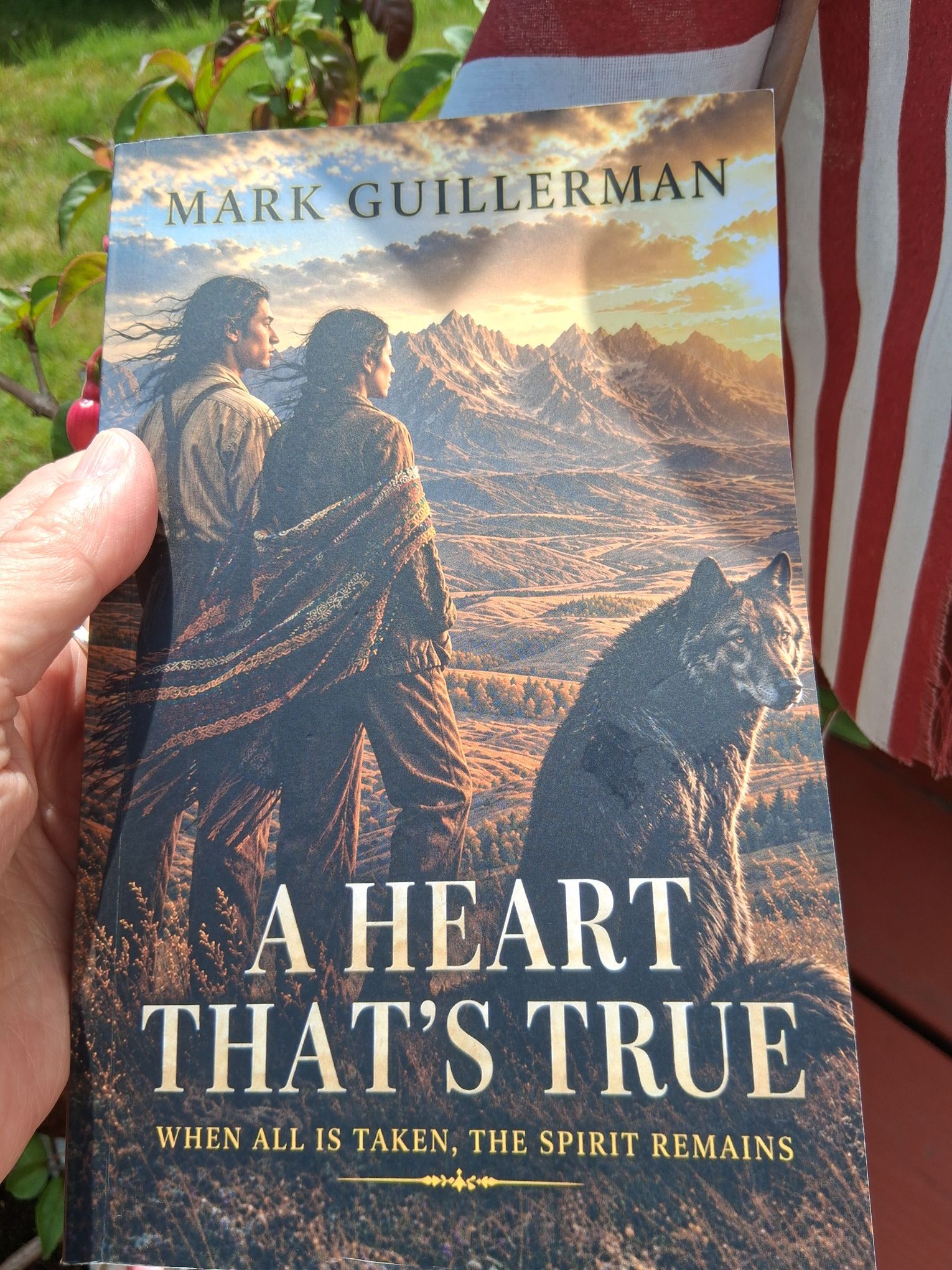
Pages & Paws

Writing, Reading, and Rural Life With a Border Collie


Leave a comment

Why THIS WWII Memoir Kept Us Up at Night

To Steal a Moment’s Time: A Memoir

By Katharina Berger with G.J. Berger (Acorn Publishing, 2023)

Pages (print): 216

Genre: Nonfiction – Memoir/World War II

Via: Author Request

Note: We received a complimentary copy of this book for honest review.

“The sun warms. Enveloped in pine trees we are again in the forest, the beautiful Thüringer Wald. Baby is lying in his carriage, and I am lying on soft thick moss sunning myself. The sky is dark blue, high and glorious. One must have visited hell to be able to see heaven as it really is.” – Katharina Berger

Some books you read. Others you experience. To Steal a Moment’s Time is the latter.

The Basics:

On the brink of World War II, Katharina Berger was the most sought-after stage and film actress in Germany. As many of her colleagues fled Hitler’s madness and the devastation of war, Katharina stayed and gave birth to a healthy baby boy in 1944. From evading Nazi fanatics and helping Jews escape, to scrounging for food and shelter as she searched for her missing husband, she journaled during her son’s first year of life, surviving on the small thread of hope that she and her child might live to see a better world.

Kimber: Mom and I have read, like a zillion books about World War II. Enough to sink a battleship. Fiction. Non-fiction. Historical fiction. All points in between. To Steal a Moment’s Time stands alone. Here’s why (the short version):

Courage and Hope

This is a story about courage and hope. To Steal a Moment’s Time is the true story of a mother trying to protect and care for her infant son during the final days of World War II. As her country collapses around her, Katharina Berger steals a few moments between 1944 and November 1945 to record what she sees, hears, experiences, and feels. The story is told in four parts. Part I is A Newborn in a Time of War. Part II is Running in Hell. Part III is Combat Too Close. Part IV is The Trek.

Packed with power and pathos, this compilation of diary entries penned by a new mother is a quiet rebellion against forgetting, a tapestry of valor and light stitched by sacrifice and forged in steel. In these pages Katharina reflects on how a war she never agreed with has ravaged most everything she holds dear as she fights for the life of her only son, Georg, while desperately searching for her solider husband.

The Telling

To Steal a Moment’s Time is a haunting, lyrical testament to maternal love operating in the shadow of total collapse. Told by the co-author’s mother, this memoir chronicles the stark contrast between fragile new life and the volent death throes of the Third Reich. From damp, overcrowded air raid shelters to constant hunger to desperate evacuations, every page charts a cartography of endurance calibrated in ounces of milk, drops of Vigantol, a squeaky baby carriage, boiling diapers, and grating carrots. It includes layers of exhaustion. Cold. Hunger. Fear. Darkness. Confusion. Chaos. Russians marching on Berlin. Death, deprivation, and desolation. The kindness and generosity of American soldiers.

Translated from the original German, the writing is starkly luminous. It tears a beautiful wound in the fabric of time, capturing love and loss like starlight among ruins.

Truth: We could not sit down to draft a review of this book for several days after finishing it. It kept rolling around in our heads. Echoing. Reverberating. Sneaking up on us in the middle of the night and knocking on our hearts.

Remarkable

Thus, we won’t be rating this book. It doesn’t feel right. But we will say that To Steal a Moment’s Time is one of the most remarkable memoirs we’ve ever read, battleships notwithstanding.

Kimber: I’d grab a copy now ‘fize you, Buster.


2 Comments

From Home Plate to Hardwood to End Zone: ‘Why Is Everyone Cheering?’ Scores

Why Is Everyone Cheering?

By Lauri M. Gross (Indie author, 2026)

Pages (print): 159, including Index)

Genre: Non-fiction – Sports

Via: Author Request

Note: We received a complimentary copy of this book for honest review.

Don’t know a touchdown from a hoedown? An infield fly from a house fly? A “can of corn” from a cob of corn? Never fear. Why Is Everyone Cheering? is here to help you sort out the basics of three primo sports: Baseball, football, and basketball.

A confession: We’re not big fans of football or basketball. Except when the L.A. Lakers beat the Boston Celtics for the 1984–85 NBA Championship. Or when the Seahawks (finally) won the Super Bowl. But let’s not get picky here, okay?

So, hey. Our house is a baseball house. Like, Go Dodgers!! Three-peat, baby!

Wait. Where were we?

Oh yeah. Why Is Everyone Cheering?

Well. Even if you’re not a huge sports aficionado or one of those super annoying types who can spout batting averages, rushing yards, or most assists in a game over the last century, there’s a lot in this book that’s worthwhile. And it’s written so that your average non-sports expert can understand it and enjoy each sport a little more in the process. (Go, Ohtani!)

In terms of formatting, each chapter opens with Assumptions, a Recommended Movie List (Where is Field of Dreams? Did I miss that)? and some Basics about the Season. (Go, Betts!)

This book has five chapters. Chapter 1 is Baseball (of course). Chapter 2 is Football. Chapter 3 is Basketball. Chapter 4 is Quiz Answers. Chapter 5 is Bonus Material and Reflections. Each chapter includes a quiz on each sport (Kimber: Mom like, totally aced all of them. So there!)

The author offers readers fun and practical tools for seeing and understanding more of what’s happening in each sport. It also helps us understand more of what officials, sportscasters, and analysts (who are these people?) are saying. The text is uncomplicated. Uncluttered. It helps readers “gain knowledge and insight that will allow them to know what they are watching and enjoy the game.” Lots of photos, illustrations, charts and diagrams are included to help readers grasp key concepts. Each section/sport is well-organized and easy to follow. The text is broken down into small bite-sized pieces that are easy to digest. (Go, Freeman!)

We especially liked the way the author doesn‘t assume that every non-sports expert is a moron. Or the neighborhood fluff ball. Which are pretty much the same thing. Instead, she treats readers with respect while providing lots of insight and interesting tips, tidbits, and factoids about the who, what, when, where, why, and how of each sport. (Go, Yamamoto! What?)

For example, the football chapter explains how the game is played. How the ball is moved. How downs are awarded. Pick six. Scrambles. Special teams. Offense, defense. Pockets. Sacks. (Glad we’re not the only ones who don’t get “pass interference.”)

The chapter on basketball notes that much of the on-court action is a whole lot faster than football or baseball. Also, the site of the action – the basketball court – is much smaller than a baseball diamond or a football gridiron. Basketball players move quickly. So, Pay Attention, class! There’s also the endless squeak of sneakers on hardwood. No hats or helmet like in the other two sports. Basketball jerseys sporting city nicknames. Close encounters with fans!  “Small ball” and “bigs.” Alley-oop. Wing span. Lots more.

Thankfully, this isn’t one of those cram-your-head-full-of-sports-stats books. Nopers. Why Is Everyone Cheering? is as sunny as a lemonade stand on a summer day. Or a walk-off homer in the bottom of the ninth with the bases loaded.

Tip: Lighthearted, engaging, and down-to-earth, this book can easily be read in a single sitting. Or an afternoon. Don’t. Best to read it in chunks by sports season. Give it a chance to settle in and marinate. (We read this book shortly after the Dodgers clinched the NL West. So, Go Blue!)

Mom: Now if I can just find my official Dodgers rally cap.

Kimber (rolling her eyes): Mom, you only have like, a million.

Mom: C’mon, Kimster. You can never have too much Dodgers anything. Expect maybe that fourth Dodger dog…

Our Rating: 3.5


2 Comments

Love in the Bitterroots: A Story of Solitude and Second Chances

Falling for the Grumpy Billionaire Across the Road… Or Not!

A Sweet Montana Pet Rescue Romance, Book 4

By Gayle M. Irwin (Waggin’ Tales Inspirational Pet Stories, 2026)

Genre: Fiction – Western Romance

Pages (print): 197

Note: We received a complimentary copy of this book for honest review.

He’s running from the spotlight. She’s protecting her grandparents’ legacy. Neither expected to fall in love.

Sought-after, but now reclusive, actor Blake Scott trades his oceanside California life for a fixer-upper house in western Montana. He wants one thing: solitude. What he encounters instead is a boisterous rooster named Russell Crow, a donkey in labor, and a woman across the road who is impossible to ignore.

Lilly Warren pours everything into the farm her grandparents built. She cherishes her family and friends, her rescue animals, the greenhouse business, and the land she refuses to lose to the highest bidder. She has no time for secrets, and even less for a man who seems to be keeping them.

Scene stealers: Bernie the Burmese Mountain dog. Angel, a long-haired collie with three legs. Ranger the cocker spaniel. Russell Crow, a Rhode Island Red rooster with attitude. Kinda like a sweet furry face we all know and love. Without the feathers.

Then Blake recuperates from a swan dive off a ladder (Bernie to the rescue!) while wrestling with whether or not he wants to accept a multi-million-dollar movie contract. Meanwhile, Lilly faces rising property taxes and a plot by greedy real estate developer Gordon Huff that threatens her land, her livelihood, and her family legacy. Can Lilly count on Blake to come through in the clutch? Or is he just another self-centered Hollywood movie star pretending to be someone he’s not?

We love the story arc about Blake’s dad and his black lab, Merle. It adds a layer of warmth and texture to the story. Speaking of warmth, these pages radiate it like the glow of a campfire under September stars. The story unfolds like a Big Sky sunrise, a heart you can feel on paper.

Told from both Blake’s and Lilly’s viewpoints in alternating chapters, the plot is well-rounded and robust. Laced with occasional levity, the writing breathes with a quiet, arresting grace. Like a gathered bouquet of shadow and light, written with a tenderness so sharp it aches.

That being said, we have a few bones to pick with this book. (You knew that was coming, right?)

Bones

Lilly’s reaction to Blake’s revelation seems over the top. And Tom Hutchins’s verbal barbs chucked at Blake Scott during the county commissioners’ meeting? They sound canned. Artificial. As is the case with another Waggin’ Tales book we recently reviewed, the type font for Grumpy is way too small for us dinosaurs. We kinda hate that.

Also, why a book with this caliber of writing didn’t get more attention in the editing/proofreading department is baffling. Typos, punctuation errors, misspelled words and dropped commas and quotation marks as well as basic usage errors keep cropping up. Select examples: Blake is in the “throws of deal-making.” (The correct word is “throes.” Ouch.)  And “whisp of a sigh.” A bracelet that’s “… pale turquoise and dark corral…” There’s also the part about Lily wearing pajama bottoms on page two. Same setting and scene, on page 9, she’s dressed in blue jeans.

Kimber: Clean-up on Aisle 9!

Speaking of “grumpy,” – sort of – the cover art? Kimber: Gag me with arugula! Way too soap opera-y for our taste. The image also clashes with the book’s description of Blake. In the book he has “growth stubble on his chin and above his lips” and “deep-green eyes.” So, who’s the full-bearded, brown-eyed dude on the cover?!!

We’re also not crazy about the title. Almost made us chuck it in the DNF pile. Just sayin’. (Kimber: We kinda like Rescuing Mr. Hollywood in Big Sky Country.  Or Russell Crow to the Rescue! Maybe From Spotlight to Starlight: Romance in Montana’s Bitterroot Mountains. How ‘bout Stars, Solitude, and Second Chances? Or From Fame to Forever: A Montana Romance. There’s also my personal fave: Saved by the Animals of Big Sky Country. Anyway…)

The Bottom Line

Overall, Falling for the Grumpy Billionaire is a lithe and agile read that’s quick, clean, and as refreshing as a mountain stream in July.  Beautifully written and expertly paced, it’s a skillful blend of Montana’s wild beauty, animal love, and the hope of second chances. With a heart as big as a Montana sky, this cozy romance shows us what courage, honesty, and the magic of starting over look like, one paw-print at a time.  

Kimber: I’d grab a copy now ‘fize you. As for me? I’m gonna hang out with my new best buds. Bernie. Angel. And Ranger. While Her Royal Momness is booking the next flight to the Bitterroots. TTFN!

Pages & Paws Rating

Our Rating: 3.0

It’ll get a higher rating when that Clean-Up on Aisle 9, et.al, is taken care of.


2 Comments

‘Still My Mom’: A Heartfelt Memoir on Alzheimer’s, Family Ties, and Unending Love

Still My Mom

Alzheimer’s Love, Loss, and the Work We Do Before Goodbye

By Mike Baker (Indie author, 2026)

Genre: Non-fiction

Via: Author request

Pages (Print): 272, including an extensive list of relevant Resources and poem, The Love It Couldn’t Take

Note: We received a complimentary copy of this book for honest review.

Some goodbyes take years. Love keeps showing up anyway.

When Mike Baker’s mom was diagnosed with Alzheimer’s, his family entered a goodbye they were not ready for. The disease reached for her memory, her words, her confidence, and the ordinary rhythm of the life she had built. It also reached everyone who loved her.

Still My Mom is a raw, tender, and honest memoir about loving someone through Alzheimer’s. It is about grief that arrives before death, the strange ache of missing someone who is still here, and the work families do when the person they love begins to change.

Written with warmth, faith, humor, and deep affection, this book speaks to the families living in the long goodbye. It holds space for the hard parts of Alzheimer’s and dementia: the confusion, the guilt, the exhaustion, the grief, and the ache of wanting more time. It also honors the small moments that remain: a laugh, a look, a familiar touch, a story, a memory held by someone else when the person you love no longer holds it the same way.

This book is for families walking the Alzheimer’s road, caregivers carrying quiet grief, sons and daughters trying to show up, spouses learning a new version of love, and anyone who still has love to give before goodbye.

Perhaps the first thing you need to know about this book is that at its core, it’s a love letter. Still My Mom evokes intimacy, tenderness, and the bittersweet nature of the work done in the face of Alzheimer’s. It’s real and it’s raw. It pulls no punches about the realities of this devastating disease and how it effects friends and family members. Pages reflect grief and loss as well as hope, gratitude, and a quiet strength and grace.

The author describes this memoir as “A caregiving book written by someone who was doing the caregiving, not studying it. No clinical framework, no stages, no advice about self-care.” He’s spot-on. And that matters. Because Still My Mom isn’t a medical journal. It isn’t a clinical list of, “When you see this, do that.” It doesn’t walk you through labyrinthian mazes of “doctor-ese” – although it does note how skillful, truthful, and compassionate communication with healthcare professionals makes a difference. It’s highly readable, briskly paced, and written in clear language that’s easy to understand.

The text is divided into five main sections: Part One: Before the Disease Gets the Story. Part Two: The Work While There Is Still Time. Part Three: Caregiving Changes Everything. Part Four: The Hard End-of-Life Work. Part Five: After Goodbye. Also included is a Note to the Reader, a How to Use This Book section and a Bonus Chapter: The Work to Do Before the Mind Is Gone. (Dont miss this.) We appreciated the emphasis on caring for the caregiver and the warm family tone (“G’night John-Boy”).

The formatting is a little odd, with ragged right margins instead of full justified. Paragraphs appear in blocks and aren’t indented. But this doesn’t diminish the narrative, which unfolds smoothly and naturally.

Packed with practical advice and insight from someone who’s been there, each section and chapter is honest and forthright. But they also give you room to breathe. To be kind to yourself and your loved one. That matters, too. More on that in a min.

Frankly, we had a hard time with this book. It’s not an easy read. It’s not meant to be. So we could only handle a few pages at a time. (Kimber: That’s pretty unusual around here, bub. It’s almost like me eating a nice, thick juicy flank steak one bite at a time.)

This book is intense. It’s emotional. Incredibly thorough. Exceptionally well organized. Heartfelt. Eloquent and articulate. Beautifully written. Searingly honest and authentic. But there were times when we had to put it down. Walk away. Take some deep breaths.

And you know what? That’s okay. In fact, the author acknowledges that that’s okay.

Yea, verily. Alzheimer’s isn’t an easy subject. And Still My Mom isn’t a coffee table type book of the light and fluffy, lemon meringue variety. It’s heavy. But it also offers a way through the fog of initial diagnosis to final days. It counters fear, panic, confusion and uncertainty with clear, easy-to-understand language. Suggestions. Examples. It opens a way forward. Suggests a road through. And most of all, it offers a gentle breath of kindness and understanding with the constant reassurance of one vital, over-arching message: Alzheimer’s is tough. But you are not alone in the battle.

So again, Still My Mom isn’t an easy read. But it’s a good one, a garden where every sentence blooms with love. Indeed, the tenderness in these pages clings like sunlight to morning dew, refusing to let go even as the temperature climbs.

Bonus points: Every chapter wraps up with a Before the Next Hard Day section. This offers some concrete ideas for steps to take when a loved one is diagnosed with Alzheimer’s.

Carrying love forward from page one to the very end, Still My Mom had one of us reaching for tissue more than once. (Kimber: I’m advising Mom to buy stock in Kleenex. Not that she ever listens to me. But you never know.)

Finally, if love could shine through ink, the pages of Still My Mom would glow.

Our Rating: 4.5


2 Comments

A Throne, a Prophecy, and a Twist We Didn’t See Coming

The Promised Queen

By Matthew Toss (Christian Faith Publishing, 2026)

Genre: Fiction/Fantasy

Pages (print): 381

Via: Author request

Note: We received a complimentary copy of this book for honest review.

A young girl sets out with her faithful bud to fulfill a prophecy and become the…

Kimber: Oh, wait. One of us is getting a wee bit ahead of herself. (Insert eye roll here). Cuz. You know Mom. So, let’s back up a bit for a bird’s eye view of this highly readable and eminently engaging novel by Matthew Toss.

Ready? Set? Let’s go!

The 4-1-1:

Who is the real queen of Anam?

Young Liberty dreams of a ship. (Kimber: I’m seeing The Dawn Treader. What?) High-spirited and adventurous, Liberty is the polar opposite of her quiet, demure twin sister, Eslanda. The girls will turn thirteen during the annual Harvest Festival and choose an “apprenticeship.” Let’s just say Liberty isn’t exactly turning handsprings at the prospect.

Liberty’s best friend is Cayden. The two kiddos slip into the country of Anam a week before the Festival – an event that will crown Anam’s long-lost princess. But the Viceroy, who has managed the nation through the interregnum, sets a perilous scheme in motion. He dispatches a bounty hunter on a desperate, near-impossible mission to fracture the transition of power before it can begin.

“May the winds of fortune blow you, the depths below not know you, never a tavern throw you, and true love a lass to show you.”

As Liberty and Cayden travel deeper into Anam, they cross paths with vibrant, magnetic figures who leap off the page, each with their own secrets and stakes. Their journeys drive them toward a volatile, unprecedented reckoning – one no one is ready to face, and from which the nation may never return unchanged.

And what’s up with all the fires in Trapper’s Woods?

We like, Totally Love-ified this book. It moves like greased lightning, with characters that practically jump off the page and land in your lap.  The epic sweep of The Promised Queen reminds us of Middle Earth. There’s even a battle scene reminiscent of Minas Tirith. Along with plenty of action and a boatload (literally) of adventure, there’s also plenty of fantastical creatures like kelpies and nixies and hippocerfs, oh my! It’s a little Narnia. A little Neverland. A little The Once and Future King. (Or in this case, queen.) With a dash of The Great Divorce.

“The history of Anam is not always one of peacetime. Surely you have learned the terrible stories over the years of the wars against magical creatures, the reign of the western giants, and even the king who went mad.”

Characters

Besides Liberty and Cayden, main characters include Archbishop Langthorne, Lorcan, captain of the guard, and Doran the bounty hunter. Fiadh. Captain Fox. Cordanyth, Guardian of Ancient Wisdom.  Much more! All so lively and quick, we knew in a moment they must be… oh, wait. Wrong story. Where were we?

“I have never sensed a war that didn’t come, nor have I sensed a war whose outcome I did not see. Until today. The future is obscure, hidden behind a veil.”

Oh yeah again. This book is a delightful read. It grabbed us in chapter one and reeled us in like a fish on a line. Saturated with intrigue, mystery, and adventure, the plot unfolds like a kaleidoscope, each shift revealing a new facet of the story as you join our dynamic duo on the adventure of a lifetime. Additionally, the author’s world-building skills are top-notch. The language is as lilting and lyrical as bird song, each word a note in a tune that lingers in the air and makes you want to hear more. A triumph from the start, this exceptionally well-written debut novel restored our faith in indie authors. It made one of us want to stand up and cheer.

“These people are my family. I plan to fight for my family.”

Brimming with wit, wisdom, and whimsy, The Promised Queen is as satisfying as a warm slice of chocolate cake, fresh from the oven. Drenched in chocolate fudge sauce and a nice big dollop of vanilla ice cream. With a banana split chaser. Kimber: Don’t forget a perfectly cooked filet mignon with a side of crispy bacon the size of Alaska.

Mom: You eat what you want and I’ll eat what I want, okay?

Wait. Is that Camelot? Where once it never rained till after sundown….

Our Rating: 4.0


Leave a comment

Understanding Homer’s Epic Without the Homework Headache in ‘The Odyssey Decoded’

The Odyssey Decoded: A 70-Page Step by Step Guide to Understanding Homer’s Epic

By Adrian Solas

Genre: Entertainment

Pages (Print) 86

Via: Reedsy

Kimber: Okay, Mom. So this Odd Guy? The one who’s running around all over the Med trying to get home? What’s up with that?

Mom: It’s Odysseus, dear heart.

Kimber: Oh-whoz-ee-us?

Mom: Odysseus. You know. The guy in Homer’s The Odyssey.

Kimber: Who’s what-a-see?

Know that deer in the headlights look? That’s probably the response you’ll get if you ask most peeps what The Odyssey is about. A handful might say something like it’s a tale of a war hero coming home after a long war. If that doesn’t float your boat, don’t worry. Because The Odyssey Decoded suggests that this ancient classic may be about something else.

This thoughtful and highly readable work shows us why The Odyssey is about more than an epic journey and how it has something to say to today’s readers. Kimber: Yeah, you, Tootsie. You don’t even have to stock up on Dramamine. O happy day!

First off, note that The Odyssey Decoded isn’t meant to replace Homer’s original work. It’s intended to serve as an introduction, a companion, and a fresh perspective on “one of the most influential stories ever told.”

It succeeds. In spades. 

The book opens with one of the greatest tragedies in history: the burning of the Library of Alexandria and the consequent, incalculable loss of ancient thought and writing. It then takes us back to the origins of The Odyssey as an oral tradition and then to the poet Homer. The Odyssey Decoded then poses two key questions that propel the balance of this intriguing and highly engaging book: 1) What does the myth really tell us?, and 2) Why is The Odyssey one of the most studied books in human history?

Those familiar with Homer’s tale will recognize the principals in this book. Odysseus. Penelope. Telemachus. Calypso. Athena. Poseidon. Circe, Ino, and so on. So, the book has a familiar feel to it. The basic story is told in Episodes like a docudrama. An Episode refreshes our memory about a portion of the story. Then, under Decoding, the text explores what happened in the segment indicated and why. 

Decoding includes The Pride of the Victor, The Price of Survival, The Warning from the Dead, The Call of the Impossible, and true victory (it’s probably not what you think.) Themes and settings are also explored, including the Trojan War and years of combat and conflict and the toll they take. There’s also Odysseus’s faithful hound, Argos. Revenge. Correcting hubris. Miasma. (I’d almost forgotten about Argos.)

Analytical without being didactic, The Odyssey Decoded shows us that the original tale is about much more than an epic journey and maritime adventures. It shows us how Odysseus’s journey can be read as a trial and how said trial is part of a long process that brings Odysseus back to his human condition. We realize how Odysseus is slowly transformed from the triumphant conqueror of Troy to a weary traveler who just wants to go home. And how that transformation can apply to any reader, across any century and culture. It’s brilliant.

Also discussed is what Odysseus embodies and what Penelope symbolizes as well as the key role of Telemachus. So The Odyssey is not just the story of a man returning home after a long war. It’s a guide to human experience. Indeed, Odysseus’ story shows us how a human being becomes a whole individual. It’s one reason why this work has resonated over millennia and continues to be read and studied widely.

Don’t miss the Conclusion: The Last Secret of the Odyssey. And that’s all I’m going to say about that. The final chapter, For the Road, includes some key recaps. An illustrated companion map of Odysseus’s route through the Mediterranean is included. 

So if the words “Homer” or “Odysseus” make you want to jump up and run screaming from the room or reach for the nearest bottle of No Doze, just wait a minute. Think again. The Odyssey Decoded is a worthwhile read. And no, it is not a dry and brittle rehash of the original tale. Nor is it a classroom lecture that’s as arid as the Atacama Desert. It’s entertaining, informative, and inspiring. Bursting with vitality, energy, and insight. In fact, the writing style is as fresh as green grass after a spring rain.

Finally, it’s been years since we read The Odyssey. The Odyssey Decoded inspired one of us to dig up her copy and read it with a fresh perspective. The other – the four-footed one – is out scouting another New York steak. Go figure.

.

Pages & Paws Rating

Our Rating: 3.5


2 Comments

The Disjointed Adventures of Bo (Good Luck Following Along)

The Mother, the Daughter, and the Ghost

By Patrick Trumpy (Indie author, 2026)

Genre: Who knows?

Pages (Print): 266)

Via: Author request

Note: We received a complimentary copy of this book for honest review.

Well. That’s a coupla days out of our lives we’ll never be able to get back. And to think we coulda been watching a test pattern.

That’s about the size of it in this sarcastic, sardonic debut novel by Patrick Trumpy. Think Lemony Snickett’s Baudelaire orphans meet Eeyore and Sister Bertrille.  With a dash of A Confederacy of Dunces. It may be “darkly humorous” for the first few chapters. But eighteen-year-old Bo’s flippant, glib demeanor and her insufferably sardonic commentary get old after about 6,898 curtain calls. We bailed out at Chapter 14. So, we won’t be rating this book. Here’s why (the short version):

Told in the first person from Bo’s POV, reading The Mother is like finding a beautifully wrapped gift in the mail. You open it to find a tax audit.

“The Mother” may be a reference to Bo’s own estranged mother. Escaping that mum, Bo bolts from her familial home. Jumps in a taxi and shouts to the driver, “This is the way!” (We kept hearing The Mandalorian.) Arriving at a convent, Bo meets another “mother,” whip-wielding Mother Madeline. Or Mother Superior. Bo soon finds herself ensconced in a convent with a group of geriatric nuns who mistake Bo’s arrival as the fulfillment of a prophecy… or… something. She becomes “Bo, the Reluctant Radiant.” Aka: Hermitess of the Rocks.

Here – and pretty much everywhere – Bo spouts impossible lines like, “Do you behest my company in the tillage, or may I scamper off to contemplate?” And, “Your reverent solemness for my holy coronation is uncharacteristically considerate” (to her biological mom when Bo joins the novitiate).

It’s enough to make your hair ache.

Her companion, the ghost, is an unstable partner and certain temptations of urban life beckon.

Meanwhile, the plot moves with the alacrity of a three-toed sloth. On crutches. It’s like, Oh hi, Bo. What nonsense are you spouting today?

Reading this book is like trying to teach a pig to sing. It can’t be done and it annoys the pig.

It’s like the story’s auditioning for a soap opera and forgot to stop. The only thing missing is a PhD in overwriting. Kimber: Is this a book or a canned laugh track for a 1970s sitcom?

We bailed out after about 70 pages or so. Could not force ourselves to turn another page. I mean, really. A mocking, satirical main character who treats the world like it’s an imposition on her coffee break? A self-described animal hater? Kimber: Lost us there, Babe. Never to return.

Here’s the deal. The writing in this book is actually quite good. But we kept seeing Martin Short’s Ed Grimley every time Bo opened her mouth. So it just didn’t flip our pancake. But then, we’re kinda picky about our batter. And our tablemates.

Bottom Line

We simply do not have time for books that don’t grab us. That we don’t enjoy. That try too hard. This checks all those boxes. Besides. We’d rather read something that actually made us want to keep going. This ain’t it. So sayonara, baby!


Leave a comment

‘Daughter of Warriors’: Almost There, But Not Quite

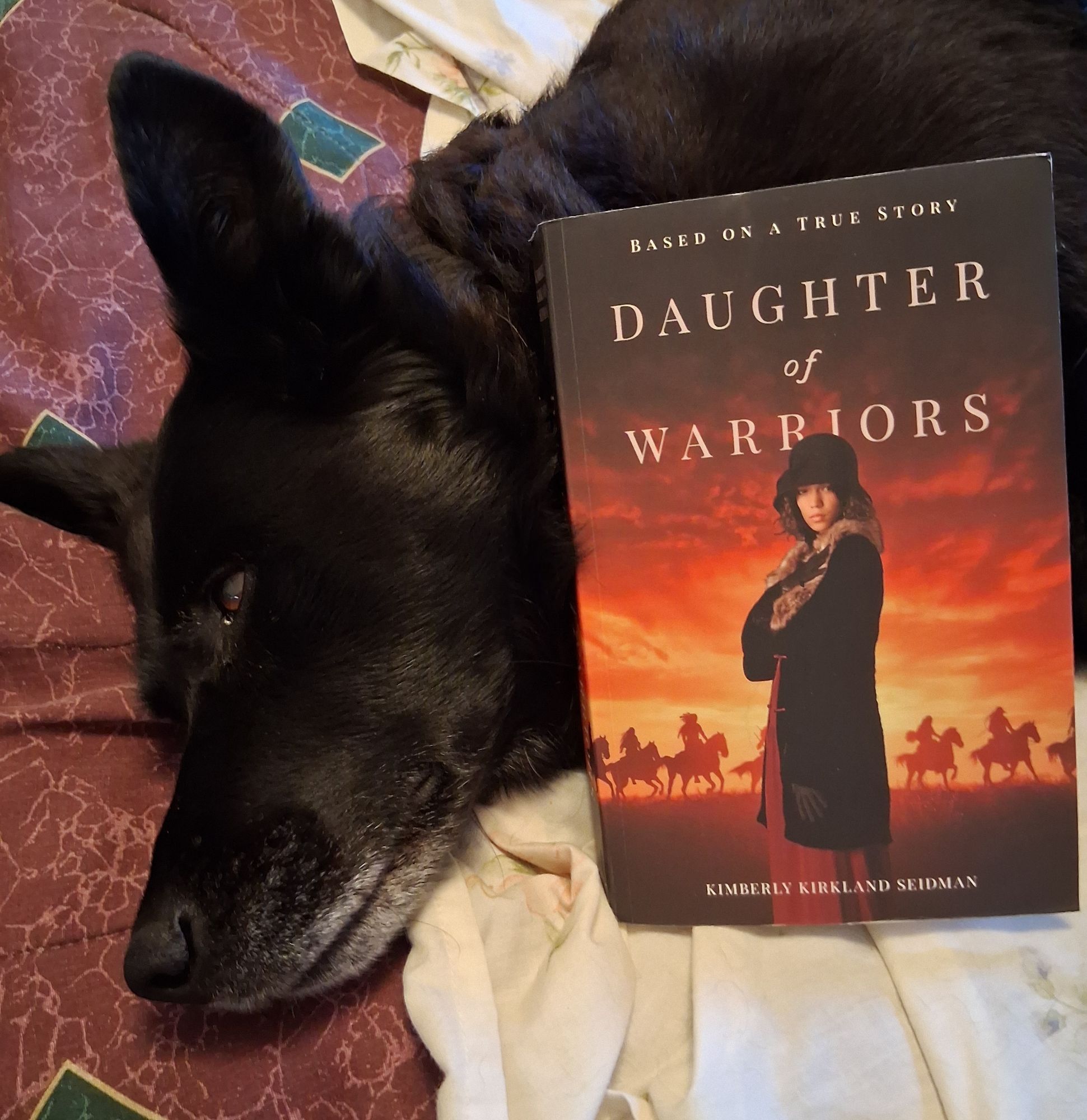
Kimber: So there I was. Comfortably parked in Mom’s lap. She’s parked in this “yawn” chair thingy. (Mom says it’s a “lawn” chair. But she doesn’t fool me!) And she’s reading this “based on a true story” book, Daughter of Warriors. While yawning in that chair overlooking the Strait of Juan de Fuca. That’s on Washington’s North Olympic Peninsula, Toots. Like this:

And this:

Within a stone’s throw of this::

Note: We received a complimentary copy of this book for honest review.

Anywho, we’re parked on this “yawn” chair thingy on a bluebird-sky day, thinking we’ll dip a toe or two into the text. Test the narrative waters. Here’s what we found.

Based on a true story, Daughter of Warriors follows a young Osage woman, Lucy Eagleton, from Pawhuska, Oklahoma, to Kansas City as Lucy searches for an ever-elusive sense of personal safety and security amid the Oklahoma oil rush of the 1920s and beyond.

After a series of heartbreaking losses and tragedies in Book One, Indian Territory,  Lucy and her Irish husband Edward Walsh and their toddler daughter, Genevieve, leave Pawhuska for Kansas City. Book Two, Paris of the Plains, opens as the family arrives in K.C. There, in the thick of the Roaring Twenties, the Walshes encounter “machine politics,” the Cosa Nostra or Mafia and “sophisticated wickedness.”

But safety remains an illusion. The shadows of Oklahoma follow Lucy, claiming those she loves and threatening her young daughter. Caught between her spiritual heritage and the sophisticated wickedness of a world that views her as a “savage,” Lucy must make an agonizing choice to ensure her daughter’s survival.

We found this historical fiction a masterpiece of writing, but a chore to read. More on that in a min, Cupcake. So kindly keep your hair on. First:

For those unfamiliar with the history, this book might be an eye-opener. We found it difficult to stay engaged since the material was already familiar. So Daughter of Warriors didn’t offer much in the fresh perspective department. And while the emotional core is compelling, the repeated focus on similar experiences over and over and over makes the narrative feel slow and redundant.

We also found narrator Loula Long Combs to be jarring. Distracting. Loula is an older white woman who befriends and loves Lucy and hears Lucy’s story. Loula is a pain in the neck. She appears in italics at the beginning of most chapters, jumping in where she’s really not needed. But that doesn’t stop said pain in the neck from narrating and doing the hand-wringing commentating thing every few pages. Worse, Loula just can’t resist telling readers how they ought to feel about Lucy and her story instead of letting readers make up their own minds. Kimber: Seriously, Toots? And Loula’s sackcloth and ashes sermonizing? Kimber again: Gag me with arugula!

Scene stealers: Hawk, an Osage warrior tasked with protecting the Walsh family. Cordelia, child of a Negro mother and Chinese father who flees violence, finds refuge in the Walsh home, and becomes Lucy’s good friend. Chestnut the horse.

At over 500 pages, Daughter of Warriors is a heavy lift. We appreciated the beautiful writing and strong female characters. While the story is emotionally rich, its repeated beats became too predictable and formulaic to keep us engaged. Additionally, the victim-oppressor dichotomy of noble, near-flawless Osage vs. evil, greedy oppressors? It gets old. Fast. (This may even out in later pages. But we weren’t gonna stick around that long.)

Yea, verily. We bailed at about 140 pages. Almost there, but not quite. As in, could not make ourselves turn another page. So we won’t be rating this book. However, we will be offering some suggested titles for further reading:


For further reading (The short list.):

This Tender Land – William Kent Kruger. Read our review here.

The 10 Big Lies About America: Combating Destructive Distortions About Our Nation – Michael Medved

Empire of the Summer Moon: Quanah Parker and the Rise and Fall of the Comanches, the Most Powerful Indian Tribe in American History – S.C. Gwynne. Read our review here.

The Settlers’ War: The Struggle for the Texas Frontier – Gregory Michno

O Pioneers!, My Antonia – Willa Cather

Oh What a Slaughter – Larry McMurty

The Last of the Mohicans – James Fenimore Cooper

Bury My Heart at Wounded Knee: An Indian History of the American West – Dee Brown


2 Comments

Why ‘Scavengers’ Left Us Breathless (3 of 3)

The Rum Runner: The Legend of Captain John Stewart (3 of 3)

By Doralynn Kennedy (Indie author, 2025)

Genre: Fiction/Gothic Romance

Pages (print): 530

Via: Author request

Note: We received a complimentary copy of this book for honest review.

“The only thing they didn’t account for was you and me falling love.”

Picking up where we left off yesterday, we’re diving into the third and final book in The Rum Runer Trilogy today. It’s called Scavengers. To get up to speed, see our reviews of Book One, Cliff House here, and Book Two, Rum Runners, here.

“How many years had he fought to master the sea, only to build something more dangerous along its edge? He had raised Cliff House with his own ambition, poured into it barrels, bribes, blood, sweat, and secrets.”

Case Pharmaceuticals sent master spy Caroline Oliver to get the goods on Edward Kelly, mysterious owner of a sprawling dark mansion squatting on cliffs overlooking the coast of Maine. But Caroline and Edward have formed their own alliance, escaping the avaricious clutches of Cliff House for a cottage in the quiet fishing town of nearby Clifton.

“But Caroline felt the weight in each step: every move forward was a step deeper into a game with rules written by enemies who would never play fair.”

Circling like sharks with blood in the water, Case will stop at nothing to gain access to and control of Cliff House. One swallows secrets and real estate. The other swallows souls.

“Always give your enemy more paper than powder. Paper stalls. Powder kills.”

Caroline and Edward are soon neck-deep in a high stakes game of chess with not just Cliff House, but also a cold-blooded band of avaricious cutthroats headed by the ruthless Marcus Veyron. This guy gives pit vipers a bad name. He uses other people’s lives as steppingstones and corporate cannon fodder.

But in a game “where the board bleeds,” Caroline and Edward have weapons not seen…

Caroline and Edward don disguises and take on new personas in an effort to stop both the house with a taste for blood and the voracious Case vultures determined to snap up the decaying mansion – and Edward’s secrets in the process. And while Edward has survived many brushes with death, he’s not sure Caroline can survive another war with it in this epic page-turner.

“Edward didn’t just survive. He endured, and he fought with a patience born of a century.”

Meanwhile, Edward’s thoughts return to Ruth (see Rum Runners review) and the promises he failed to keep. He will not make the same mistake with Caroline, who is also being hunted by a pack of Case’s hyena-like goons.

“Fear is cheaper than bribery, and more reliable than loyalty.”

This book has more plot twists than Snake Alley, especially as the story steams toward a shattering crescendo.

“Some lies we carry willingly because the truth would drown people we love.”

Together with the two other books in The Rum Runner Trilogy, Cliff House (Book One) and Rum Runners, (Book Two), Scavengers rings down the curtain on an ambitious, three‑part masterpiece. The trilogy is a colossal odyssey — three parts, one unforgettable saga. But these novels are much more. They’re deeper. Older. Wiser. With echoes of another Ruth. A distant Ruth. From Moab. (You’ll recognize her if you know what to look for.)

“When deliverance comes, it may be at our hands, but it will be God who commands it.”

The writing? Well. Glad you asked. The writing paints in lightning, not pastels. Sentences crackle like live wires. The words don’t just tell the story—they grab you by the collar and pull you in. Think intense as a thunderstorm on a Friday night — unpredictable, relentless, and somehow still beautiful.

There’s a lot of fire in this third book. Fires in Caroline and Edward’s cottage in Clifton. Fires to ward off chill. Fires to light dark corners. Popping fires that collapse into ash. Fires burn in the story itself, sputtering and smoking just under the surface. Call it “foreshadowing.”

There’s also a cup with three drops. A choice. For Mary. Keep this safe. For better. For worse. “Together, then. Until the last piece falls.”

Each of the three books in The Rum Runner trilogy can be read as a stand-alone. If this book consisted of just Cliff House or just Rum Runners, that would be enough. But we recommend reading all three novels in succession, as intended and designed. The tail is tucked in neatly at the end, which is the mark of a true professional.

Finally, it’s been awhile since a book moved us a much as this trilogy.  Every page is a heartbeat, every chapter a pulse. It’s an emotional journey that you don’t just read, you live. Indeed, the story doesn’t unfold, it envelopes you like a fine mist. Or a second skin. It wraps you in a sensory experience that refuses to let go. It left us breathless.

I’d grab a copy now ‘fize you.

Our Rating: 5.0


3 Comments

High Spirits & Higher Stakes: A Prohibition-Era Page-Turner (2 of 3)

The Rum Runner: The Legend of Captain John Stewart (2 of 3)

By Doralynn Kennedy (Indie author, 2025)

Genre: Fiction/Gothic Romance

Pages (print): 530

Via: Author request

Note: We received a complimentary copy of this book for honest review.

We’re picking up where we left off yesterday with a review of the second book in the three-novel collection, The Rum Runner: The Legend of Captain John Stewart. Here’s our review of Book One: Cliff House. (Kimber: I’d check that out, Toots. It’ll give ya some important back story.)

So, Mom and I? We figured we’d just dip a toe into Book One. Like, test the narrative waters. Then get to Book Two when we can. Cuz, our TBR pile looks kinda like Mount Rushmore these days. Or maybe the state of Alaska.

Just shows you what we know.

After finishing Book One, Cliff House, we were itchin’ to dive into Book Two, Rum Runners. Like, Do Not Pass Go. Do Not Collect $200. So, we did. The next day.

Yep, we thoroughly enjoyed Cliff House. But guess what, Cookie? Book Two, Rum Runners, is even better. I’ll let Mom ‘splain. Ya might want to buckle up.

He’s caught between the two things he loves most – the empire he’s built and the woman he loves. John Stewart is being pulled in opposite directions that he can’t reconcile in this sweeping gothic romance set on the New England Coast.

“Not all houses are for the living.”

John Stewart is an enigmatic kinda guy. Taciturn. Passionate. Mysterious. We kept seeing Jay Gatsby. Or maybe Edmond Dantes. And a little of James Clavell’s Dirk Struan of Tai-pan. A dash of Rhett Butler. And Stewart’s main squeeze in Book Two, nurse Ruth Wilson? We kept seeing Dickens’s Esther Summerson of Bleak House.

Well. Rum Runners opens 100 years before Book One. An exhausted nurse peers into a tempestuous sea in the midst of a raging storm, searching for any hint of shipwreck survivors. Survival is something Ruth Wilson knows well. Half her town is gone due to a deadly flu epidemic, including her family and most of her friends and neighbors. But in the raging storm she finds another survivor: Captain John Stewart.

“Revenge makes widows where it should only claim enemies.”

Once he’s healthy again, Stewart contacts Ruth and asks her to come to his Connecticut estate, Marshwood Manor, to care for his diabetic mother. Once there, Ruth meets the kindly and steady Dr. Michael Best (echoes of another Dickensian character, Tom Pinch of Martin Chuzzlewit.). Together, Ruth and the doctor oversee the Stewart matriarch’s care. The doctor asks for Ruth’s hand in marriage. She is touched by his kindness and quiet, unfettered steadiness. Ruth is also unsettled by “men with rifles in the roses” at Marshwood Manor. And what’s up with the little girl who isn’t really there?

“Ruth found herself suspended between the two: the quiet ward of Dr. Best, where one might count a lifetime in the faithful return of spring blossoms; and the reckless blaze of John Stewart, where one might live a single year and yet feel it outweighed all others.”

Ruth chooses to join John Stewart at the new house he’s building on a cliff in Maine. And “The promise she gave a dying woman was a chain that pulled tighter the more he disappeared.” Can Ruth keep her promises to John’s dying mother without losing her own soul?

“She thought she wanted glitter. What she really wanted was grace.”

Book Two explains how and why John Stewart got into rum running. And the origins of Cliff House, which is really two houses. Cliff House above is all show. Chandeliers. Polished wood. A band and a ballroom. Cliff House below is hidden doors. Narrow, slick staircases. Deliveries at odd hours. Shadows. And while Cliff House remains a formidable character in Book Two, it’s not as central as it was in Book One. So, make sure you read both, okay?

The tone of Rum Runners differs a bit from Cliff House. The latter is more cerebral. There’s plenty of action in Rum Runners. For example, after a duel to the death over smuggling supremacy, Stewart’s criminal empire grows. It spreads from Main to Chicago, “from coast to coast: bribes paid, rivals buried, men bought for loyalty or silence.”  

We loved how the author weaves echoes of Book One throughout Book Two: A woman in pink. Mercy with a mouth like a trap. A cup with three drops. A flask and water from a cavern pool. One, two, three. One, two, three.

“Memory is an animal that will not be tamed.”

As in Cliff House, superb writing and skillful storytelling are the watchwords for Rum Runners. The author’s metaphors remain as sharp as a chisel carving stone. Her similes sparkle like embers in the dark. The narrative makes readers feel like we’re tip-toeing into a shadowy world of secrets where faint whispers curl through cracks in the walls and floorboards are full of breaths held too long.

The story races forward with the precision of a seasoned conductor, keeping the beat tight and the tension high. It’s a brisk, expertly paced journey where every word is a deliberate choice, every scene a calculated advance.

And… we’re not through yet! Be sure to keep an eye out for our review of Book Three: Scavengers. Coming TOMORROW!

Our Rating: 4.5