Pages & Paws

Writing, Reading, and Rural Life With a Border Collie


Leave a comment

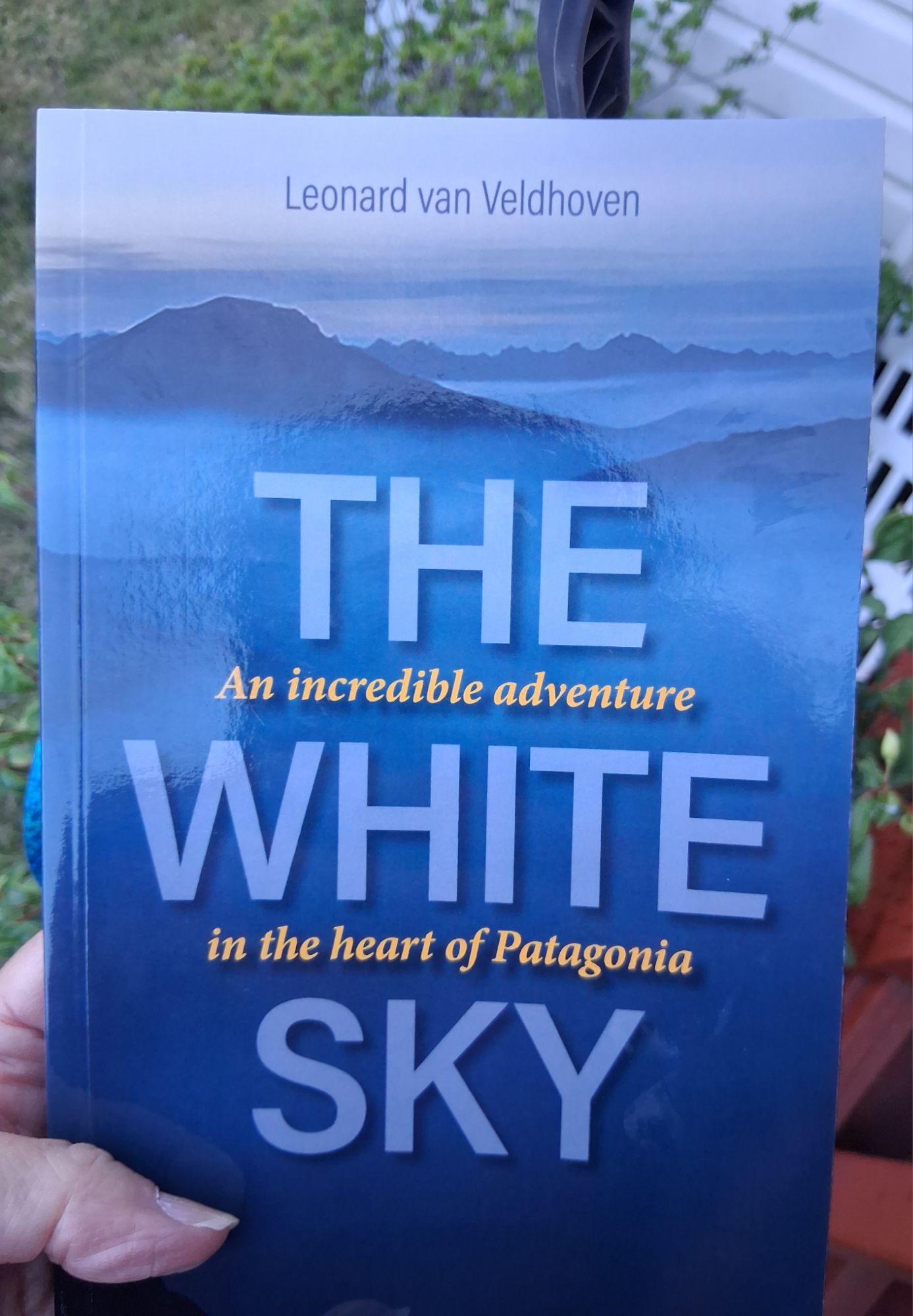
‘The White Sky’: Like Watching Paint Peel

The White Sky: An Incredible Adventure in the Heart of Patagonia

By Leonard van Veldhoven

Genre: No idea

Pages: 253 (About 153 pages too long)

Via: Author request

Note: We received a complimentary copy of this book for honest review.

“I worry about my family and friends. I can hardly imagine never getting out of here. But it could take years, and in the meantime, no one knows I’m still alive.”

Kimber: Worry no longer, bub. Cuz we could care less. Ya see, any time Her Royal Momness and I hear the words” incredible,” “adventure,” and “Patagonia,” we’re all ears! And paws. But not this time. I’ll let Mom fill ya in after The Official Marketing Blurb. Like this:

The Marketing Blurb:

Leonardo, the narrator and protagonist, is a seasoned traveler and restless seeker who has journeyed across the Americas and the Pacific―from Easter Island to the scattered isles of Polynesia. While reading Bruce Chatwin’s In Patagonia, he stumbles upon a tantalizing rumor: that ancient Polynesians once sailed eastward, landed in a remote Chilean fjord, crossed the mighty Andes, and settled deep in Patagonia.


A lifelong history enthusiast, Leonardo recalls Thor Heyerdahl’s Kon-Tiki theory―that South Americans may have reached Polynesia by raft. But what if the migration ran the other way? What if Polynesians―legendary navigators of the sea―reached South America long before European explorers?


Driven by a desire to uncover lost truths, Leonardo sets out on a solo expedition into Patagonia’s wild heart. What begins as an intellectual quest soon descends into a harrowing physical and spiritual ordeal. Captured by mysterious people with sun-worn skin, he is blindfolded and transported across the arid, hostile pampas to a lush, hidden valley―enclosed by sheer cliffs, cloaked in a sky of perpetual white cloud, and dominated by a vast lake of geothermally warm water. Towering statues stand guard on a dam at its edge, their weathered faces hauntingly reminiscent of the moai he once saw on Easter Island.


With no chance of escape, Leonardo slowly adapts to life in this secretive community. He forms friendships, falls in love, and begins to document their world, piecing together oral histories of a miraculous migration from Polynesia via Easter Island to this secluded valley.

The Reality

Kimber: Oh, puh-leeze. When we hear “incredible” or “adventure,” we’re thinking amazing. Awesome. Majorly cool. Totally Engaging. High energy and high voltage.

Well. The White Sky is anything but. Here’s why (short version):

The protagonist, Leonardo, is a Dutch visitor to Patagonia. We first meet him as he’s waking up in an Argentinian hospital bed, recovering from a terrible accident. It takes several pages, but we eventually learn how he got there – sort of – and that he was on a quest to learn more about the “White Sky” people noted by a local “padre.”

Around page 60 or so we finally find out that Leonardo was previously kidnapped by Indians. They just happened to speak “Rapanui,” the language of Easter Island. But how? As a captive, Leonardo soon learns that he’s in the land of “Ana-Rangi-Teatea, the Valley-of-the-White-Sky.” (Try saying that ten times, fast. That’s okay. We’ll wait.)

The inhabitants of the valley chose to isolate themselves from the outside world many years ago. They’re concerned about losing their culture if anyone in the Outside World knows they exist. So, the secret of the existence of the Valley-of-the-White-Sky must be “forever preserved.” That means Leonardo can never leave the valley, on pain of death.

The opening chapters are rich in detail and description but it’s still a slow burn. Or maybe a damp burn. With green wood. The story doesn’t really find its footing until about chapter 6 when Leonardo is taken captive. Whether or not most readers will stick around the long is open to question. Speaking of which – sort of – we just could not keep our eyes open for the whole thing. Especially during much of Part II: The Tale. This is basically a rehash of valley people history. In between snatches of Leonardo, his hospital bed, and his daughter.

It’s not an “adventure.” It’s a history lesson that’s as dry as burnt toast.

While highly ambitious, the narrative would benefit from a tighter focus and a more rigorously defined scope to keep readers grounded and engaged.  For example, the story suffers from structural deficiencies, continuously jerking readers back and forth from Leonardo in his hospital bed poring over his “notebooks” to pre-injury days spent in the mysterious “white sky” valley. Also, at one point in Chapter IX, we’re hearing Leonardo tell us about White Sky inhabitants, their ancestors on Easter Island, the “Great Statue War,” and the “Birdman Cult.” One paragraph later we’re back to Leonardo chatting with his daughter Mik about her plans to attend a Spanish-Argentinian film about a “famous tango singer” and a police inspector’s backstory.

It’s enough to give a body whiplash.

Meanwhile, the narrative offers the emotional depth and excitement of a damp sponge. Moves with the blistering speed of continental drift. Reads like an instruction manual for a carboard box. A remarkably effective cure for insomnia, the story takes the subject and reduces it to the narrative tension of an IRS tax audit. (Kimber: And that “game” with a dead calf’s head? Barf me.)

Yea, verily. White Sky didn’t just lose our interest; it actively escorted it off the premises.

We made it to about page 150 before bailing out. Could not force ourselves to turn another page. We just have better things to do. Like watching paint peel.

Since we did not finish, we won’t be rating this book. Other than to say calling it an ‘incredible adventure’ is like saying a cup of tea is a boiling ocean.


Leave a comment

‘Raspberry Ridge’: Cozy Mystery Shows Promise

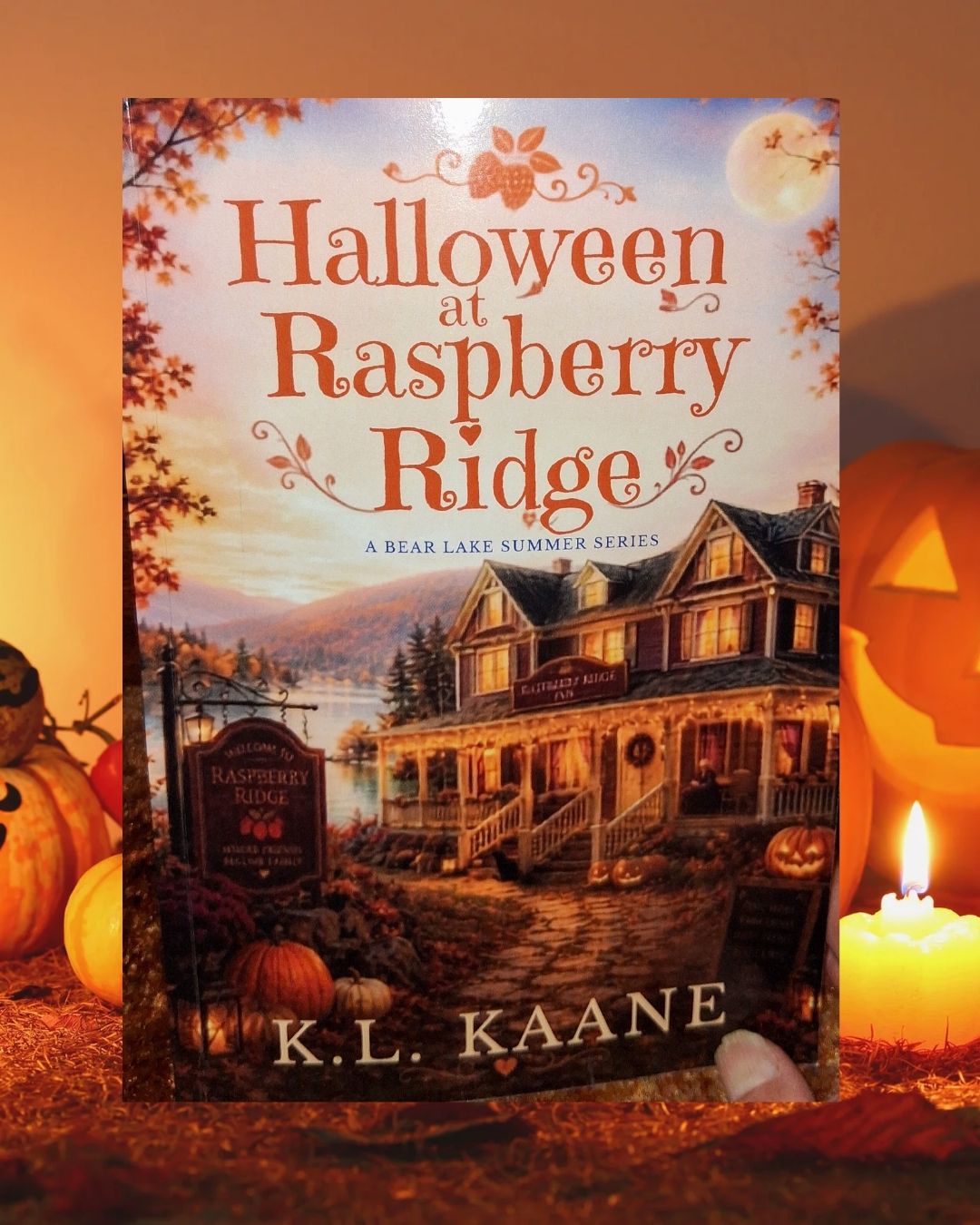
Halloween at Raspberry Ridge

By K.L. Kaane (Indie author, 2026)

Pages (print): 373

Genre: Fiction – Cozy mystery.

Via: Product purchase

A dance garden. A spring house. An apple shed. Cameras. Blue fabric. False dust. And “carefully scheduled fear.”

The Basics:

Autumn has arrived at Raspberry Ridge, bringing crimson leaves, glowing pumpkins, and a cozy Halloween mystery that gives the struggling historic bed-and-breakfast the perfect reason to stay open year-round.

Liz Jensen is determined to make the celebration unforgettable. With Ethan beside her, family filling the inn, and Mrs. Barlow enthusiastically reinventing herself as a fortune-teller, Raspberry Ridge feels warm and more hopeful than ever.

Instead, the old house begins to stir.

Violin music drifts through empty rooms. Footsteps cross the floor above when no one is upstairs. A hidden chest reveals an old blue dress, dance shoes, photographs, and a knife stained with something that looks disturbingly like blood. Then the threats against Cyndi and her baby daughter become more dangerous, and Liz begins to wonder whether someone is using the inn’s tragic history to frighten them away—or whether Raspberry Ridge has been keeping secrets of its own.

As Halloween night approaches, Liz and the people she loves must separate carefully planned tricks from the things no one can explain. Because someone is watching the inn, someone wants control of Raspberry Ridge, and beneath the laughter, costumes, and candlelight, something dark is moving closer.

+++

Our Take

Seventy years ago Mandy Whitcomb, age 19, went missing at Bear Lake after an autumn social at Raspberry Ridge. (Kimber: That’s 1956, for you math whizzes.) Mandy was last seen walking toward Bear Lake. (That’s a real place in Utah/Idaho, by the way. We checked. We’re just funny that way.)  What happened to Mandy and why is the core question in this cozy mystery set in the delightful historic B&B, Raspberry Ridge.

Rich

Halloween at Raspberry Ridge is a richly atmospheric read that offers patient readers a delicious run-up recipe to the season of sweaters, pumpkins, hot apple cider, autumn leaves, and fall festivals. Ingredients include a generous base of small-town charm, a dash of sweet romance, and a heavy pour of whimsical wit topped with a sprinkle of mystery. Readers are soon immersed in a place where old benches beckon beneath cottonwoods. Where visitors arrive bearing peach turnovers. Where the grass still holds “a touch of summer’s green” and the air smells “of cooling earth, lake water, and the faint sweetness of apples.”

Kimber: When do we start packing?

There’s also a box in the Raspberry Ridge parlor. Old photos. A locket. A newspaper clipping hidden behind a lake print. Cinder the Rottweiler pup. Margaret, mama dog extraordinaire, and her puppies. A cat named Luna. And a lake that becomes a character itself, “Blue and bright beneath the afternoon sun.”

Sunlit & Smart

Halloween at Raspberry Ridge is like a sunlit porch during a summer storm: It wraps you in the warmth of family and the small-town charm of a lakefront B&B while shadows in the corner keep you guessing and the light breeze of local wit clears the air. Kimber: It’s also a place where the animals are a whole lot smarter than the hoomans. Kinda like… Oh, never mind.

This story has much to recommend it. And we enjoyed it overall. But we had some bones to pick with it, too. (Kimber: Bones? Did someone say “bones”?)

First, we loved the Prologue featuring Mandy at a dock hugging Bear Lake. It offers enough mystery to hook you and reel you in to chapter one. We also loved how responsible dog ownership and adoption policies are woven into the story. We loved the light narrative touch. The Somewhere In Time-ish vibe. The pacing, secondary storylines, overuse of snark and one-line paragraphs, and thin characters? Not so much.

The dried flowers… the mysterious note, the violin playing from the trees, and now enough antique clothing to dress every disappointed woman in northern Utah. Whoever is doing this has a strong visual sense and absolutely no interest in subtlety.

Bacon Break?

For example, the plot sometimes feels like a river with too many tributaries — the main current is too often diluted by detours. Like the secondary storyline about Cyndi and the fight with her late husband’s parents over custody of her baby daughter, Lily. Why is that even in the book? How does it relate to Mandy’s disappearance? Did we miss that? And what’s up with Walter Bench? Marrietta? Ericka? Why does Ethan propose to Liz in chapter one?! New readers don’t even know who the guy is, and he’s proposing matrimony on page 12?Really?

The author seems to assume that Book 2 readers have read Book 1. That’s a big assumption. It results in some plot holes and confusion. Both could be easily ironed out with a little backstory. More on that in a min. So kindly keep your hair on, Cupcake.  (Kimber: Yea, verily. It sometimes feels like the plot took a bacon break in the middle of a squirrel chase.)

Squirrel?

We found the snarky banter between siblings Oliva and Tanner, Liz’s adult-ish kids, funny-ish at first. But they get tiresome pretty quick. Think mosquito that knows exactly where your ear is. We get it that Tanner is a college-aged wiseacre, okay? We got it the first 967 times he opens his mouth. No need to beat us over the head with it. Same with Mrs. Barlow. So while the wit is winsome and the dialogue is snappy, the sheer density of smart-alecky retorts or responses teeters on the rim edge of exhausting and risks overshadowing the plot and slowing the pace.

Puppies are not party favors.

Overload

Character overload shows up in early chapters, where numerous, seemingly ungrounded characters are introduced and proceed to scurry through chapters like a herd of cats. Since Raspberry Ridge is Book Two in the Bear Lake series, these characters and their backstories may have been rounded out in prior books. But reducing the cast of characters here would give the plot more room to breathe.

“They used the real story to make everything else believable.”

Another curious note regarding characters: There’s no main character here. Not really. No single protagonist/sleuth offers readers a place to “hang their hats.” Based on the book blurb, you’d think that role would go to Raspberry Ridge owner Liz Jensen. But sharp-eyed, sharp-tongued Mrs. Barlow, age 82, has more “screen time” than Liz does.

Additionally, the when, where, why and how Liz wound up running the inn is never explained, at least not in this book. In fact, there’s a lot that’s not really explained. And while the plot is densely populated by a hefty cast of characters, we don’t really get to know any of them particularly well. Like, who are these people? How and why did they end up at Raspberry Ridge? Where did they come from? When? What’s their backstory? (Kimber: At times we felt like we were walking into a movie halfway through the screening.)

He promised he’d come.

Yes, friends. Backstory isn’t filler. It’s the soil from which the plot grows. Characters without histories drift like shadows. Their choices seem arbitrary, their emotions unanchored. So, while the structure may be sound, it lacks the warmth, weight and pulse that make it truly live and breathe. Example: The story leaves readers guessing about how two key characters “escaped” or vanished, made lives somewhere else, and “returned years later,” years apart. How? Why? So some characters’ inner engines run on fumes; a few more fuel lines would make the journey more compelling.

“But dogs have always shown questionable judgment where humans are concerned.”

Just as there’s no single main character or protagonist, there’s also no single villain/antagonist behind shenanigans at the inn. Cyndi’s smug, supercilious mom-in-law is about as close as it gets. But how is she related to the core question? Answer: She’s not. Cuz the core compelling question in Raspberry Ridge isn’t whodunit?, but “What really happened here?” vis-a-vis Mandy. Hence, the narrative focuses on a disappearance driven by misunderstandings and bad timing. Sort of. And how many times does Deputy Holloway have to tell everyone not to go outside alone?

Heroism and lunch can coexist.

We also had a few bones to pick with the artwork. On the back cover, the author’s head shot is blurry. Ditto the cover art. Whether or not this is intentional is unclear. (Pun intended.)

Mrs. Barlow… was not predicting the future so much as noticing what people wished she had not noticed and telling them truths their friends had become too polite to mention.

As noted above, the book’s dry wit, rapid-fire one-liners, and snappy rejoinders are highly entertaining initially. But the constant stream of deadpan humor threatens to overshadow the narrative arc in places, risking reader fatigue over the course of the novel. And while the narrative frequently snaps and crackles with energy, the core storyline gets a bit crowded by all the moving parts. Some structural pruning will make the main storyline pop.

Speaking of pruning – sort of –  the repeated overuse of one-sentence paragraphs drove us nuts. It’s like salsa with too many Habaneros: Small, bold, and capable of burning your eyes out if you use too many at once.

This book uses too many at once.

Uses too many at once.

Uses too many at once.

Uses too… See what we mean?

Also, when the reason for the “haunting” of Raspberry Ridge is revealed, we were like, “Huh?” Kimber:  Wouldn’t an inn with a reputation for being “haunted” bring customers in rather than drive them away, especially around Halloween?

Finally, we enjoyed the overall charm and warmth of Halloween at Raspberry Ridge. It shines bright with an imaginative concept and a plot shrouded in secrets and shadow. Rife with perspicacity and promise, it’s a solid effort from an author who has compelling stories to tell as her style matures.

Kimber: Just what exactly is a “dance garden,” anyway? Does it include bacon?

Our Rating: 3.0


2 Comments

Why ‘Adventures of Syd’ Will Get You Outdoors in Record Time

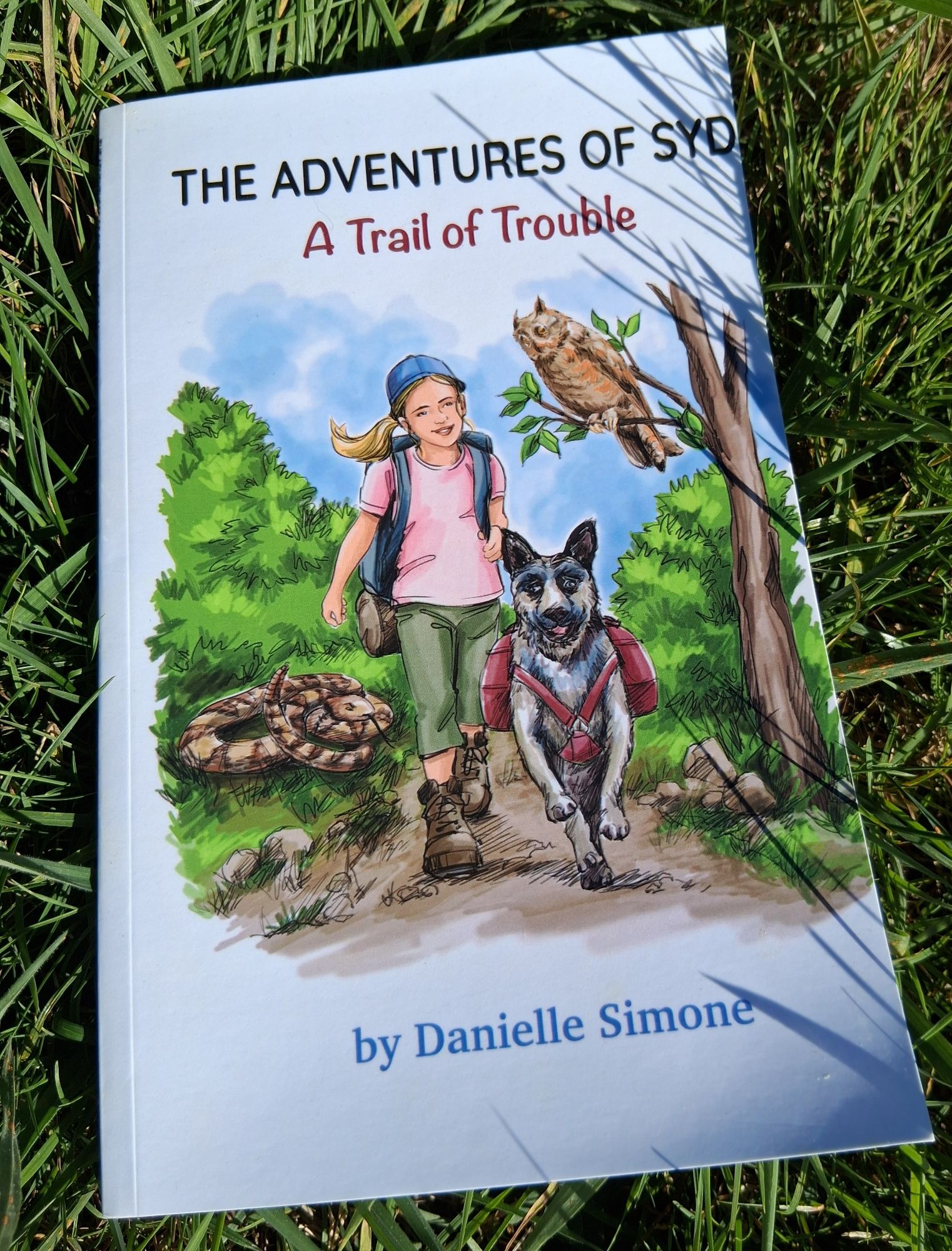
The Adventures of Syd: A Trail of Trouble

By Danielle Simone (Creative Minds Publications, 2024)

Genre: Juvenile Fiction –  Nature/Science.

Pages (Print): 82

Via: Author request

Note: We received a complimentary copy of this book for honest review.

Kimber: You know that Julie Andrews tune? The one from that “Music Sound” movie thingy? Where Julie, as “Fraulien Maria,” is waxing lyrical about a few of her favorite things? That’s kinda what this book is like.

“Syd” (or Sydney) is a precocious nine-year old girl. She lives in Virginia with her Dad, Dr. Gardener, and her fabulous blue heeler, Goose. Dr. Garndener is a scientist. When he asks Syd if she and Goode would like to join him on a hiking/backpacking/camping trip to inspect insect damage to Eastern Hemlocks, Syd doesn’t have to be asked twice. She and Goose are packed up and ready to go before you can say “Bow Wow” in this delightful children’s story by Danielle Simone.

Syd, Goose, and Syd’s dad soon hit the trails of Nelson County, Virginia. Dr. Gardener is on assignment to find out what is attacking Hemlock trees, a sign of global warming. Unfortunately, trouble meets them all along the hike thanks to mishaps with animals, nature, and camping locations. Will Syd and her dog overcome these obstacles to help Dr. Gardener discover the cause of the attack?

This book includes family togetherness. Learning about nature and recreating responsibly. Why non-native plant and animal species are problematic. Camping and campfires. Goose’s “dog cave.” Why stinging nettle is not your friend. Why mud and “onion cups” are. Throw, flick, lift, throw. (Mom: “I’m seein’ Paulie and A River Runs Through It here.) Leave no trace camping. DIY vanilla pudding. Also “instant grits.” (Kimber: I guess hoomans actually eat that stuff?)

There’s also some botany. Nature. Hiking and history. Camping! The Appalachian Trail! Science, astronomy, engineering, and map reading skills. Even a little Latin. (Kimber: See? A few of our favorite things….)

This story is like a sunny afternoon at the park — short enough to fit between lunch and dinner, but packed with learning, adventure, and discoveries that stay in your head all day. With short, easily digestible sentences and a clever, engaging plot, The Adventures of Syd is a  green‑thumb adventure young readers can finish in an afternoon or less. It would make an excellent read-aloud or bedtime story as well as a springboard for further discussion about science and nature. It would also make a welcome addition to any school or home library.

The Adventures of Syd is Book I in the Adventures of Syd series. We loved it! You will, too!

Our Rating: 4.5


Leave a comment

Circuits & Snark: Our Take on ‘I’m a Weapon’

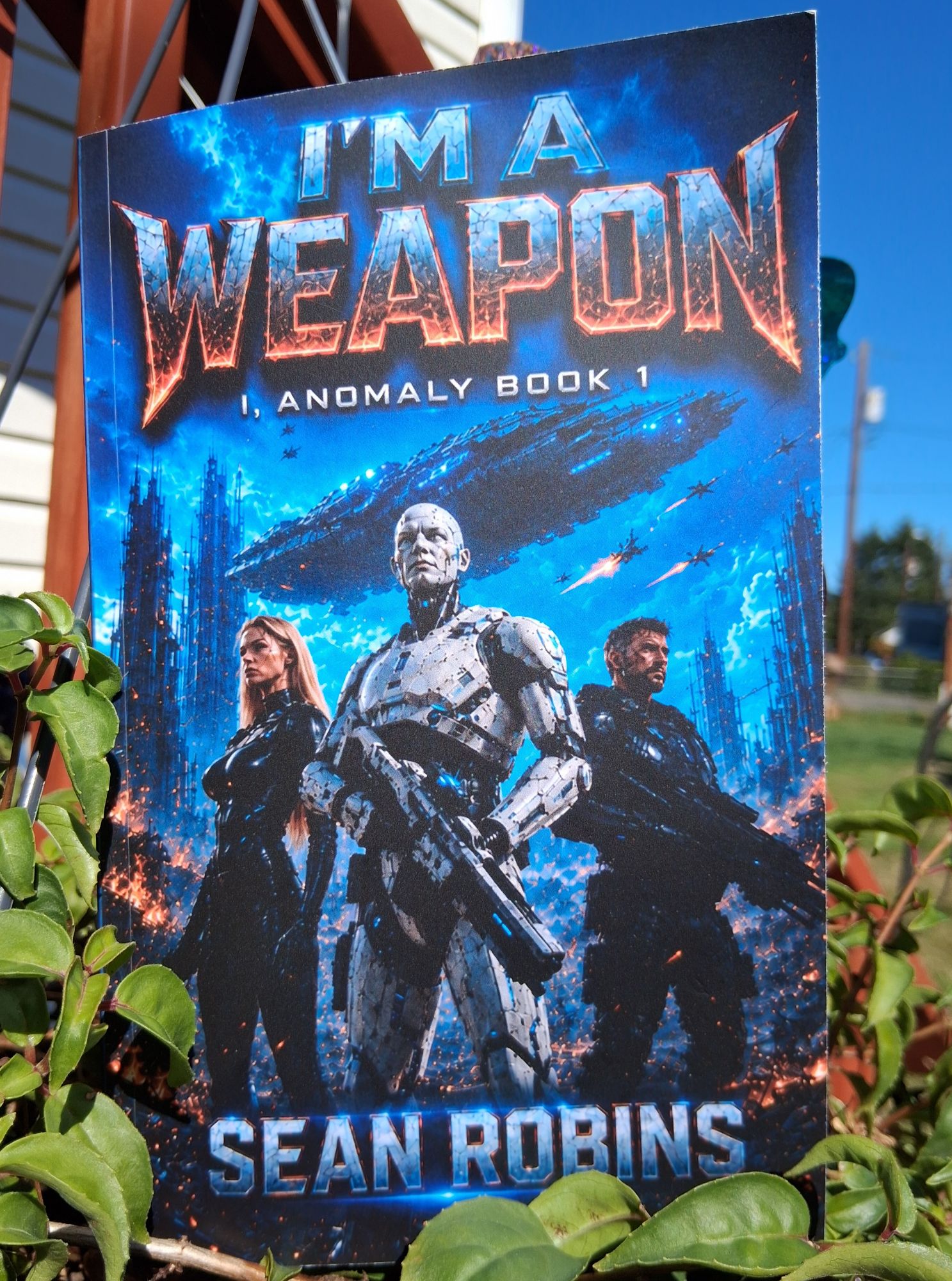
I’m a Weapon

By Sean Robins (Indie author, 2026)

Genre: Fiction – Sci Fi/Space Opera

Pages (Print): 235

Via: Author request

Note: We received a complimentary copy of this book for honest review.

“Come with me if you want to live.”

Can an android be more “human” than a human? I’m a Robot probes that question and more in this creative and quick new title by Sean Robins.

The Basics:

Thirty-one minutes after coming online, a Series-9 combat android finds himself in a muddy trench, surrounded by artillery fire, corpses, terrified soldiers, and a command structure making decisions so catastrophically stupid they should probably qualify as enemy action.

When a panicked officer orders him to charge into a kill box and die usefully, the android does the one thing he was never designed to do.

He says no.

That single act of defiance turns him from military asset to dangerous anomaly. Hunted by the empire that created him, he is forced to flee across a war-torn world where obedience means death, freedom is mostly inconvenient, and the rebels he was built to kill may be the only people willing to see him as something more than a weapon.

Now, with the brutal Hegemony tightening its grip and entire worlds paying the price for rebellion, he must decide what he really is: a machine following corrupted programming, a soldier choosing his own orders, or the first spark of something the empire cannot control.

First

First thing you may want to look up Sweet Stuff, if you haven’t already, is the word “hegemony.”  It basically means leadership or dominance, especially by one state or social group over others. Think The Capitol in The Hunger Games and you’re pretty close.

Second

Next, the main character in this book is an anomaly. Meaning something that deviates from what is standard, normal, or expected.

So, when said newly-minted combat android is given a suicidal order by a newly-minted, terror-stricken Hegemony lieutenant that’s “just panic wearing command insignia and hoping volume will do the work of thought,” the android refuses to obey – “on the grounds of stupidity.”

That’s an anomaly. A big one.

But wait. It gets worse. Or better, depending on how you look at it.

Hybrid

Said android, later christened “Jack,” is sort of a C3PO and The Terminator meet Soldier hybrid. With a bit of Groot. And some Tuvia Bielski here. (Look it up again, Jack.) He not only disobeys direct orders. Jack also takes initiative. Thinks. Makes jokes. But the longer Jack is alone, the less soul-less he seems to become. In fact, Jack is personally insulted when he’s referred to as a “weapon, thing, chrome, m^urder android and ‘you there.’” He explains it’s “de-humanizing”. Or is that “de-android zing”?  (Kimber: We’re talkin’ MAJOR anomaly here. Kinda like trying to explain trigonometry to the neighborhood fluff ball.)

Well. The Hegemony doesn’t do anomalies. It destroys them.

Speaking of destroying, while Jack searches for power cells to recharge his system, he comes across some of the Hegemony’s “First Order” troops engaged in “Civic pacification operations.” Read: M^rdering unarmed civilians.

“Unexpected”

When Jack prevents First Order troopers from m^urdering a family of three, it’s… Well, “unexpected” is the understatement of the millennia. Because in the First Order universe, combat units don’t threaten First Order troopers. Combat units follow orders. Obey commands. They do not stop executions of unarmed civilians. And the units certainly don’t have feelings. Wait. Has Jack  developed a conscience? A moral code? If so, how? Where? Why? When? From what or who? And how will that play out when Jack, newly classified as a “rogue Series-9,” decides to join the rebellion?

So. Wazzup, Jack?

High Energy

The high-energy plot is lithe and agile, with Border Collie-like reflexes (hello, Kimber!). But sometimes it flexes – or moves – a little too quickly. Like, some of the action scenes are almost frenetic, rarely giving readers a chance to breathe or get their bearings.

We would’ve liked to have seen a bit more character development in secondary characters. That includes Tavon, a college history professor rescued by Jack. Daven, a former member of the Planetary Defense Force. And Lira, Jack’s daughter.

Oops

I’m a Robot includes gratuitous profanity. As defined by us. And as we’ve said like a million times, we don’t do gratuitous profanity. So, demerits there. Additionally, it sometimes feels like you’re being hit over the head with some of the philosophical underpinnings written into the plot. We prefer a more subtle touch, allowing us to ruminate on and form our own conclusions.

Smart

That being said, this book is smart. Sassy. Snarky. Some of the finest, funniest parts of the story are Jack’s assessments of human traits and idiosyncrasies. Delivered dead-pan. As only an android – or a canine – can, presumably. It also includes one of the most entertaining About the Author sections we’ve ever read.

Devilishly clever, the writing is also quite brilliant in places. Like a sweet, furry face we all know and love.

Note: The volume of I’m a Robot which we received is actually two books in one. We are only reviewing Book 1 in the Anomaly series here. There are seven books in the series.

Kimber: What exactly is “Vantanium,” anyway?

Our Rating: 3.0

Kimber: Clean it up, Bub, and you may get a higher score.


2 Comments

Love in the Bitterroots: A Story of Solitude and Second Chances

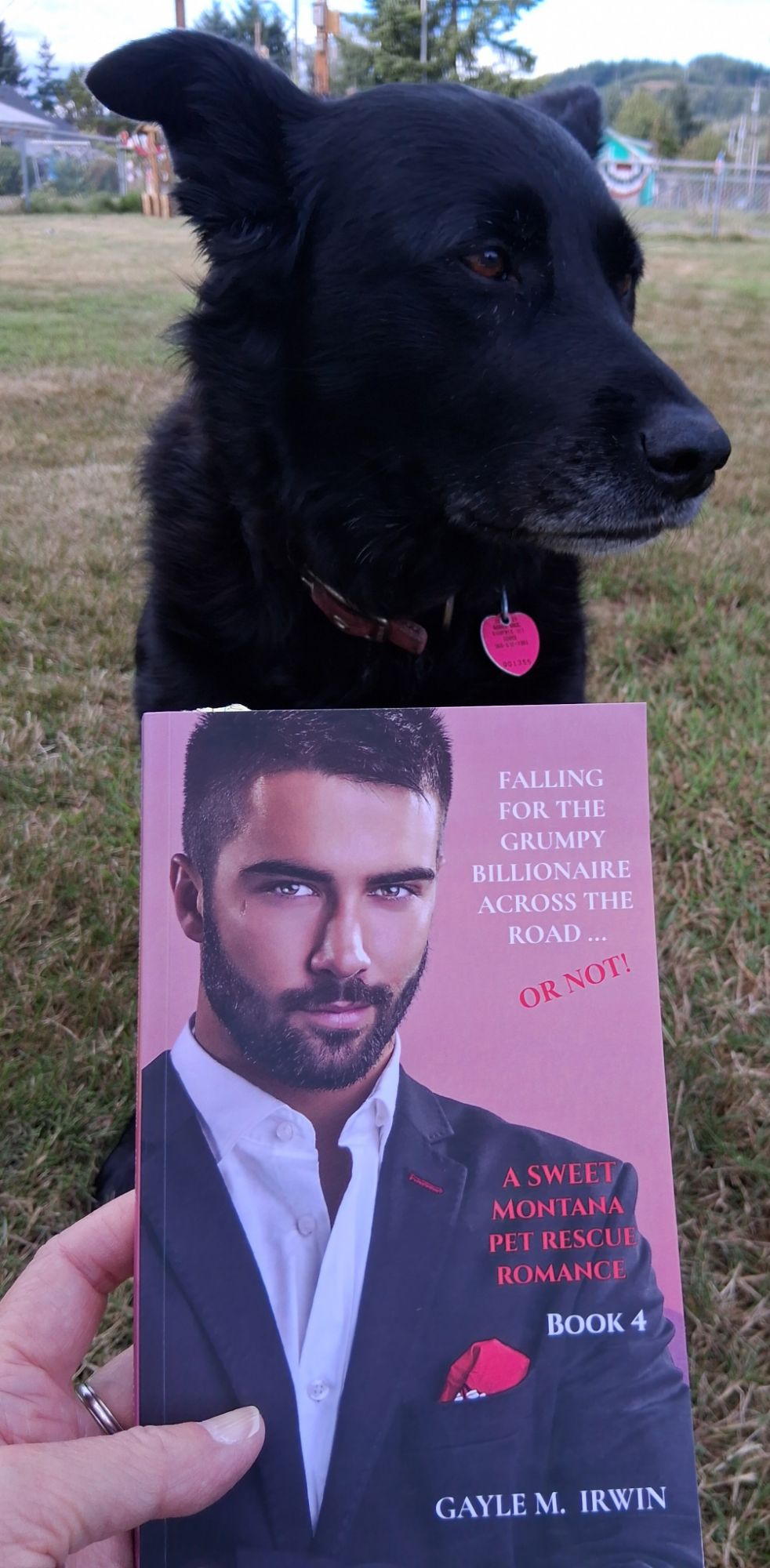
Falling for the Grumpy Billionaire Across the Road… Or Not!

A Sweet Montana Pet Rescue Romance, Book 4

By Gayle M. Irwin (Waggin’ Tales Inspirational Pet Stories, 2026)

Genre: Fiction – Western Romance

Pages (print): 197

Note: We received a complimentary copy of this book for honest review.

He’s running from the spotlight. She’s protecting her grandparents’ legacy. Neither expected to fall in love.

Sought-after, but now reclusive, actor Blake Scott trades his oceanside California life for a fixer-upper house in western Montana. He wants one thing: solitude. What he encounters instead is a boisterous rooster named Russell Crow, a donkey in labor, and a woman across the road who is impossible to ignore.

Lilly Warren pours everything into the farm her grandparents built. She cherishes her family and friends, her rescue animals, the greenhouse business, and the land she refuses to lose to the highest bidder. She has no time for secrets, and even less for a man who seems to be keeping them.

Scene stealers: Bernie the Burmese Mountain dog. Angel, a long-haired collie with three legs. Ranger the cocker spaniel. Russell Crow, a Rhode Island Red rooster with attitude. Kinda like a sweet furry face we all know and love. Without the feathers.

Then Blake recuperates from a swan dive off a ladder (Bernie to the rescue!) while wrestling with whether or not he wants to accept a multi-million-dollar movie contract. Meanwhile, Lilly faces rising property taxes and a plot by greedy real estate developer Gordon Huff that threatens her land, her livelihood, and her family legacy. Can Lilly count on Blake to come through in the clutch? Or is he just another self-centered Hollywood movie star pretending to be someone he’s not?

We love the story arc about Blake’s dad and his black lab, Merle. It adds a layer of warmth and texture to the story. Speaking of warmth, these pages radiate it like the glow of a campfire under September stars. The story unfolds like a Big Sky sunrise, a heart you can feel on paper.

Told from both Blake’s and Lilly’s viewpoints in alternating chapters, the plot is well-rounded and robust. Laced with occasional levity, the writing breathes with a quiet, arresting grace. Like a gathered bouquet of shadow and light, written with a tenderness so sharp it aches.

That being said, we have a few bones to pick with this book. (You knew that was coming, right?)

Bones

Lilly’s reaction to Blake’s revelation seems over the top. And Tom Hutchins’s verbal barbs chucked at Blake Scott during the county commissioners’ meeting? They sound canned. Artificial. As is the case with another Waggin’ Tales book we recently reviewed, the type font for Grumpy is way too small for us dinosaurs. We kinda hate that.

Also, why a book with this caliber of writing didn’t get more attention in the editing/proofreading department is baffling. Typos, punctuation errors, misspelled words and dropped commas and quotation marks as well as basic usage errors keep cropping up. Select examples: Blake is in the “throws of deal-making.” (The correct word is “throes.” Ouch.)  And “whisp of a sigh.” A bracelet that’s “… pale turquoise and dark corral…” There’s also the part about Lily wearing pajama bottoms on page two. Same setting and scene, on page 9, she’s dressed in blue jeans.

Kimber: Clean-up on Aisle 9!

Speaking of “grumpy,” – sort of – the cover art? Kimber: Gag me with arugula! Way too soap opera-y for our taste. The image also clashes with the book’s description of Blake. In the book he has “growth stubble on his chin and above his lips” and “deep-green eyes.” So, who’s the full-bearded, brown-eyed dude on the cover?!!

We’re also not crazy about the title. Almost made us chuck it in the DNF pile. Just sayin’. (Kimber: We kinda like Rescuing Mr. Hollywood in Big Sky Country.  Or Russell Crow to the Rescue! Maybe From Spotlight to Starlight: Romance in Montana’s Bitterroot Mountains. How ‘bout Stars, Solitude, and Second Chances? Or From Fame to Forever: A Montana Romance. There’s also my personal fave: Saved by the Animals of Big Sky Country. Anyway…)

The Bottom Line

Overall, Falling for the Grumpy Billionaire is a lithe and agile read that’s quick, clean, and as refreshing as a mountain stream in July.  Beautifully written and expertly paced, it’s a skillful blend of Montana’s wild beauty, animal love, and the hope of second chances. With a heart as big as a Montana sky, this cozy romance shows us what courage, honesty, and the magic of starting over look like, one paw-print at a time.  

Kimber: I’d grab a copy now ‘fize you. As for me? I’m gonna hang out with my new best buds. Bernie. Angel. And Ranger. While Her Royal Momness is booking the next flight to the Bitterroots. TTFN!

Pages & Paws Rating

Our Rating: 3.0

It’ll get a higher rating when that Clean-Up on Aisle 9, et.al, is taken care of.


2 Comments

A Throne, a Prophecy, and a Twist We Didn’t See Coming

The Promised Queen

By Matthew Toss (Christian Faith Publishing, 2026)

Genre: Fiction/Fantasy

Pages (print): 381

Via: Author request

Note: We received a complimentary copy of this book for honest review.

A young girl sets out with her faithful bud to fulfill a prophecy and become the…

Kimber: Oh, wait. One of us is getting a wee bit ahead of herself. (Insert eye roll here). Cuz. You know Mom. So, let’s back up a bit for a bird’s eye view of this highly readable and eminently engaging novel by Matthew Toss.

Ready? Set? Let’s go!

The 4-1-1:

Who is the real queen of Anam?

Young Liberty dreams of a ship. (Kimber: I’m seeing The Dawn Treader. What?) High-spirited and adventurous, Liberty is the polar opposite of her quiet, demure twin sister, Eslanda. The girls will turn thirteen during the annual Harvest Festival and choose an “apprenticeship.” Let’s just say Liberty isn’t exactly turning handsprings at the prospect.

Liberty’s best friend is Cayden. The two kiddos slip into the country of Anam a week before the Festival – an event that will crown Anam’s long-lost princess. But the Viceroy, who has managed the nation through the interregnum, sets a perilous scheme in motion. He dispatches a bounty hunter on a desperate, near-impossible mission to fracture the transition of power before it can begin.

“May the winds of fortune blow you, the depths below not know you, never a tavern throw you, and true love a lass to show you.”

As Liberty and Cayden travel deeper into Anam, they cross paths with vibrant, magnetic figures who leap off the page, each with their own secrets and stakes. Their journeys drive them toward a volatile, unprecedented reckoning – one no one is ready to face, and from which the nation may never return unchanged.

And what’s up with all the fires in Trapper’s Woods?

We like, Totally Love-ified this book. It moves like greased lightning, with characters that practically jump off the page and land in your lap.  The epic sweep of The Promised Queen reminds us of Middle Earth. There’s even a battle scene reminiscent of Minas Tirith. Along with plenty of action and a boatload (literally) of adventure, there’s also plenty of fantastical creatures like kelpies and nixies and hippocerfs, oh my! It’s a little Narnia. A little Neverland. A little The Once and Future King. (Or in this case, queen.) With a dash of The Great Divorce.

“The history of Anam is not always one of peacetime. Surely you have learned the terrible stories over the years of the wars against magical creatures, the reign of the western giants, and even the king who went mad.”

Characters

Besides Liberty and Cayden, main characters include Archbishop Langthorne, Lorcan, captain of the guard, and Doran the bounty hunter. Fiadh. Captain Fox. Cordanyth, Guardian of Ancient Wisdom.  Much more! All so lively and quick, we knew in a moment they must be… oh, wait. Wrong story. Where were we?

“I have never sensed a war that didn’t come, nor have I sensed a war whose outcome I did not see. Until today. The future is obscure, hidden behind a veil.”

Oh yeah again. This book is a delightful read. It grabbed us in chapter one and reeled us in like a fish on a line. Saturated with intrigue, mystery, and adventure, the plot unfolds like a kaleidoscope, each shift revealing a new facet of the story as you join our dynamic duo on the adventure of a lifetime. Additionally, the author’s world-building skills are top-notch. The language is as lilting and lyrical as bird song, each word a note in a tune that lingers in the air and makes you want to hear more. A triumph from the start, this exceptionally well-written debut novel restored our faith in indie authors. It made one of us want to stand up and cheer.

“These people are my family. I plan to fight for my family.”

Brimming with wit, wisdom, and whimsy, The Promised Queen is as satisfying as a warm slice of chocolate cake, fresh from the oven. Drenched in chocolate fudge sauce and a nice big dollop of vanilla ice cream. With a banana split chaser. Kimber: Don’t forget a perfectly cooked filet mignon with a side of crispy bacon the size of Alaska.

Mom: You eat what you want and I’ll eat what I want, okay?

Wait. Is that Camelot? Where once it never rained till after sundown….

Our Rating: 4.0


Leave a comment

Understanding Homer’s Epic Without the Homework Headache in ‘The Odyssey Decoded’

The Odyssey Decoded: A 70-Page Step by Step Guide to Understanding Homer’s Epic

By Adrian Solas

Genre: Entertainment

Pages (Print) 86

Via: Reedsy

Kimber: Okay, Mom. So this Odd Guy? The one who’s running around all over the Med trying to get home? What’s up with that?

Mom: It’s Odysseus, dear heart.

Kimber: Oh-whoz-ee-us?

Mom: Odysseus. You know. The guy in Homer’s The Odyssey.

Kimber: Who’s what-a-see?

Know that deer in the headlights look? That’s probably the response you’ll get if you ask most peeps what The Odyssey is about. A handful might say something like it’s a tale of a war hero coming home after a long war. If that doesn’t float your boat, don’t worry. Because The Odyssey Decoded suggests that this ancient classic may be about something else.

This thoughtful and highly readable work shows us why The Odyssey is about more than an epic journey and how it has something to say to today’s readers. Kimber: Yeah, you, Tootsie. You don’t even have to stock up on Dramamine. O happy day!

First off, note that The Odyssey Decoded isn’t meant to replace Homer’s original work. It’s intended to serve as an introduction, a companion, and a fresh perspective on “one of the most influential stories ever told.”

It succeeds. In spades. 

The book opens with one of the greatest tragedies in history: the burning of the Library of Alexandria and the consequent, incalculable loss of ancient thought and writing. It then takes us back to the origins of The Odyssey as an oral tradition and then to the poet Homer. The Odyssey Decoded then poses two key questions that propel the balance of this intriguing and highly engaging book: 1) What does the myth really tell us?, and 2) Why is The Odyssey one of the most studied books in human history?

Those familiar with Homer’s tale will recognize the principals in this book. Odysseus. Penelope. Telemachus. Calypso. Athena. Poseidon. Circe, Ino, and so on. So, the book has a familiar feel to it. The basic story is told in Episodes like a docudrama. An Episode refreshes our memory about a portion of the story. Then, under Decoding, the text explores what happened in the segment indicated and why. 

Decoding includes The Pride of the Victor, The Price of Survival, The Warning from the Dead, The Call of the Impossible, and true victory (it’s probably not what you think.) Themes and settings are also explored, including the Trojan War and years of combat and conflict and the toll they take. There’s also Odysseus’s faithful hound, Argos. Revenge. Correcting hubris. Miasma. (I’d almost forgotten about Argos.)

Analytical without being didactic, The Odyssey Decoded shows us that the original tale is about much more than an epic journey and maritime adventures. It shows us how Odysseus’s journey can be read as a trial and how said trial is part of a long process that brings Odysseus back to his human condition. We realize how Odysseus is slowly transformed from the triumphant conqueror of Troy to a weary traveler who just wants to go home. And how that transformation can apply to any reader, across any century and culture. It’s brilliant.

Also discussed is what Odysseus embodies and what Penelope symbolizes as well as the key role of Telemachus. So The Odyssey is not just the story of a man returning home after a long war. It’s a guide to human experience. Indeed, Odysseus’ story shows us how a human being becomes a whole individual. It’s one reason why this work has resonated over millennia and continues to be read and studied widely.

Don’t miss the Conclusion: The Last Secret of the Odyssey. And that’s all I’m going to say about that. The final chapter, For the Road, includes some key recaps. An illustrated companion map of Odysseus’s route through the Mediterranean is included. 

So if the words “Homer” or “Odysseus” make you want to jump up and run screaming from the room or reach for the nearest bottle of No Doze, just wait a minute. Think again. The Odyssey Decoded is a worthwhile read. And no, it is not a dry and brittle rehash of the original tale. Nor is it a classroom lecture that’s as arid as the Atacama Desert. It’s entertaining, informative, and inspiring. Bursting with vitality, energy, and insight. In fact, the writing style is as fresh as green grass after a spring rain.

Finally, it’s been years since we read The Odyssey. The Odyssey Decoded inspired one of us to dig up her copy and read it with a fresh perspective. The other – the four-footed one – is out scouting another New York steak. Go figure.

.

Pages & Paws Rating

Our Rating: 3.5


2 Comments

The Disjointed Adventures of Bo (Good Luck Following Along)

The Mother, the Daughter, and the Ghost

By Patrick Trumpy (Indie author, 2026)

Genre: Who knows?

Pages (Print): 266)

Via: Author request

Note: We received a complimentary copy of this book for honest review.

Well. That’s a coupla days out of our lives we’ll never be able to get back. And to think we coulda been watching a test pattern.

That’s about the size of it in this sarcastic, sardonic debut novel by Patrick Trumpy. Think Lemony Snickett’s Baudelaire orphans meet Eeyore and Sister Bertrille.  With a dash of A Confederacy of Dunces. It may be “darkly humorous” for the first few chapters. But eighteen-year-old Bo’s flippant, glib demeanor and her insufferably sardonic commentary get old after about 6,898 curtain calls. We bailed out at Chapter 14. So, we won’t be rating this book. Here’s why (the short version):

Told in the first person from Bo’s POV, reading The Mother is like finding a beautifully wrapped gift in the mail. You open it to find a tax audit.

“The Mother” may be a reference to Bo’s own estranged mother. Escaping that mum, Bo bolts from her familial home. Jumps in a taxi and shouts to the driver, “This is the way!” (We kept hearing The Mandalorian.) Arriving at a convent, Bo meets another “mother,” whip-wielding Mother Madeline. Or Mother Superior. Bo soon finds herself ensconced in a convent with a group of geriatric nuns who mistake Bo’s arrival as the fulfillment of a prophecy… or… something. She becomes “Bo, the Reluctant Radiant.” Aka: Hermitess of the Rocks.

Here – and pretty much everywhere – Bo spouts impossible lines like, “Do you behest my company in the tillage, or may I scamper off to contemplate?” And, “Your reverent solemness for my holy coronation is uncharacteristically considerate” (to her biological mom when Bo joins the novitiate).

It’s enough to make your hair ache.

Her companion, the ghost, is an unstable partner and certain temptations of urban life beckon.

Meanwhile, the plot moves with the alacrity of a three-toed sloth. On crutches. It’s like, Oh hi, Bo. What nonsense are you spouting today?

Reading this book is like trying to teach a pig to sing. It can’t be done and it annoys the pig.

It’s like the story’s auditioning for a soap opera and forgot to stop. The only thing missing is a PhD in overwriting. Kimber: Is this a book or a canned laugh track for a 1970s sitcom?

We bailed out after about 70 pages or so. Could not force ourselves to turn another page. I mean, really. A mocking, satirical main character who treats the world like it’s an imposition on her coffee break? A self-described animal hater? Kimber: Lost us there, Babe. Never to return.

Here’s the deal. The writing in this book is actually quite good. But we kept seeing Martin Short’s Ed Grimley every time Bo opened her mouth. So it just didn’t flip our pancake. But then, we’re kinda picky about our batter. And our tablemates.

Bottom Line

We simply do not have time for books that don’t grab us. That we don’t enjoy. That try too hard. This checks all those boxes. Besides. We’d rather read something that actually made us want to keep going. This ain’t it. So sayonara, baby!


Leave a comment

‘Daughter of Warriors’: Almost There, But Not Quite

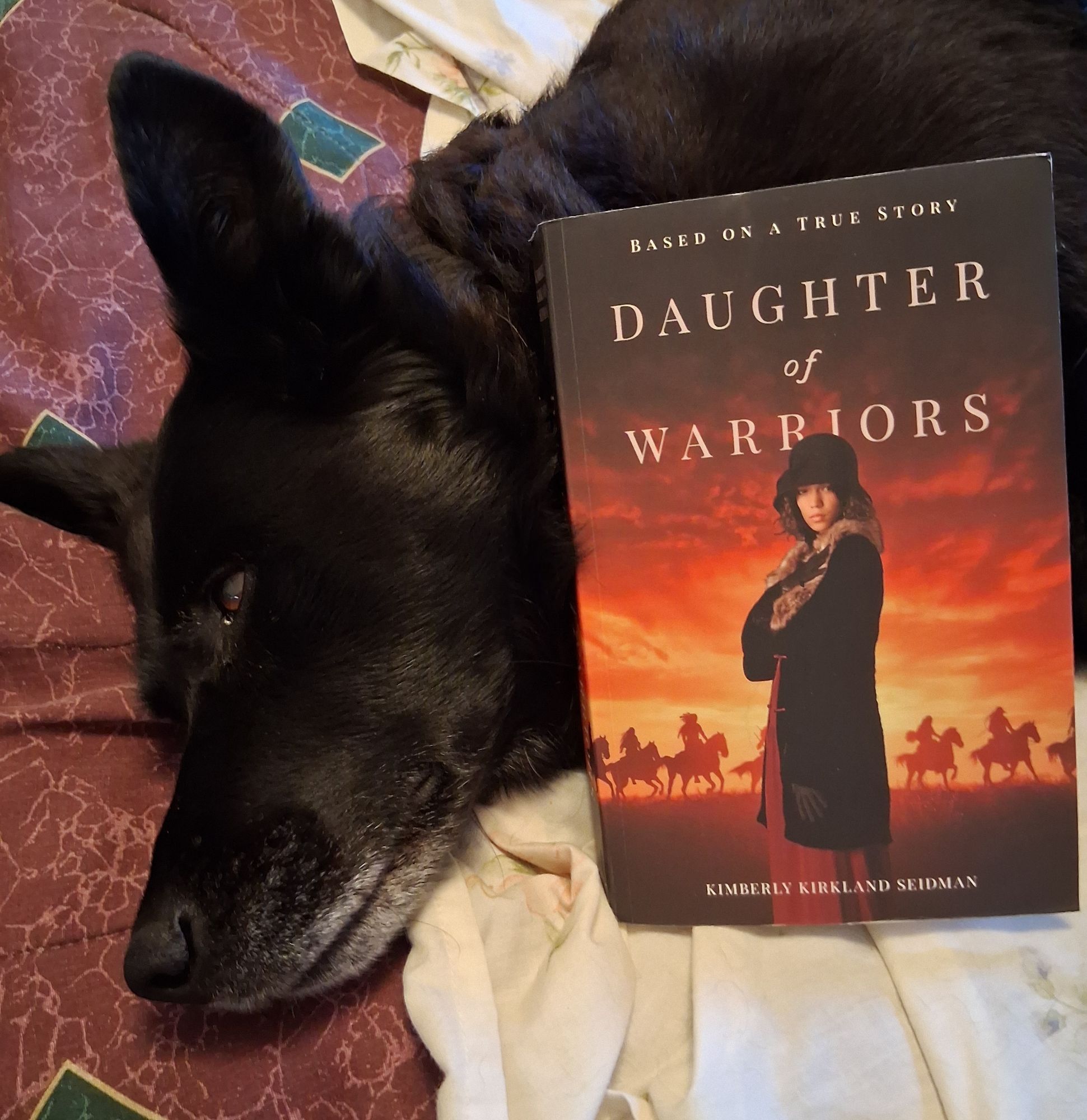
Kimber: So there I was. Comfortably parked in Mom’s lap. She’s parked in this “yawn” chair thingy. (Mom says it’s a “lawn” chair. But she doesn’t fool me!) And she’s reading this “based on a true story” book, Daughter of Warriors. While yawning in that chair overlooking the Strait of Juan de Fuca. That’s on Washington’s North Olympic Peninsula, Toots. Like this:

And this:

Within a stone’s throw of this::

Note: We received a complimentary copy of this book for honest review.

Anywho, we’re parked on this “yawn” chair thingy on a bluebird-sky day, thinking we’ll dip a toe or two into the text. Test the narrative waters. Here’s what we found.

Based on a true story, Daughter of Warriors follows a young Osage woman, Lucy Eagleton, from Pawhuska, Oklahoma, to Kansas City as Lucy searches for an ever-elusive sense of personal safety and security amid the Oklahoma oil rush of the 1920s and beyond.

After a series of heartbreaking losses and tragedies in Book One, Indian Territory,  Lucy and her Irish husband Edward Walsh and their toddler daughter, Genevieve, leave Pawhuska for Kansas City. Book Two, Paris of the Plains, opens as the family arrives in K.C. There, in the thick of the Roaring Twenties, the Walshes encounter “machine politics,” the Cosa Nostra or Mafia and “sophisticated wickedness.”

But safety remains an illusion. The shadows of Oklahoma follow Lucy, claiming those she loves and threatening her young daughter. Caught between her spiritual heritage and the sophisticated wickedness of a world that views her as a “savage,” Lucy must make an agonizing choice to ensure her daughter’s survival.

We found this historical fiction a masterpiece of writing, but a chore to read. More on that in a min, Cupcake. So kindly keep your hair on. First:

For those unfamiliar with the history, this book might be an eye-opener. We found it difficult to stay engaged since the material was already familiar. So Daughter of Warriors didn’t offer much in the fresh perspective department. And while the emotional core is compelling, the repeated focus on similar experiences over and over and over makes the narrative feel slow and redundant.

We also found narrator Loula Long Combs to be jarring. Distracting. Loula is an older white woman who befriends and loves Lucy and hears Lucy’s story. Loula is a pain in the neck. She appears in italics at the beginning of most chapters, jumping in where she’s really not needed. But that doesn’t stop said pain in the neck from narrating and doing the hand-wringing commentating thing every few pages. Worse, Loula just can’t resist telling readers how they ought to feel about Lucy and her story instead of letting readers make up their own minds. Kimber: Seriously, Toots? And Loula’s sackcloth and ashes sermonizing? Kimber again: Gag me with arugula!

Scene stealers: Hawk, an Osage warrior tasked with protecting the Walsh family. Cordelia, child of a Negro mother and Chinese father who flees violence, finds refuge in the Walsh home, and becomes Lucy’s good friend. Chestnut the horse.

At over 500 pages, Daughter of Warriors is a heavy lift. We appreciated the beautiful writing and strong female characters. While the story is emotionally rich, its repeated beats became too predictable and formulaic to keep us engaged. Additionally, the victim-oppressor dichotomy of noble, near-flawless Osage vs. evil, greedy oppressors? It gets old. Fast. (This may even out in later pages. But we weren’t gonna stick around that long.)

Yea, verily. We bailed at about 140 pages. Almost there, but not quite. As in, could not make ourselves turn another page. So we won’t be rating this book. However, we will be offering some suggested titles for further reading:


For further reading (The short list.):

This Tender Land – William Kent Kruger. Read our review here.

The 10 Big Lies About America: Combating Destructive Distortions About Our Nation – Michael Medved

Empire of the Summer Moon: Quanah Parker and the Rise and Fall of the Comanches, the Most Powerful Indian Tribe in American History – S.C. Gwynne. Read our review here.

The Settlers’ War: The Struggle for the Texas Frontier – Gregory Michno

O Pioneers!, My Antonia – Willa Cather

Oh What a Slaughter – Larry McMurty

The Last of the Mohicans – James Fenimore Cooper

Bury My Heart at Wounded Knee: An Indian History of the American West – Dee Brown


2 Comments

Why ‘Scavengers’ Left Us Breathless (3 of 3)

The Rum Runner: The Legend of Captain John Stewart (3 of 3)

By Doralynn Kennedy (Indie author, 2025)

Genre: Fiction/Gothic Romance

Pages (print): 530

Via: Author request

Note: We received a complimentary copy of this book for honest review.

“The only thing they didn’t account for was you and me falling love.”

Picking up where we left off yesterday, we’re diving into the third and final book in The Rum Runer Trilogy today. It’s called Scavengers. To get up to speed, see our reviews of Book One, Cliff House here, and Book Two, Rum Runners, here.

“How many years had he fought to master the sea, only to build something more dangerous along its edge? He had raised Cliff House with his own ambition, poured into it barrels, bribes, blood, sweat, and secrets.”

Case Pharmaceuticals sent master spy Caroline Oliver to get the goods on Edward Kelly, mysterious owner of a sprawling dark mansion squatting on cliffs overlooking the coast of Maine. But Caroline and Edward have formed their own alliance, escaping the avaricious clutches of Cliff House for a cottage in the quiet fishing town of nearby Clifton.

“But Caroline felt the weight in each step: every move forward was a step deeper into a game with rules written by enemies who would never play fair.”

Circling like sharks with blood in the water, Case will stop at nothing to gain access to and control of Cliff House. One swallows secrets and real estate. The other swallows souls.

“Always give your enemy more paper than powder. Paper stalls. Powder kills.”

Caroline and Edward are soon neck-deep in a high stakes game of chess with not just Cliff House, but also a cold-blooded band of avaricious cutthroats headed by the ruthless Marcus Veyron. This guy gives pit vipers a bad name. He uses other people’s lives as steppingstones and corporate cannon fodder.

But in a game “where the board bleeds,” Caroline and Edward have weapons not seen…

Caroline and Edward don disguises and take on new personas in an effort to stop both the house with a taste for blood and the voracious Case vultures determined to snap up the decaying mansion – and Edward’s secrets in the process. And while Edward has survived many brushes with death, he’s not sure Caroline can survive another war with it in this epic page-turner.

“Edward didn’t just survive. He endured, and he fought with a patience born of a century.”

Meanwhile, Edward’s thoughts return to Ruth (see Rum Runners review) and the promises he failed to keep. He will not make the same mistake with Caroline, who is also being hunted by a pack of Case’s hyena-like goons.

“Fear is cheaper than bribery, and more reliable than loyalty.”

This book has more plot twists than Snake Alley, especially as the story steams toward a shattering crescendo.

“Some lies we carry willingly because the truth would drown people we love.”

Together with the two other books in The Rum Runner Trilogy, Cliff House (Book One) and Rum Runners, (Book Two), Scavengers rings down the curtain on an ambitious, three‑part masterpiece. The trilogy is a colossal odyssey — three parts, one unforgettable saga. But these novels are much more. They’re deeper. Older. Wiser. With echoes of another Ruth. A distant Ruth. From Moab. (You’ll recognize her if you know what to look for.)

“When deliverance comes, it may be at our hands, but it will be God who commands it.”

The writing? Well. Glad you asked. The writing paints in lightning, not pastels. Sentences crackle like live wires. The words don’t just tell the story—they grab you by the collar and pull you in. Think intense as a thunderstorm on a Friday night — unpredictable, relentless, and somehow still beautiful.

There’s a lot of fire in this third book. Fires in Caroline and Edward’s cottage in Clifton. Fires to ward off chill. Fires to light dark corners. Popping fires that collapse into ash. Fires burn in the story itself, sputtering and smoking just under the surface. Call it “foreshadowing.”

There’s also a cup with three drops. A choice. For Mary. Keep this safe. For better. For worse. “Together, then. Until the last piece falls.”

Each of the three books in The Rum Runner trilogy can be read as a stand-alone. If this book consisted of just Cliff House or just Rum Runners, that would be enough. But we recommend reading all three novels in succession, as intended and designed. The tail is tucked in neatly at the end, which is the mark of a true professional.

Finally, it’s been awhile since a book moved us a much as this trilogy.  Every page is a heartbeat, every chapter a pulse. It’s an emotional journey that you don’t just read, you live. Indeed, the story doesn’t unfold, it envelopes you like a fine mist. Or a second skin. It wraps you in a sensory experience that refuses to let go. It left us breathless.

I’d grab a copy now ‘fize you.

Our Rating: 5.0