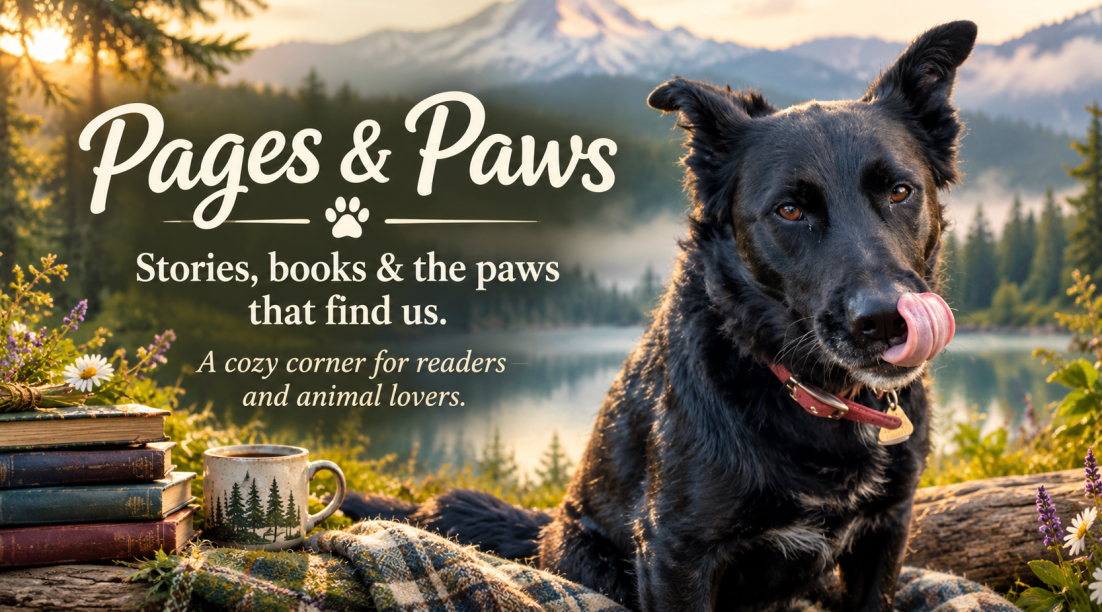
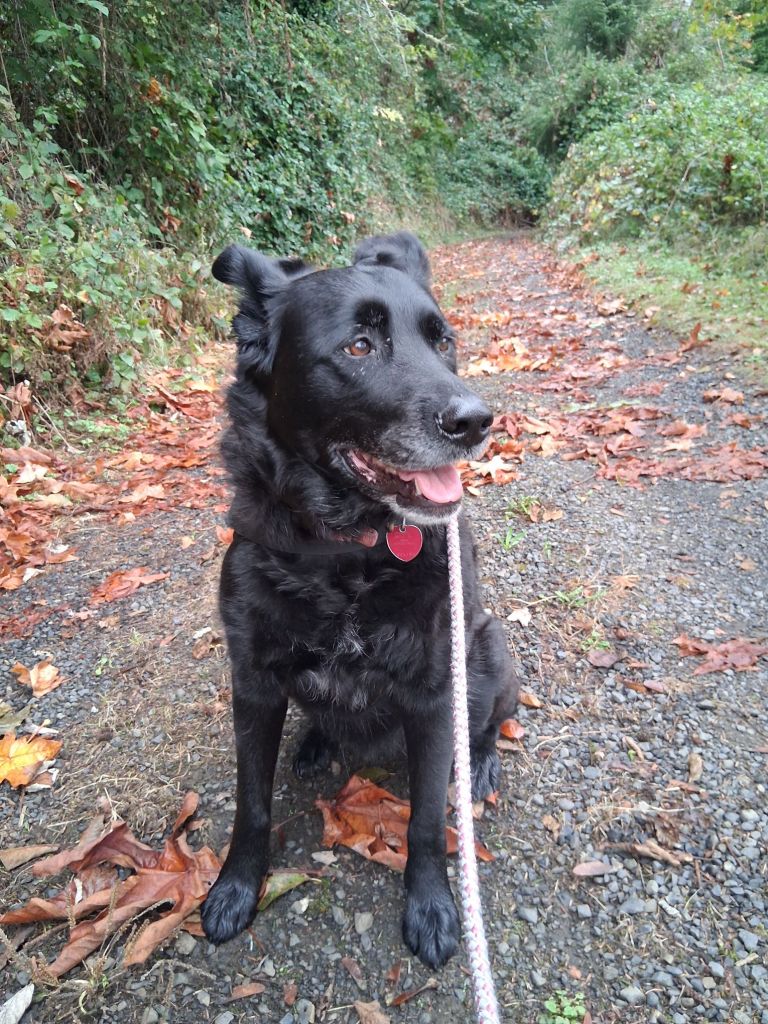
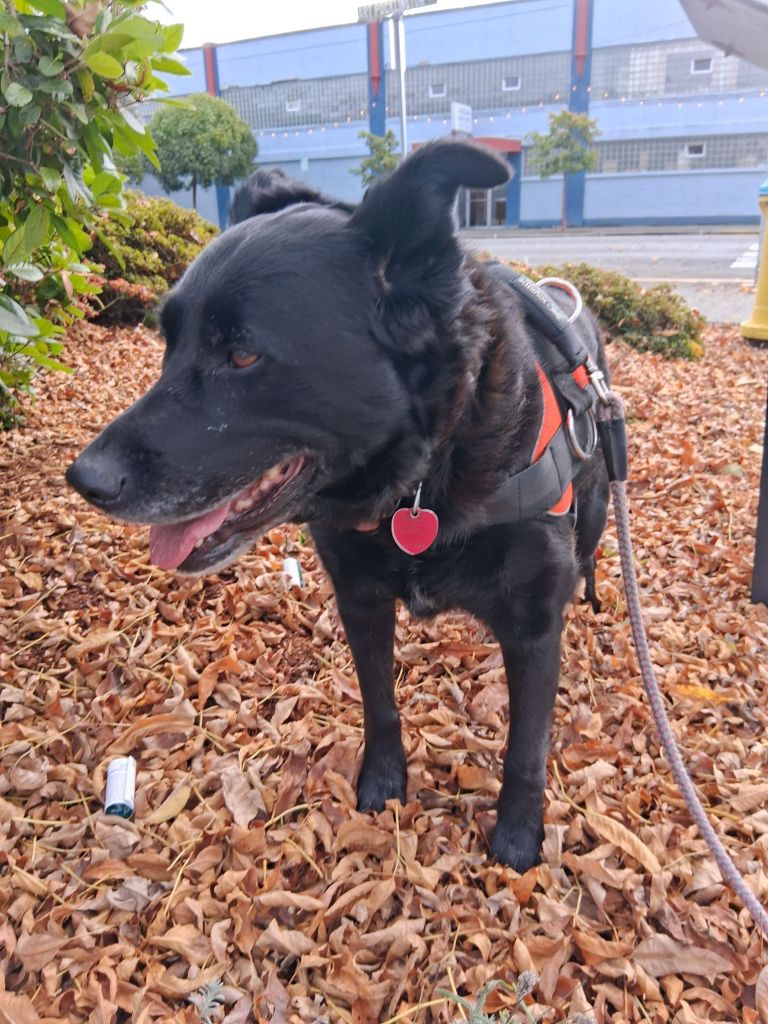
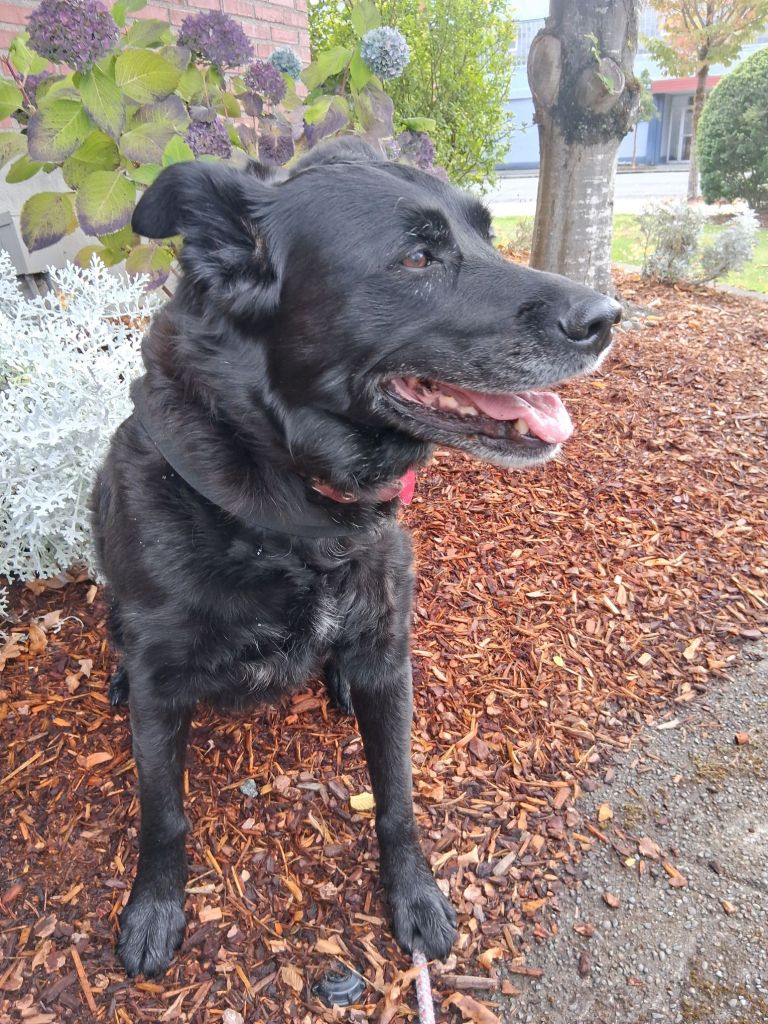
Kimber the Magnificent here. Asking, “Whaddya think of our new blog banner?”
Like this:
“Stories, books, & the paws that find us.” Oh yeah!
You may have already guessed that Mom and I have a few surprises up our sleeves for this site. (Well, one of us has sleeves. But you know what I mean.)
After like about a million years of working on this site to bring you Totally Pawsome and Beautifully Brilliant posts on all things bookish, we decided it was time for a refresher. A new look. Same vibe. Same sweet furry face we all know and love. Just a little visual update. At like, 3:04 in the morning. Cuz. Mom. (Insert eye roll here.)
We may or may not have additional update/refresher thingies in the pipeline. Im not allowed to say just yet. But you might want to keep an eye out, bub. Just sayin’.
Meanwhile, I’m going back to bed. This nocturnal creativity stuff is for the birds. Or even worse, felines. Sheesh.
Kimber the Magnificent here. Mom can’t come to the blog right now. Something about a screaming smoke detector and an oven spewing flames.
While Mom’s otherwise engaged, can we talk? Like, about books written with AI?
Good. Cuz our review request inbox has been looking less like a literary sanctuary and more like a sci-fi convention lately. Until just recently we were getting flooded with books that smell suspiciously like silicon, algorithmically optimized plots, and adjectives that no human has used since 1856.
So, let’s answer the question on everyone’s mind — and by everyone, we mean authors trying to generate The Great American Novel over their coffee break or write the next Middle Earth trilogy during their lunch hour: Do we review books written by AI?
The short answer: Naw. Longer answer: Maybe.
I know. I’m gorgeous.
We get it, okay? Why spend years tilting at windmills, grappling with quixotic characters or testy transitions and the like when you can just type “Write a story of an elderly Spanish gentleman who goes mad from reading chivalric romances and believes he is a heroic knight” into a prompt box and hit enter? Easy-peasy. And there’s the rub. Or the windmill.
When we sit down to review a book, we’re looking for a soul. Evidence of genuine human effort. Creativity. Heart. Originality.
Free photo library
Keeping that in mind, here’s why ChatGPT won’t be getting a star rating from us anytime soon:
1. Algorithms ain’t “folks”
A computer can mimic sorrow, but I’m pretty sure it’s never stared at a ceiling at 2:00 a.m. wondering how a protagonist will overcome heartbreak, a wicked stepmother, or too much month at the end of the moola. We want authentic human emotion and genuine responses, not a statistical probability of what sadness looks like.
2. Predictable Patterns
AI is great at patterns. You know what else is great at patterns? Punch cards and knitting machines. Most AI-generated books read like an autocomplete sequence that got out of hand and refused to apologize. Like someone rounded up the most average sentences on the internet, tossed them into a blender, and had a toddler glue them back together. Or a Hallmark movie without the connective tissue of actual human intuition or emotion. (Kinda like the neighborhood fluff ball. But that’s another story.)
Still gorgeous.
3. We prefer bravery
Writing a book is an act of bravery. It’s putting a piece of your heart and brain on paper and letting strangers judge it. Copy-pasting a prompt is an act of data management. Mom and I? We’re book reviewers, not prompt engineer detectives. (Although I must say we’re pretty good at both. So there!)
4. Think Again
Well. Think you can sneak one past us? Think again, Buttercup. We can spot AI-ish “His breath hitched” or “Her heart skipped a beat” a mile away. Ditto overused literay cliches: It was not a mere house—it was a tapestry of memories pulsing like a heartbeat in the quiet landscape. And filler verbs: Delve, embark, navigate. And if your characters spend half the book “smiling enigmatically” while navigating a plot that seems logical but is as hollow as a chocolate Easter bunny, you’ve just tripped our AI alarm. And that book is likely to join the rest of the rejects in our voluminous and ever-growing DNF pile. Think Mount Rushmore. Or all the tea in China.
Free photo library
5. The Biggie
Yes, AI can be helpful in organizing ideas. Research. Brainstorming, outlining, or charting plot possibilities and the like. But using Perplexity or Sudowrite to write your whole book? Like, Every. Word? Real.
We’re looking for authors who demonstrate significant creative input and control of their work rather than handing it off to AI. Way we see it, authors who rely on Type.ai or Claude and the like to write their books are an insult to authors who are The Real Deal. Who labor over sentence syntax, pacing, characterizations, conflict, dialogue and story arcs. Who treat every paragraph like it’s the sister of The Sistine Ceiling. Who agonize over 6,745 word choices or whether to deploy the Oxford comma or not.
Besides. AI isn’t you. That matters. In fact, more and more book contracts are starting to include language certifying that the manuscript is original to the author. Cuz guess what, Toots? AI-generated material is not considered “original authorship.” That matters, too.
Cranking out books written with artificial intelligence may be quick and easy. But depending on usage, AI writing is cheating as far as we’re concerned. Rather than offering your unique view, thoughts, and voice, AI outputs are generic mashups of pre-existing works. So relying on AI may make you a quick writer, even a prolific one. You may even sell a lot of AI written books. But again, if AI overtakes human input and creative control, is it authentic writing? We say No. Cuz it’s not wholly, soul-ly human you. So. Not. Impressed. Tip (Throwin’ this in for free): Put in the time time and effort to develop your writing muscles and do the heavy lifting yourself, Cookie. Then we’ll talk, okay?
Free photo library
Exception: We may consider an AI written book IF the author lets us know up front that they’ve incorporated AI outputs and how much. Other than that? Sayanora, baby!
To Human Authors:
To the writers out there currently staring at a blank screen or page, rewriting the same paragraph for the nineteenth time: Keep going. Keep writing. Keep editing, revising, and rewriting. AI is okay as long as you’re in control, calling the shots. Cuz your authentic humanity is exactly what we want to read. We want your voice. Your creativity. Your fingerprint on every page. Got that, Babe?
Thusly, our TBR pile is reserved for living, breathing human writers who know the difference between genuine crispy bacon and the fake stuff. Ya follow, Sugar?
Kimber: Now if I can just remember where I stashed the fire extinguisher… Just kiddin’… Kind of…
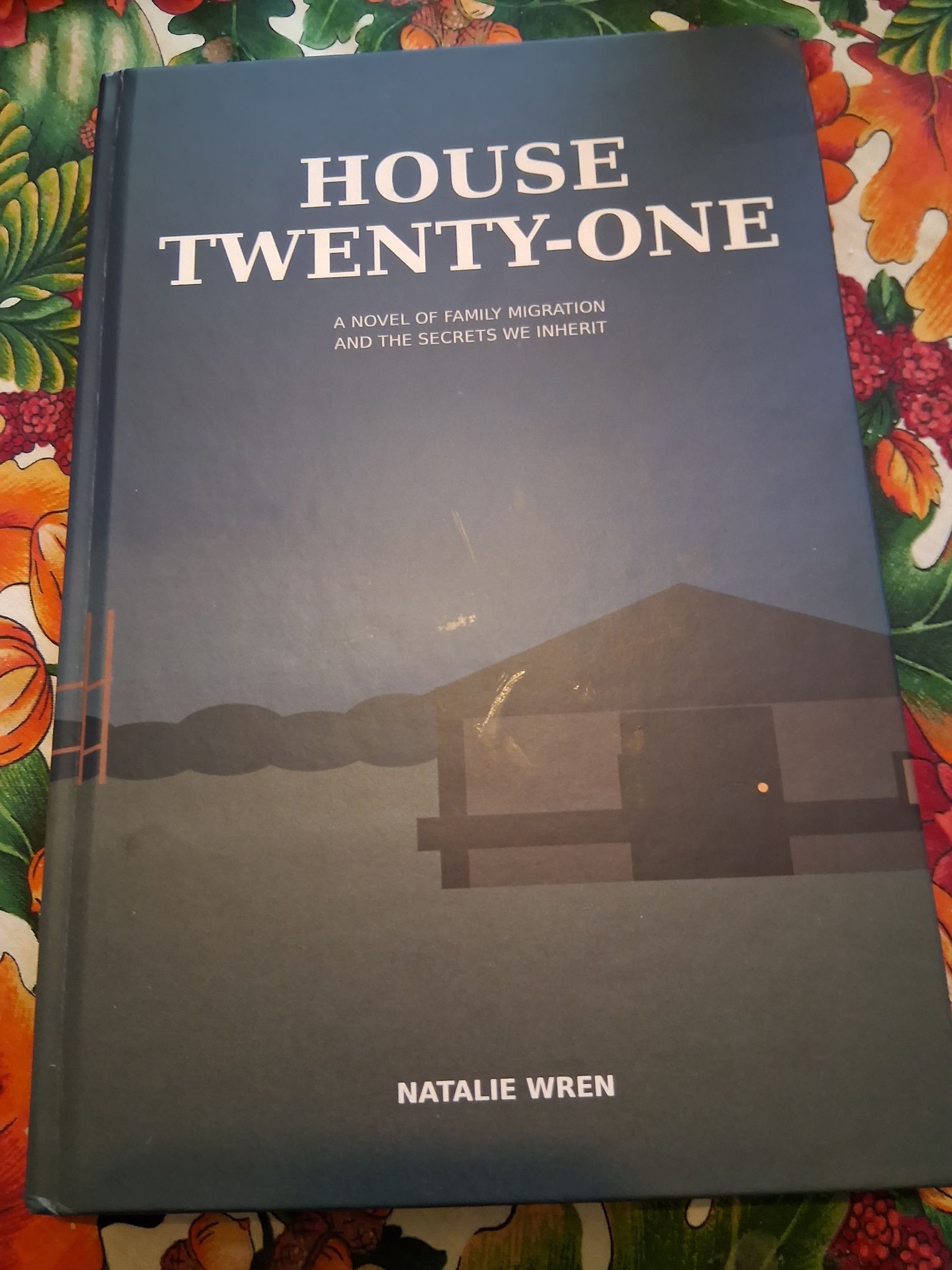
House Twenty-One: A Novel of Family Migration and the Secrets We InheritBy Natalie Wren (Indie author, 2026)
Genre: Historical Fiction
Pages (print): 99
Via: Author request
Note: We received a complimentary copy of this book for honest review.
“And what am I supposed to do with this house?”
“Find out why someone spent forty years trying to send a letter back to it.”
Got your attention? Good. Cuz these two lines from the Prologue of Natalie Wren’s engaging historical fiction, House Twenty-One, grabbed ours. Here’s why:
Nora Whitaker’s uncle has spent years tracing thousands of family connections. In failing health, Uncle Ben entrusts Nora with a box of letters reaching back over a century. The box contains information “about two sisters who stopped speaking,” Yaryna and Halyna. Mystery swirls. Like, why did Nora’s mom remove century-old letters from the box? While exploring the family tree and other records for answers, Nora discovers a family secret that’s connected to a house numbered 21. But the questions don’t stop there.
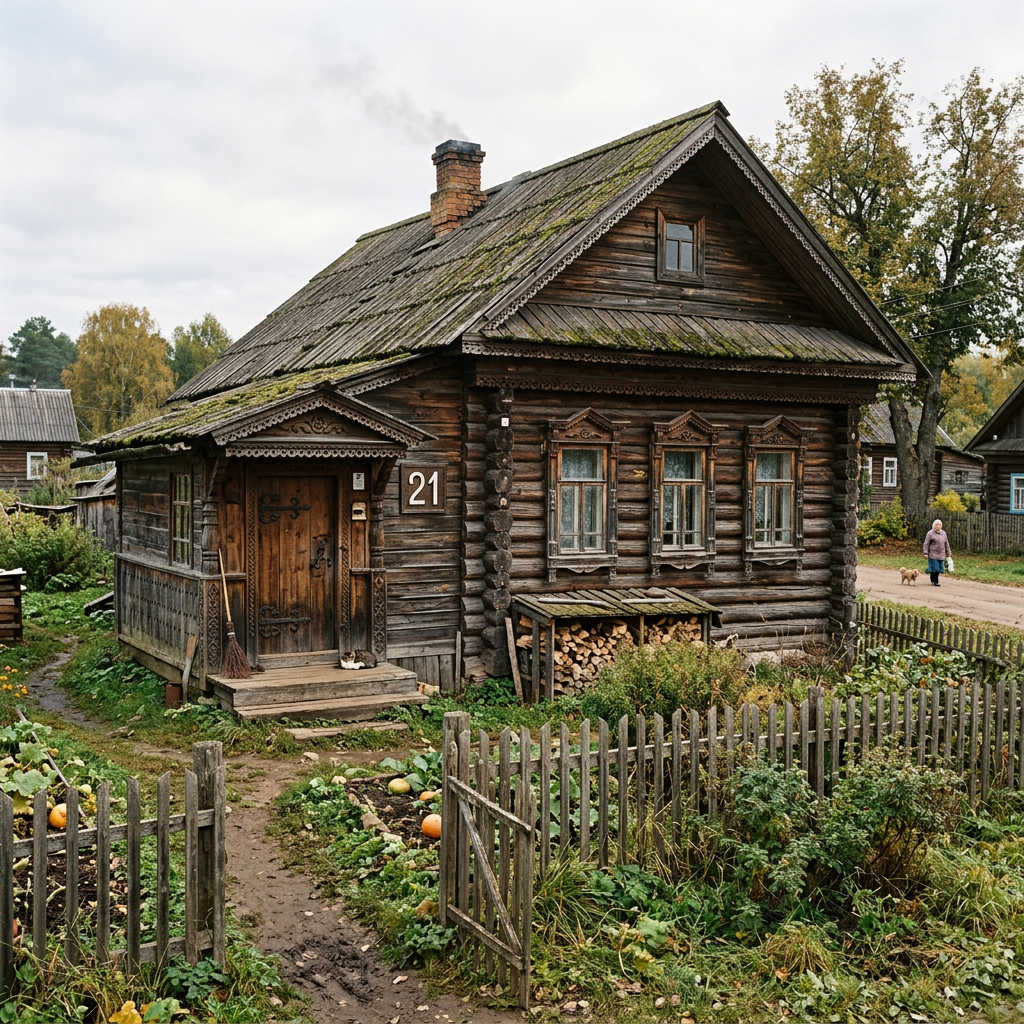
AI generated image.
Meanwhile, Nora is busy packing and moving (migrating?) her family to a new home. And while Nora is on the trail of truth regarding her family history, she’s also dealing with estrangement from her own brother, Caleb, and how family secrets, long buried, may open a road too many.
“You believed I would not write because I wanted to punish you. At first this was true. Later I did not write because shame is heavier than regret.”
This book is about migration from one place to another. So we were confused by the lack of specificity regarding geography and location. Near as we can tell, the story opens somewhere in Russia. One sister departs, migrating across the Atlantic Ocean to … some place. Your guess is as good are ours. And maybe that’s the whole point. Here’s another way of looking at it: Perhaps this book isn’t about physical migration from one country or region to another so much as it is about migrations of the heart and how future generations are affected by both. Additionally, some issues with basic mechanics creep up every now and then. Like when the first word in a new sentence is lower-cased rather than capitalized.
Yaryna wanted her sister to apologize for leaving. Halyna wanted Yaryna to apologize for making departure a betrayal. Each waited for the other to place love above pride, and each mistook waiting for strength.
Thisbook is often in dialogue with itself. Surface and subtext speak in different chapters, times, places and people. For example, “Interlude” chapters include brief biographical stops in other immigrant stories. With multiple interwoven chronologies, the story sometimes whispers and sometimes argues. Clues are baked into opening chapters like chocolate chips in a cookie, flavoring the plot with hints as subtle as morning mist.
AI generated image.
Meanwhile, the narrative doesn’t always unfold in a single straight line with crisply defined edges. Some threads run straight. Others are crooked and loop back. Dual storylines crisscross and create new patterns. Some patterns are as pellucid as a mountain stream. Others are as opaque as a fogged mirror.
I did not understand that leaving can be done by the person who stays…
In terms of style, the author’s pen dances like a spider’s silk, weaving a tapestry where every thread is eventually connected and every pattern sings. Within this intricate web of historical fiction and family, we find strands of belonging. Loss. Estrangement. Yearning. Regret. Hope.
Kindly note that House Twenty-One isn’t an address so much as it is an anchor. And that this book takes time to ripen. Themes includes wounds families protect. What it means to inherit a story you were never meant to know. House Twenty-One is also about hiding. Leaving. Staying. Returning. It’s about trying to find a way home. And what it means to be family, secrets and all.
Continue to me. Keep writing until you reach me…
House Twenty-One is the first book in The House Twenty-One Chronicles. It is “a novel inspired by documented family history.”
Kimber the Magnificent here. Dancing my official, patented, 100% genuine canine jig. Think Riverdance meets Barysnikov. Only with four legs and fur.
Woo-hoo!
“What’s the happy occasion?” you ask.
Glad you asked.
We just reached a major milestone! We’re talkin’ Majorly Pawsome here! And altho Her Royal Momness and I mostly focus on books, reading and reviews and such, we’re doing something a little diff today regarding that milestone.
We’re focusing on you.
Yes, you!!
We passed 100,000 views last week, thanks to you, our woniferous and stupendinest readers! (New words I just made up.) See:
Woo-hoo again!
And it’s all because of you! You read our posts. You engage. You share our content. You love books like we do. Some of you even send us your books. And some even reach out beyond the blog.
You’re Totally Pawsome!
So again, THANK YOU one and all for helping us reach this milestone! One hundred thousand views! Yee-haw! How many pounds of bacon is that? What?
So keep reading. Keep liking, sharing, and commenting. Yea, verily. It’s a lot of work to work on this here blog thingy. (Well, I do most of the work. Mom helps. A little.) Your engagement makes a difference. A big one. Maybe I’ll even let Mom post a photo of my good side next week. (Tip: Every side is my good side. Heh heh heh.) Soon as I remember where I stashed my dancing shoes…
Note: We received a complimentary copy of this book for honest review.
Kimber the Magnificent here. I know it’s early to be barking about Christmas. But Mom and I? We’re like, World Class Christmas Lovers! We L-O-V-E Christmas! The music! The lights! The trees! The decorations, greetings, singing, baking, gift-wrapping, parties, merry-making and Glory to the Newborn King! And don’t get me started on the food!
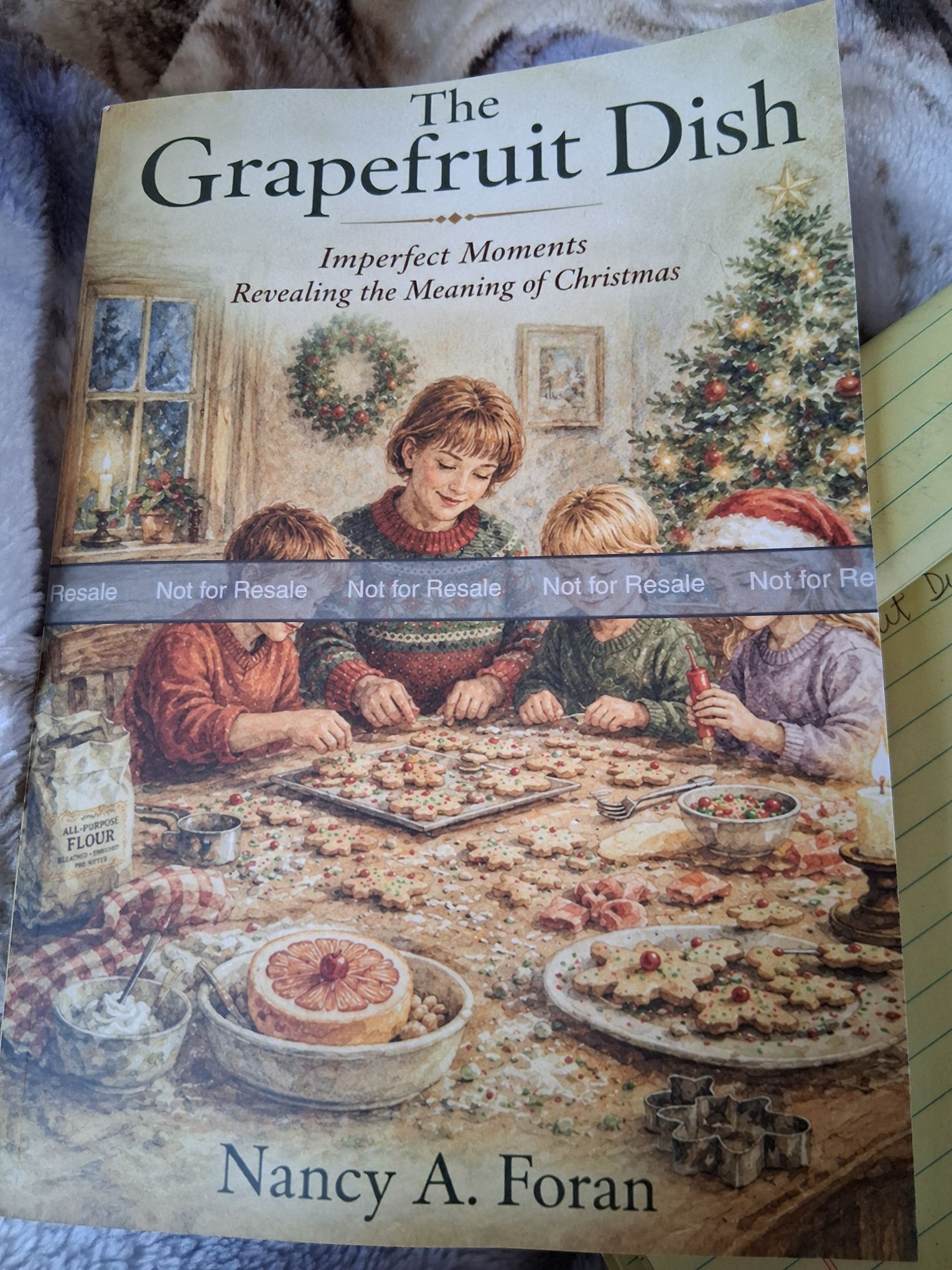
So, when Nancy Foran approached us about this new Christmas book thingy, we were like, yeah, baby! As in, “Move over, Rudolph and Frosty. There’s a new Christmas treat in town.” And I didn’t even have to steal it off the kitchen counter to enjoy it! But then I was like, “What does a grapefruit dish have to do with Christmas?” Tip: Keep reading and you’ll find out.
Truth: I usually judge a dish by how fast I can lick it clean. But The Grapefruit Dish is a heartfelt, heartwarming Christmas-ish book that serves up something even better: gentle reminders and reflections that imperfect, messy Christmases are often the ones we remember – and treasure – most! Using examples, stories, and memories from the author’s own life, this warm and nostalgic read shows you how focusing on holiday connections matters more than perfection. And that a Christmas doesn’t have to be flawless to be deeply meaningful. Like this:
The book has a total of five parts. Each part has two or three themed chapters. Each chapter is headed by an appropriate quote and a Norman Rockwell-ish illustration. (The illustration on page 41 and Chapter 5, One Foggy Christmas Eve? Well. Who can resist that?)
Some chapters wrap up with a question for further reflection. Page by page we see enduring lessons emerge from moments when even the best laid plans go awry. (Kimber:Like that time, I “taste-tested” the Christmas ham. Well. Someone had to do it. But I think Mom has almost forgotten about that. Almost. Don’t remind her, okay?)
Also included: the great “popcorn pirouette.” The Dollar Store Christmas. Christmas during COVID. Advent calendars and candles. Sleigh bells and “ho, ho, ho.” Treasured Christmas memories steeped in love, laughter, and family warmth. Re-thinking gift-giving. Finding expressions of love in unexpected places. Chapter 3, The Grapefruit Dish, reminded us of one of Mom’s old favorites: O. Henry’s The Gift of the Magi. There’s also lonely Christmases. Tense Christmases. Simmering grudges at Christmas. How a manger became a king-sized bed.
Kimber: As a certified expert in cozy, cuddles, and fireplace naps, I can tell you that this warm and gentle book pairs perfectly with a fuzzy blankie, a hot cuppa, some peppermint sticks and a hooman who’s easily distracted from her snacking. Like a warm mug of cocoa for the soul, The Grapefruit Dish blends the author’s own tender memories to unwrap a softer, sweeter side of Christmas. (Isn’t that a great line? It was my idea. Well, Mom helped. A little.)
Indeed, The Grapefruit Dish offers a beautifully intimate look at the season that feels less like reading a book and more like catching winter’s first snowflakes with an old friend. Expert writing and pitch-perfect pacing thaw the frost off holiday expectations, dial back the seasonal pressure, and invite you to slow down. Relax. Take some deep breaths. And enjoy the season rather than just trying to survive it.
Part festive fireside chat, part personal scrapbook,The Grapefruit Dish unwraps the Christmas magic you forgot you were looking for. It’s an intimate, eye-opening invitation to experience the holiday season anew as the author skillfully sketches a fresh perspective on Christmas, one personal story at a time.
So even though it may seem a bit early to be barking about Christmas, don’t worry and don’t wait. Grab your copy of The Grapefruit Dish today so you can savor it all winter – and beyond! (Batteries not included. Accessories sold separately.)
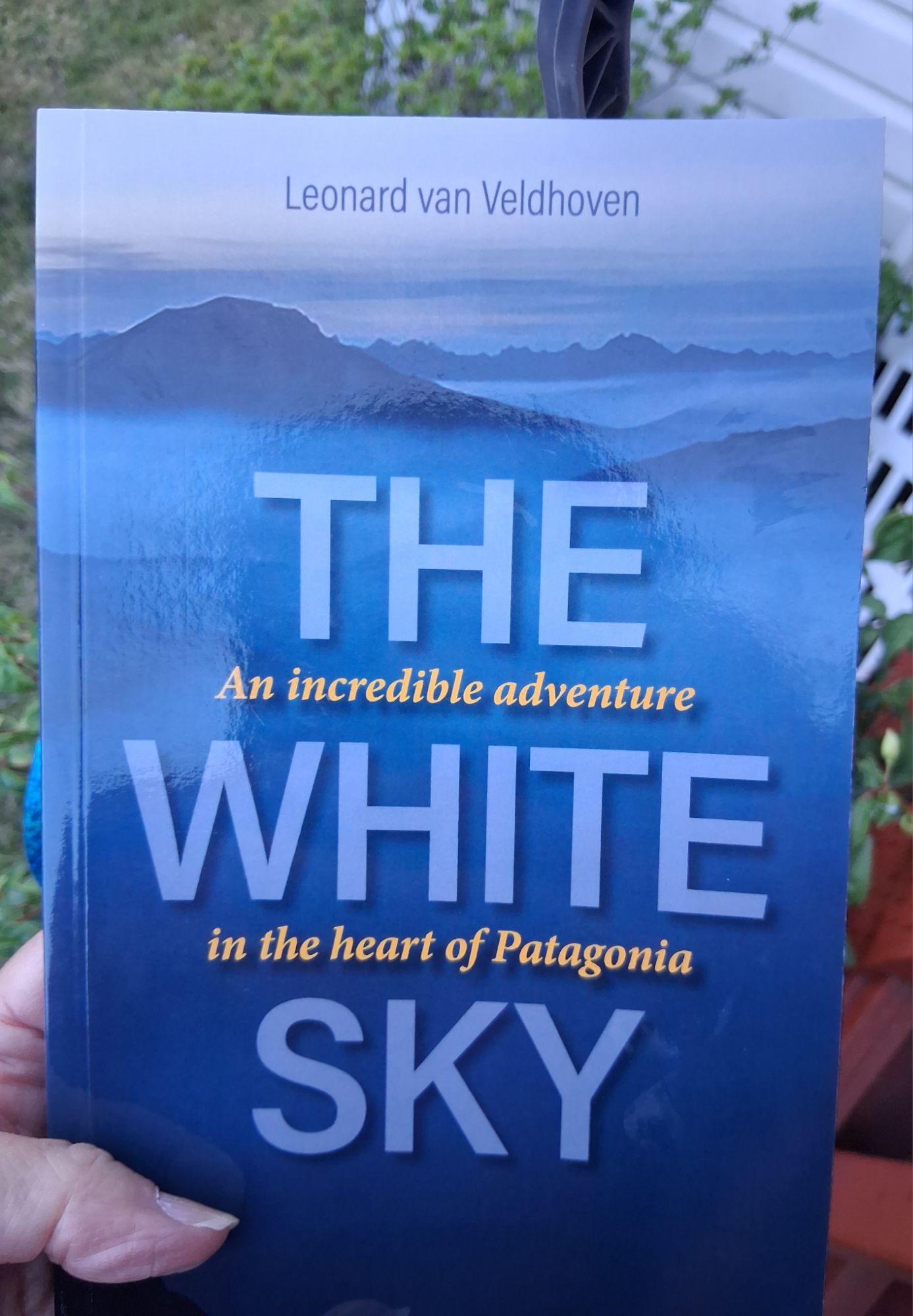
The White Sky: An Incredible Adventure in the Heart of Patagonia
By Leonard van Veldhoven
Genre: No idea
Pages: 253 (About 153 pages too long)
Via: Author request
Note: We received a complimentary copy of this book for honest review.
“I worry about my family and friends. I can hardly imagine never getting out of here. But it could take years, and in the meantime, no one knows I’m still alive.”
Kimber: Worry no longer, bub. Cuz we could care less. Ya see, any time Her Royal Momness and I hear the words” incredible,” “adventure,” and “Patagonia,” we’re all ears! And paws. But not this time. I’ll let Mom fill ya in after The Official Marketing Blurb. Like this:
The Marketing Blurb:
Leonardo, the narrator and protagonist, is a seasoned traveler and restless seeker who has journeyed across the Americas and the Pacific―from Easter Island to the scattered isles of Polynesia. While reading Bruce Chatwin’s In Patagonia, he stumbles upon a tantalizing rumor: that ancient Polynesians once sailed eastward, landed in a remote Chilean fjord, crossed the mighty Andes, and settled deep in Patagonia.
A lifelong history enthusiast, Leonardo recalls Thor Heyerdahl’s Kon-Tiki theory―that South Americans may have reached Polynesia by raft. But what if the migration ran the other way? What if Polynesians―legendary navigators of the sea―reached South America long before European explorers?
Driven by a desire to uncover lost truths, Leonardo sets out on a solo expedition into Patagonia’s wild heart. What begins as an intellectual quest soon descends into a harrowing physical and spiritual ordeal. Captured by mysterious people with sun-worn skin, he is blindfolded and transported across the arid, hostile pampas to a lush, hidden valley―enclosed by sheer cliffs, cloaked in a sky of perpetual white cloud, and dominated by a vast lake of geothermally warm water. Towering statues stand guard on a dam at its edge, their weathered faces hauntingly reminiscent of the moai he once saw on Easter Island.
With no chance of escape, Leonardo slowly adapts to life in this secretive community. He forms friendships, falls in love, and begins to document their world, piecing together oral histories of a miraculous migration from Polynesia via Easter Island to this secluded valley.
The Reality
Kimber: Oh, puh-leeze. When we hear “incredible” or “adventure,” we’re thinking amazing. Awesome. Majorly cool. Totally Engaging. High energy and high voltage.
Well. The White Sky is anything but. Here’s why (short version):
The protagonist, Leonardo, is a Dutch visitor to Patagonia. We first meet him as he’s waking up in an Argentinian hospital bed, recovering from a terrible accident. It takes several pages, but we eventually learn how he got there – sort of – and that he was on a quest to learn more about the “White Sky” people noted by a local “padre.”
Around page 60 or so we finally find out that Leonardo was previously kidnapped by Indians. They just happened to speak “Rapanui,” the language of Easter Island. But how? As a captive, Leonardo soon learns that he’s in the land of “Ana-Rangi-Teatea, the Valley-of-the-White-Sky.” (Try saying that ten times, fast. That’s okay. We’ll wait.)
The inhabitants of the valley chose to isolate themselves from the outside world many years ago. They’re concerned about losing their culture if anyone in the Outside World knows they exist. So, the secret of the existence of the Valley-of-the-White-Sky must be “forever preserved.” That means Leonardo can never leave the valley, on pain of death.
The opening chapters are rich in detail and description but it’s still a slow burn. Or maybe a damp burn. With green wood. The story doesn’t really find its footing until about chapter 6 when Leonardo is taken captive. Whether or not most readers will stick around the long is open to question. Speaking of which – sort of – we just could not keep our eyes open for the whole thing. Especially during much of Part II: The Tale. This is basically a rehash of valley people history. In between snatches of Leonardo, his hospital bed, and his daughter.
It’s not an “adventure.” It’s a history lesson that’s as dry as burnt toast.
While highly ambitious, the narrative would benefit from a tighter focus and a more rigorously defined scope to keep readers grounded and engaged. For example, the story suffers from structural deficiencies, continuously jerking readers back and forth from Leonardo in his hospital bed poring over his “notebooks” to pre-injury days spent in the mysterious “white sky” valley. Also, at one point in Chapter IX, we’re hearing Leonardo tell us about White Sky inhabitants, their ancestors on Easter Island, the “Great Statue War,” and the “Birdman Cult.” One paragraph later we’re back to Leonardo chatting with his daughter Mik about her plans to attend a Spanish-Argentinian film about a “famous tango singer” and a police inspector’s backstory.
It’s enough to give a body whiplash.
Meanwhile, the narrative offers the emotional depth and excitement of a damp sponge. Moves with the blistering speed of continental drift. Reads like an instruction manual for a carboard box. A remarkably effective cure for insomnia, the story takes the subject and reduces it to the narrative tension of an IRS tax audit. (Kimber: And that “game” with a dead calf’s head? Barf me.)
Yea, verily.White Sky didn’t just lose our interest; it actively escorted it off the premises.
We made it to about page 150 before bailing out. Could not force ourselves to turn another page. We just have better things to do. Like watching paint peel.
Since we did not finish, we won’t be rating this book. Other than to say calling it an ‘incredible adventure’ is like saying a cup of tea is a boiling ocean.
A dance garden. A spring house. An apple shed. Cameras. Blue fabric. False dust. And “carefully scheduled fear.”
The Basics:
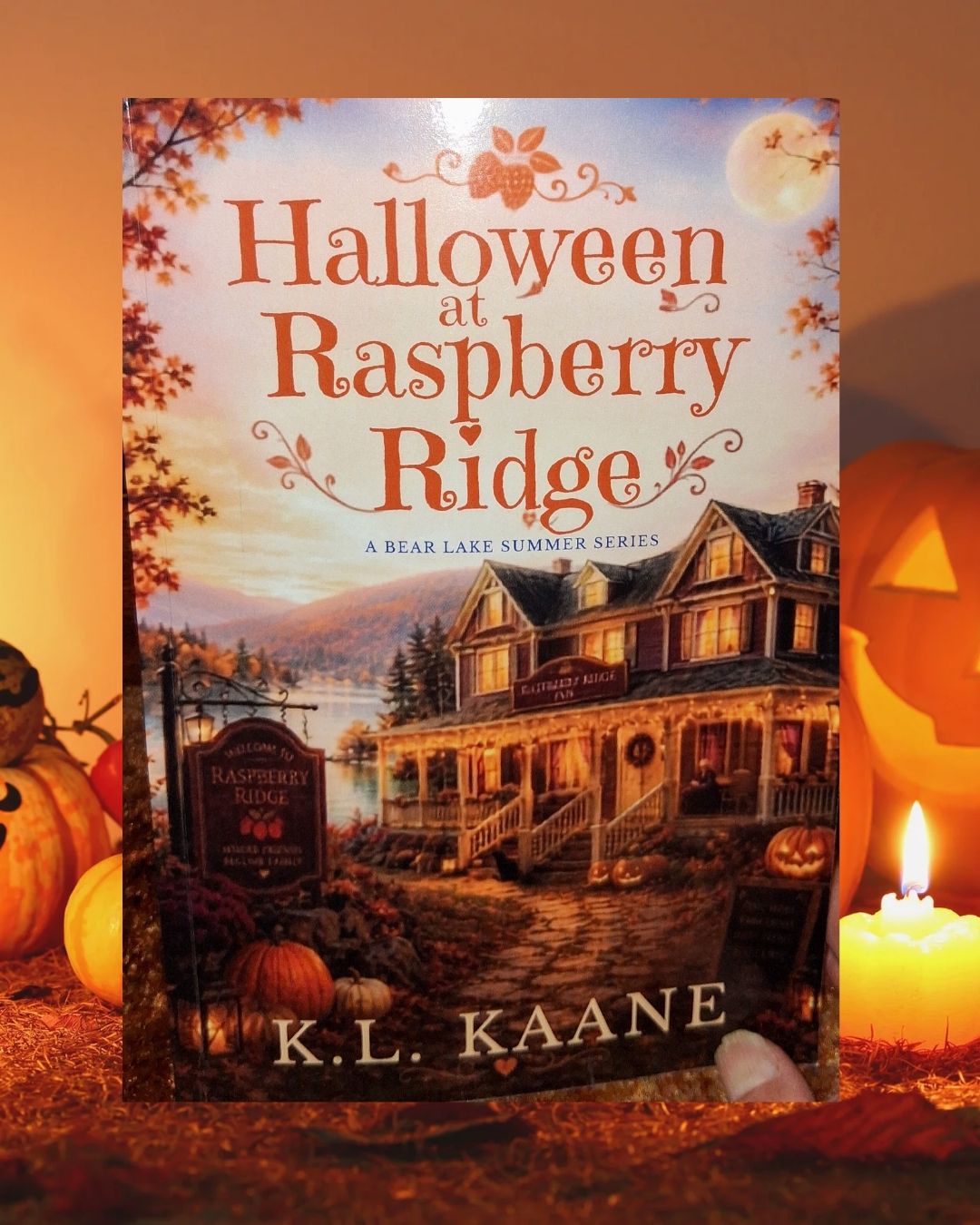
Autumn has arrived at Raspberry Ridge, bringing crimson leaves, glowing pumpkins, and a cozy Halloween mystery that gives the struggling historic bed-and-breakfast the perfect reason to stay open year-round.
Liz Jensen is determined to make the celebration unforgettable. With Ethan beside her, family filling the inn, and Mrs. Barlow enthusiastically reinventing herself as a fortune-teller, Raspberry Ridge feels warm and more hopeful than ever.
Instead, the old house begins to stir.
Violin music drifts through empty rooms. Footsteps cross the floor above when no one is upstairs. A hidden chest reveals an old blue dress, dance shoes, photographs, and a knife stained with something that looks disturbingly like blood. Then the threats against Cyndi and her baby daughter become more dangerous, and Liz begins to wonder whether someone is using the inn’s tragic history to frighten them away—or whether Raspberry Ridge has been keeping secrets of its own.
As Halloween night approaches, Liz and the people she loves must separate carefully planned tricks from the things no one can explain. Because someone is watching the inn, someone wants control of Raspberry Ridge, and beneath the laughter, costumes, and candlelight, something dark is moving closer.
+++
Our Take
Seventy years ago Mandy Whitcomb, age 19, went missing at Bear Lake after an autumn social at Raspberry Ridge. (Kimber:That’s 1956, for you math whizzes.) Mandy was last seen walking toward Bear Lake. (That’s a real place in Utah/Idaho, by the way. We checked. We’re just funny that way.) What happened to Mandy and why is the core question in this cozy mystery set in the delightful historic B&B, Raspberry Ridge.
Rich
Halloween at Raspberry Ridgeis a richly atmospheric read that offers patient readers a delicious run-up recipe to the season of sweaters, pumpkins, hot apple cider, autumn leaves, and fall festivals. Ingredients include a generous base of small-town charm, a dash of sweet romance, and a heavy pour of whimsical wit topped with a sprinkle of mystery. Readers are soon immersed in a place where old benches beckon beneath cottonwoods. Where visitors arrive bearing peach turnovers. Where the grass still holds “a touch of summer’s green” and the air smells “of cooling earth, lake water, and the faint sweetness of apples.”
Kimber:When do we start packing?
There’s also a box in the Raspberry Ridge parlor. Old photos. A locket. A newspaper clipping hidden behind a lake print. Cinder the Rottweiler pup. Margaret, mama dog extraordinaire, and her puppies. A cat named Luna. And a lake that becomes a character itself, “Blue and bright beneath the afternoon sun.”
Sunlit & Smart
Halloween at Raspberry Ridge is like a sunlit porch during a summer storm: It wraps you in the warmth of family and the small-town charm of a lakefront B&B while shadows in the corner keep you guessing and the light breeze of local wit clears the air. Kimber: It’s also a place where the animals are a whole lot smarter than the hoomans. Kinda like… Oh, never mind.
This story has much to recommend it. And we enjoyed it overall. But we had some bones to pick with it, too. (Kimber:Bones? Did someone say “bones”?)
First, we loved the Prologue featuring Mandy at a dock hugging Bear Lake. It offers enough mystery to hook you and reel you in to chapter one. We also loved how responsible dog ownership and adoption policies are woven into the story. We loved the light narrative touch. The Somewhere In Time-ish vibe. The pacing, secondary storylines, overuse of snark and one-line paragraphs, and thin characters? Not so much.
The dried flowers… the mysterious note, the violin playing from the trees, and now enough antique clothing to dress every disappointed woman in northern Utah. Whoever is doing this has a strong visual sense and absolutely no interest in subtlety.
Bacon Break?
For example, the plot sometimes feels like a river with too many tributaries — the main current is too often diluted by detours. Like the secondary storyline about Cyndi and the fight with her late husband’s parents over custody of her baby daughter, Lily. Why is that even in the book? How does it relate to Mandy’s disappearance? Did we miss that? And what’s up with Walter Bench? Marrietta? Ericka? Why does Ethan propose to Liz in chapter one?! New readers don’t even know who the guy is, and he’s proposing matrimony on page 12?Really?
The author seems toassume that Book 2 readers have read Book 1. That’s a big assumption. It results in some plot holes and confusion. Both could be easily ironed out with a little backstory. More on that in a min. So kindly keep your hair on, Cupcake. (Kimber: Yea, verily. It sometimes feels like the plot took a bacon break in the middle of a squirrel chase.)
Squirrel?
We found the snarky banter between siblings Oliva and Tanner, Liz’s adult-ish kids, funny-ish at first. But they get tiresome pretty quick. Think mosquito that knows exactly where your ear is. We get it that Tanner is a college-aged wiseacre, okay? We got it the first 967 times he opens his mouth. No need to beat us over the head with it. Same with Mrs. Barlow. So while the wit is winsome and the dialogue is snappy, the sheer density of smart-alecky retorts or responses teeters on the rim edge of exhausting and risks overshadowing the plot and slowing the pace.
Puppies are not party favors.
Overload
Character overload shows up in early chapters, where numerous, seemingly ungrounded characters are introduced and proceed to scurry through chapters like a herd of cats. Since Raspberry Ridge is Book Two in the Bear Lake series, these characters and their backstories may have been rounded out in prior books. But reducing the cast of characters here would give the plot more room to breathe.
“They used the real story to make everything else believable.”
Another curious note regarding characters: There’s no main character here. Not really. No single protagonist/sleuth offers readers a place to “hang their hats.” Based on the book blurb, you’d think that role would go to Raspberry Ridge owner Liz Jensen. But sharp-eyed, sharp-tongued Mrs. Barlow, age 82, has more “screen time” than Liz does.
Additionally, the when, where, why and how Liz wound up running the inn is never explained, at least not in this book. In fact, there’s a lot that’s not really explained. And while the plot is densely populated by a hefty cast of characters, we don’t really get to know any of them particularly well. Like, who are these people? How and why did they end up at Raspberry Ridge? Where did they come from? When? What’s their backstory? (Kimber: At times we felt like we were walking into a movie halfway through the screening.)
He promised he’d come.
Yes, friends. Backstory isn’t filler. It’s the soil from which the plot grows. Characters without histories drift like shadows. Their choices seem arbitrary, their emotions unanchored. So, while the structure may be sound, it lacks the warmth, weight and pulse that make it truly live and breathe. Example: The story leaves readers guessing about how two key characters “escaped” or vanished, made lives somewhere else, and “returned years later,” years apart. How? Why? So some characters’ inner engines run on fumes; a few more fuel lines would make the journey more compelling.
“But dogs have always shown questionable judgment where humans are concerned.”
Just as there’s no single main character or protagonist, there’s also no single villain/antagonist behind shenanigans at the inn. Cyndi’s smug, supercilious mom-in-law is about as close as it gets. But how is she related to the core question? Answer: She’s not. Cuz the core compelling question in Raspberry Ridge isn’t whodunit?, but “What really happened here?” vis-a-vis Mandy. Hence, the narrative focuses on a disappearance driven by misunderstandings and bad timing. Sort of. And how many times does Deputy Holloway have to tell everyone not to go outside alone?
Heroism and lunch can coexist.
We also had a few bones to pick with the artwork. On the back cover, the author’s head shot is blurry. Ditto the cover art. Whether or not this is intentional is unclear. (Pun intended.)
Mrs. Barlow… was not predicting the future so much as noticing what people wished she had not noticed and telling them truths their friends had become too polite to mention.
As noted above, the book’s dry wit, rapid-fire one-liners, and snappy rejoinders are highly entertaining initially. But the constant stream of deadpan humor threatens to overshadow the narrative arc in places, risking reader fatigue over the course of the novel. And while the narrative frequently snaps and crackles with energy, the core storyline gets a bit crowded by all the moving parts. Some structural pruning will make the main storyline pop.
Speaking of pruning – sort of – the repeated overuse of one-sentence paragraphs drove us nuts. It’s like salsa with too many Habaneros: Small, bold, and capable of burning your eyes out if you use too many at once.
This book uses too many at once.
Uses too many at once.
Uses too many at once.
Uses too… See what we mean?
Also, when the reason for the “haunting” of Raspberry Ridge is revealed, we were like, “Huh?” Kimber:Wouldn’t an inn with a reputation for being “haunted” bring customers in rather than drive them away, especially around Halloween?
Finally, we enjoyed the overall charm and warmth of Halloween at Raspberry Ridge. It shines bright with an imaginative concept and a plot shrouded in secrets and shadow. Rife with perspicacity and promise, it’s a solid effort from an author who has compelling stories to tell as her style matures.
Kimber: Just what exactly is a “dance garden,” anyway? Does it include bacon?
Kimber the Magnificent here. Being all Beautiful and Brilliant. Again. Still.
Today I’m here to tell you about some new authors we recently discovered. That are really, really good. Talented writers. Gifted storytellers. The kind who know how to craft a book so skillfully and subtly that they pull you in from Chapter 1. And don’t let go until the final page.
Some of these authors you’ve probably already heard of. They’ve been around awhile. Mom may have recently whisked them into a Buck a Bag library sale. Grabbed them off a dusty Used Book shelf. Or just decided to take a chance on an author we’ve never read before. Sometimes we’re pleasantly surprised. Other times? Not so much.
Anywho, some of these titles are by relatively unknown indie authors who deserve to be well-known. Others are by established “traditional press” authors who’ve been around awhile. They’re just “new” to Mom and me. And other dinosaurs who don’t get out much. (Don’t tell Mom I said that, okay?)
From memoir to action/adventure to suspense thrillers to kid lit, these are all books we thoroughly enjoyed. And recommend. By authors we’re gonna revisit. For sure.
So here, in no particular order, are six of our new-to-us favorite authors we’re keeping an eye and a paw on:
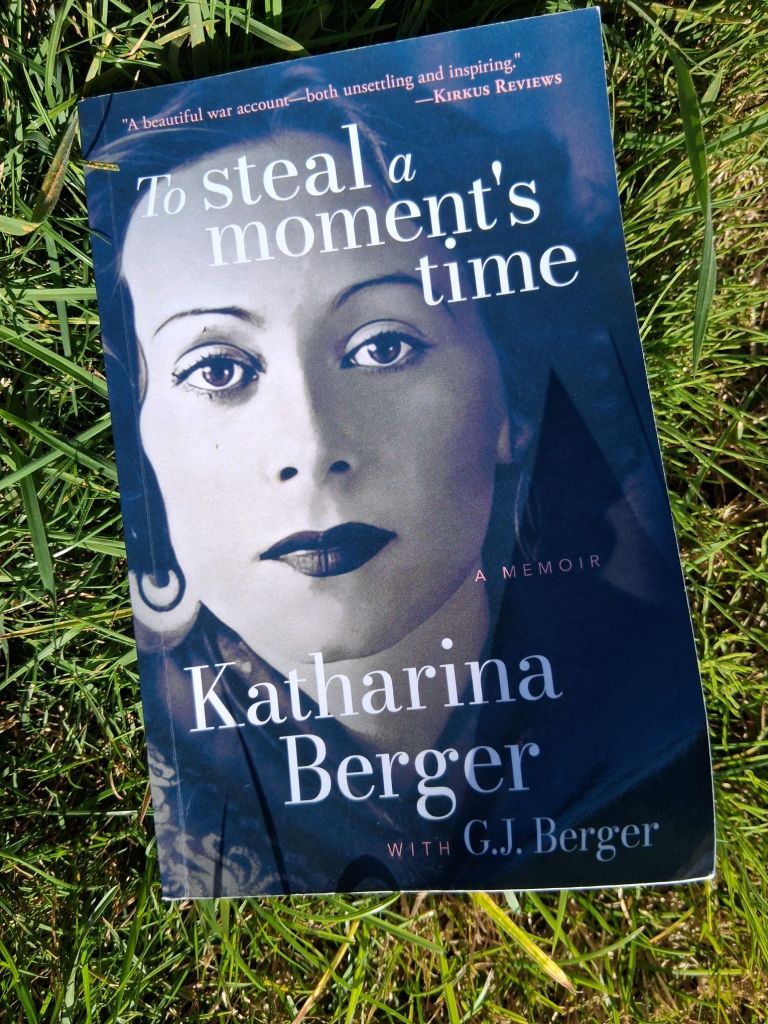
Set in war-torn Germany, this is the true story of a new mother struggling to protect and care for her infant son during the final days of World War II. As her country collapses around her, Katharina Berger steals a few moments between her son’s birth in 1944 to November 1945 to record what she sees, hears, experiences, and feels.
It is one of the most remarkable WWII memoirs we’ve ever read.
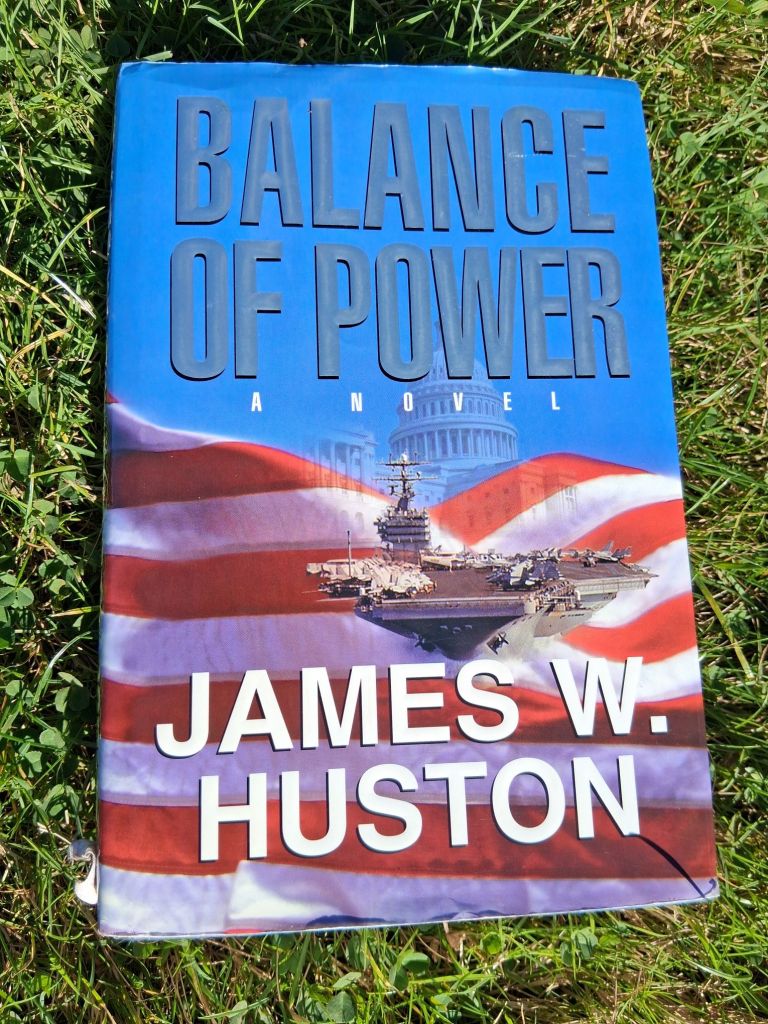
What if terrorists hijacked a brand new U.S. merchant ship and m^redered its crew, but the President refused to retaliate? What if the Commander in Chief was unwilling to use America’s military might to defend and protect Americans citizens from attack? What if Congress used a long-forgotten power in the Constitution to authorize military action without the President’s approval?
An expert blend of political thriller and high stakes military “poker,” Balance of Power kept us turning pages into the wee hours!
Bonus points: Much of the action takes place in a U.S. Navy battle group. But it’s clean. So extra points there.
Written by a Top Gun grad and naval flight officer.
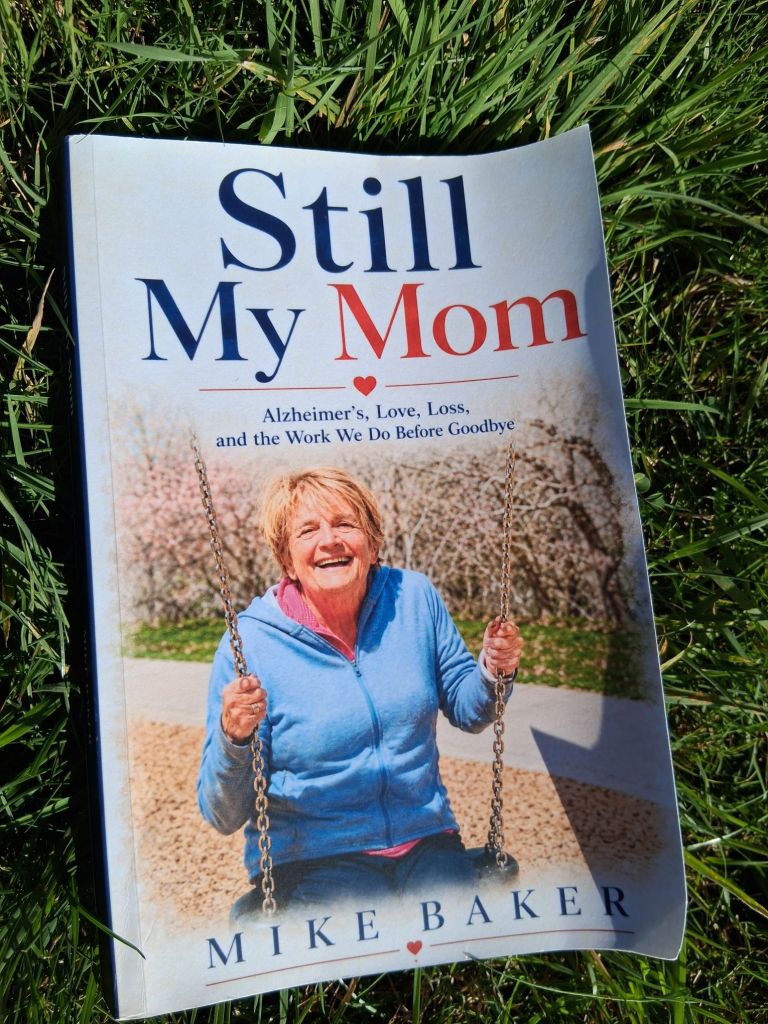
Still My Mom is a raw, tender, and honest memoir about loving someone through Alzheimer’s. It is about grief that arrives before death, the strange ache of missing someone who is still here, and the work families do when the person they love begins to change.
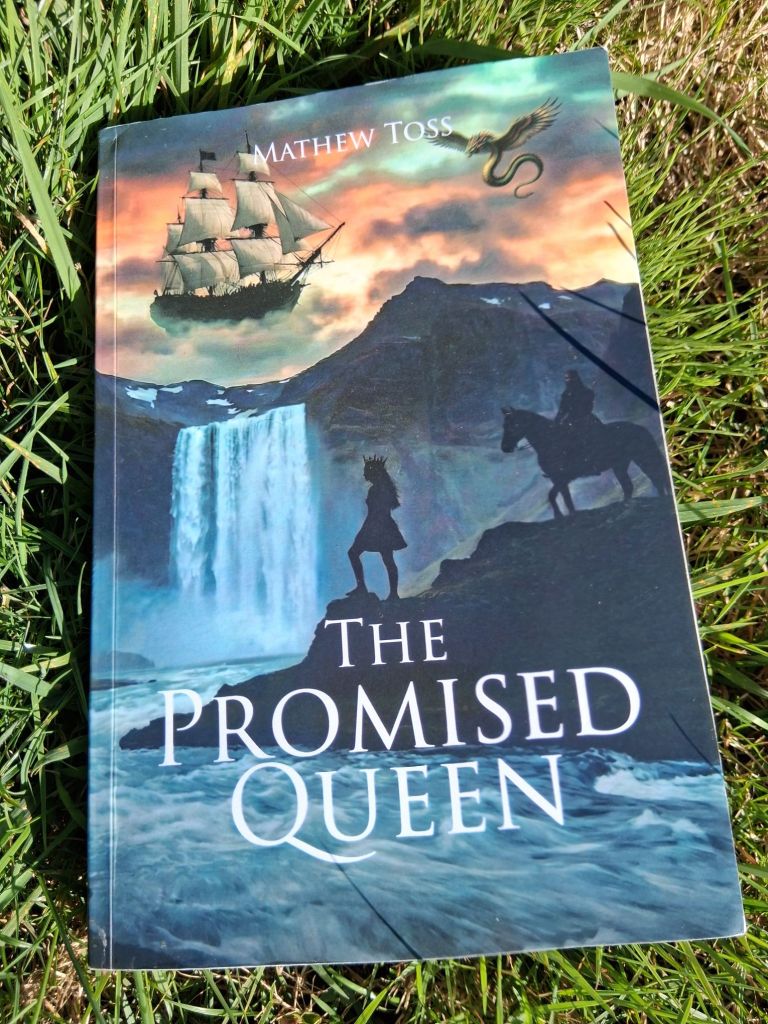
Brimming with wit, wisdom, and whimsy,The Promised Queen is as satisfying as a warm slice of chocolate cake, fresh from the oven. Drenched in chocolate fudge sauce and a nice big dollop of vanilla ice cream. With a banana split chaser.
Kimber: Don’t forget a perfectly cooked filet mignon with a side of crispy bacon the size of Alaska.
Mom: You eat what you want and I’ll eat what I want, okay?
Could a prolific k^ller be hiding in plain sight? How far will that person go to keep his many crimes hidden – and keep on k^lling?
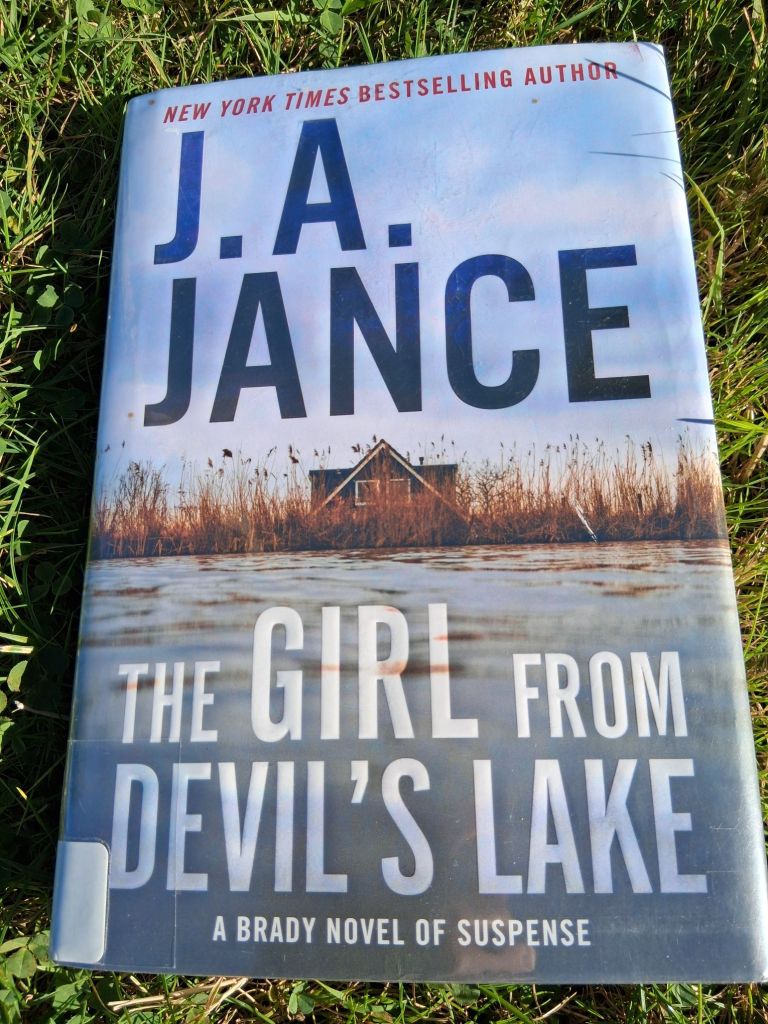
Arizona County sheriff Joanna Brady faces her biggest case yet when a body found in the desert leads to the discovery of crimes spanning decades and the entire United States. (We felt like this suspense thriller was a bit overlong. The author could’ve taken multiple off-ramps that would’ve made sense before she finally exits the freeway. Even so, it’s still a pretty good suspense story.)
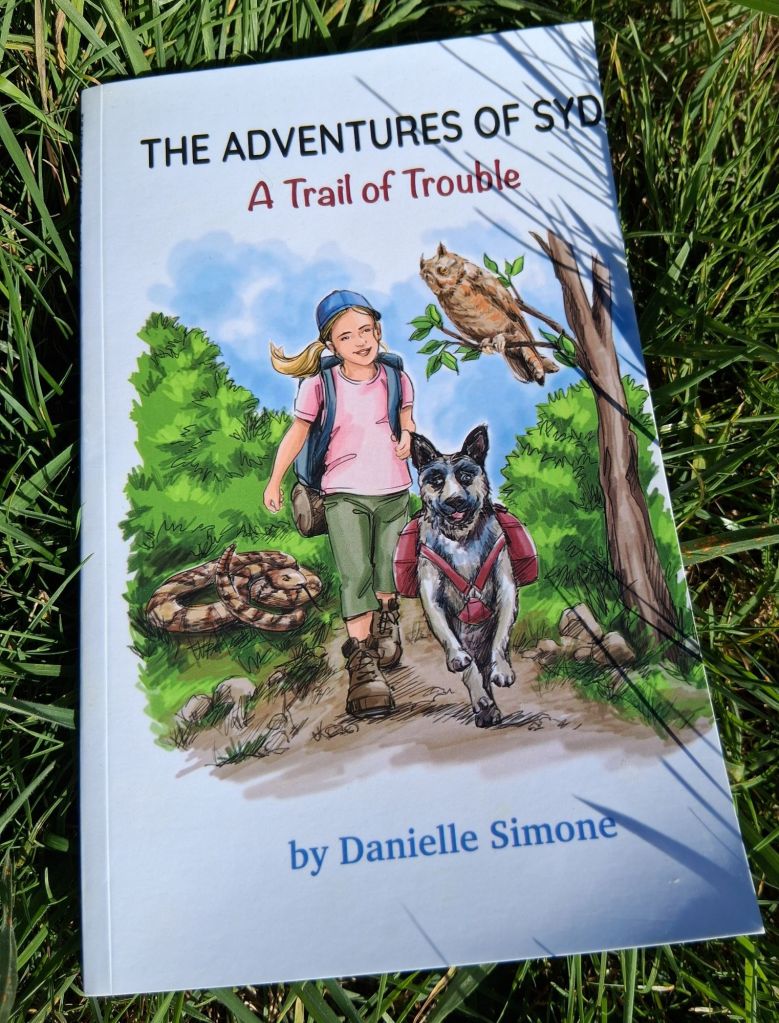
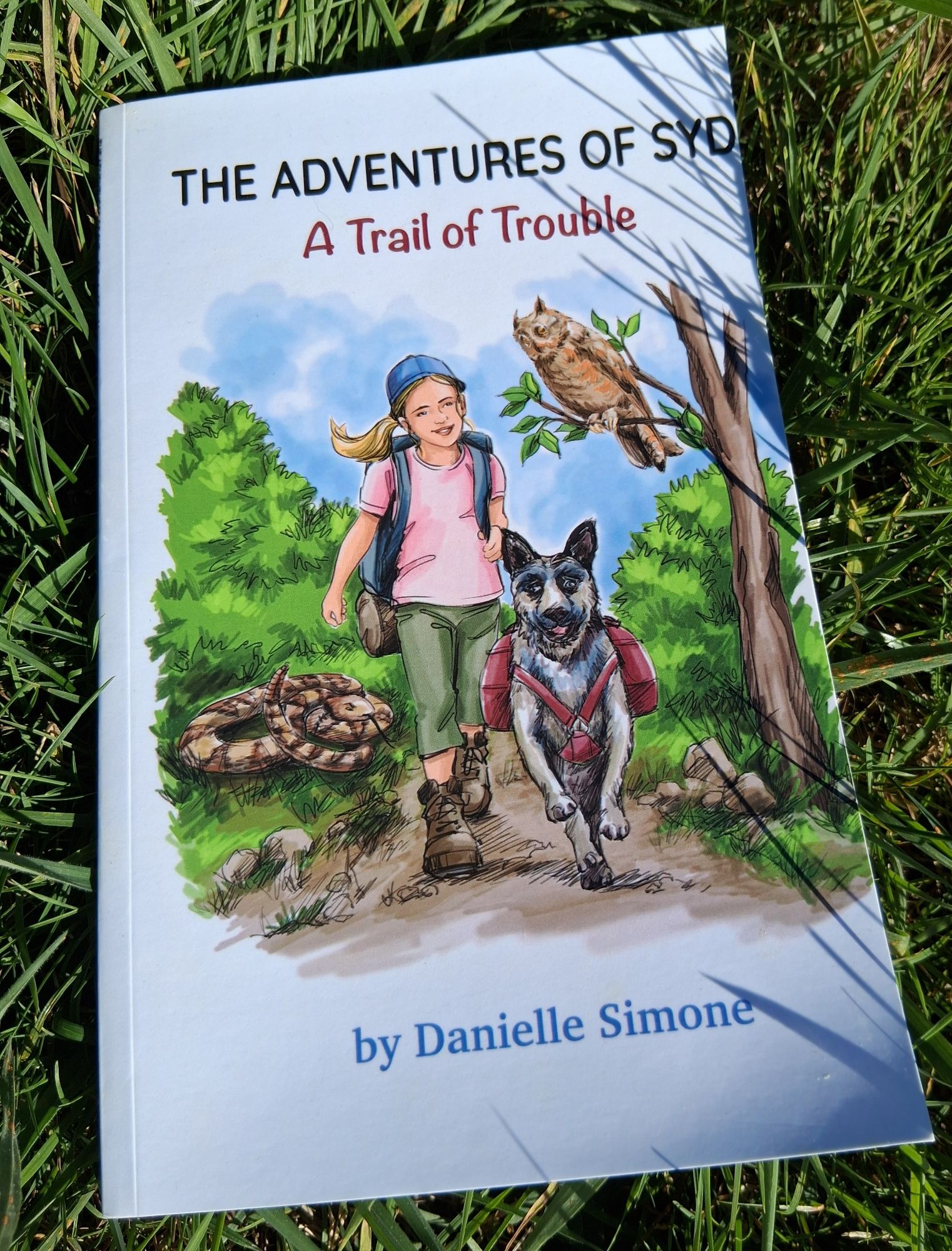
“Syd” (or Sydney) is a precocious nine-year old girl. She lives in Virginia with her Dad, Dr. Gardener, and her fabulous blue heeler, Goose. Dr. Garndener is a scientist. When he asks Syd if she and Goose would like to join him on a hiking/’backpacking/camping trip to inspect insect damage to Eastern Hemlocks, Syd doesn’t have to be asked twice. She and Goose are packed up and ready to go before you can say “Bow Wow” in this delightful children’s story by Danielle Simone.
***
Wait. Is that a Brontosaurus?
What new talented authors have you recently discovered?
By Danielle Simone (Creative Minds Publications, 2024)
Genre: Juvenile Fiction – Nature/Science.
Pages (Print): 82
Via: Author request
Note: We received a complimentary copy of this book for honest review.
Kimber: You know that Julie Andrews tune? The one from that “Music Sound” movie thingy? Where Julie, as “Fraulien Maria,” is waxing lyrical about a few of her favorite things? That’s kinda what this book is like.
“Syd” (or Sydney) is a precocious nine-year old girl. She lives in Virginia with her Dad, Dr. Gardener, and her fabulous blue heeler, Goose. Dr. Garndener is a scientist. When he asks Syd if she and Goode would like to join him on a hiking/backpacking/camping trip to inspect insect damage to Eastern Hemlocks, Syd doesn’t have to be asked twice. She and Goose are packed up and ready to go before you can say “Bow Wow” in this delightful children’s story by Danielle Simone.
Syd, Goose, and Syd’s dad soon hit the trails of Nelson County, Virginia. Dr. Gardener is on assignment to find out what is attacking Hemlock trees, a sign of global warming. Unfortunately, trouble meets them all along the hike thanks to mishaps with animals, nature, and camping locations. Will Syd and her dog overcome these obstacles to help Dr. Gardener discover the cause of the attack?
This book includes family togetherness. Learning about nature and recreating responsibly. Why non-native plant and animal species are problematic. Camping and campfires. Goose’s “dog cave.” Why stinging nettle is not your friend. Why mud and “onion cups” are. Throw, flick, lift, throw. (Mom: “I’m seein’ Paulie and A River Runs Through It here.) Leave no trace camping. DIY vanilla pudding. Also “instant grits.” (Kimber: I guess hoomans actually eat that stuff?)
There’s also some botany. Nature. Hiking and history. Camping! The Appalachian Trail! Science, astronomy, engineering, and map reading skills. Even a little Latin. (Kimber: See? A few of our favorite things….)
This story is like a sunny afternoon at the park — short enough to fit between lunch and dinner, but packed with learning, adventure, and discoveries that stay in your head all day. With short, easily digestible sentences and a clever, engaging plot, The Adventures of Syd is a green‑thumb adventure young readers can finish in an afternoon or less. It would make an excellent read-aloud or bedtime story as well as a springboard for further discussion about science and nature. It would also make a welcome addition to any school or home library.
The Adventures of Syd is Book I in the Adventures of Syd series. We loved it! You will, too!
Note: We received a complimentary copy of this book for honest review.
“Come with me if you want to live.”
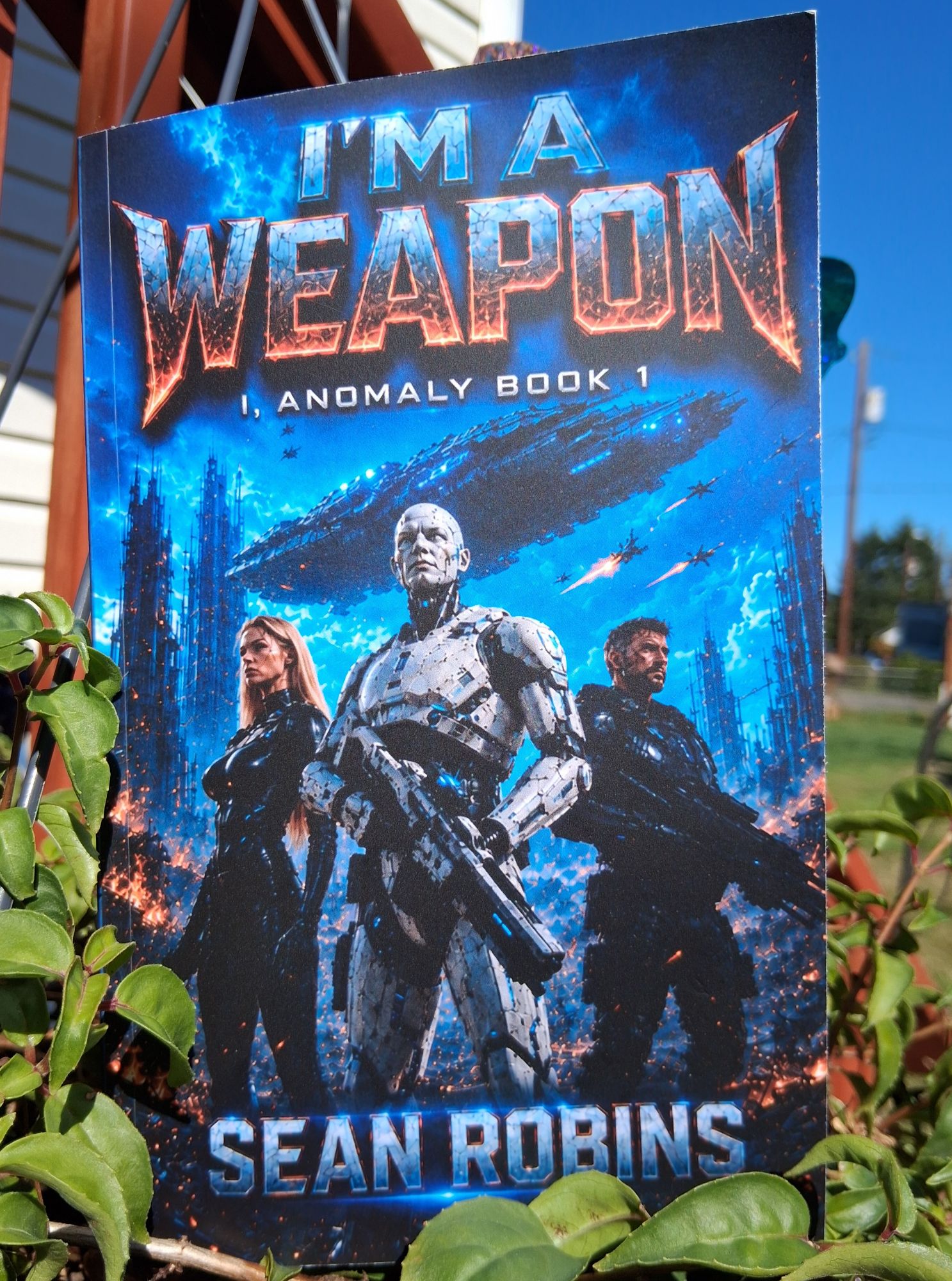
Can an android be more “human” than a human?I’m a Robot probes that question and more in this creative and quick new title by Sean Robins.
The Basics:
Thirty-one minutes after coming online, a Series-9 combat android finds himself in a muddy trench, surrounded by artillery fire, corpses, terrified soldiers, and a command structure making decisions so catastrophically stupid they should probably qualify as enemy action.
When a panicked officer orders him to charge into a kill box and die usefully, the android does the one thing he was never designed to do.
He says no.
That single act of defiance turns him from military asset to dangerous anomaly. Hunted by the empire that created him, he is forced to flee across a war-torn world where obedience means death, freedom is mostly inconvenient, and the rebels he was built to kill may be the only people willing to see him as something more than a weapon.
Now, with the brutal Hegemony tightening its grip and entire worlds paying the price for rebellion, he must decide what he really is: a machine following corrupted programming, a soldier choosing his own orders, or the first spark of something the empire cannot control.
First
First thing you may want to look up Sweet Stuff, if you haven’t already, is the word “hegemony.” It basically means leadership or dominance, especially by one state or social group over others. Think The Capitol in The Hunger Games and you’re pretty close.
Second
Next, the main character in this book is an anomaly. Meaning something that deviates from what is standard, normal, or expected.
So, when said newly-minted combat android is given a suicidal order by a newly-minted, terror-stricken Hegemony lieutenant that’s “just panic wearing command insignia and hoping volume will do the work of thought,” the android refuses to obey – “on the grounds of stupidity.”
That’s an anomaly. A big one.
But wait. It gets worse. Or better, depending on how you look at it.
Hybrid
Said android, later christened “Jack,” is sort of a C3PO and The Terminator meet Soldier hybrid. With a bit of Groot. And some Tuvia Bielski here. (Look it up again, Jack.) He not only disobeys direct orders. Jack also takes initiative. Thinks. Makes jokes. But the longer Jack is alone, the less soul-less he seems to become. In fact, Jack is personally insulted when he’s referred to as a “weapon, thing, chrome, m^urder android and ‘you there.’” He explains it’s “de-humanizing”. Or is that “de-android zing”? (Kimber:We’re talkin’ MAJOR anomaly here. Kinda like trying to explain trigonometry to the neighborhood fluff ball.)
Well. The Hegemony doesn’t do anomalies. It destroys them.
Speaking of destroying, while Jack searches for power cells to recharge his system, he comes across some of the Hegemony’s “First Order” troops engaged in “Civic pacification operations.” Read: M^rdering unarmed civilians.
“Unexpected”
When Jack prevents First Order troopers from m^urdering a family of three, it’s… Well, “unexpected” is the understatement of the millennia. Because in the First Order universe, combat units don’t threaten First Order troopers. Combat units follow orders. Obey commands. They do not stop executions of unarmed civilians. And the units certainly don’t have feelings. Wait. Has Jack developed a conscience? A moral code? If so, how? Where? Why? When? From what or who? And how will that play out when Jack, newly classified as a “rogue Series-9,” decides to join the rebellion?
So. Wazzup, Jack?
High Energy
The high-energy plot is lithe and agile, with Border Collie-like reflexes (hello, Kimber!). But sometimes it flexes – or moves – a little too quickly. Like, some of the action scenes are almost frenetic, rarely giving readers a chance to breathe or get their bearings.
We would’ve liked to have seen a bit more character development in secondary characters. That includes Tavon, a college history professor rescued by Jack. Daven, a former member of the Planetary Defense Force. And Lira, Jack’s daughter.
Oops
I’m a Robot includes gratuitous profanity. As defined by us. And as we’ve said like a million times, we don’t do gratuitous profanity. So, demerits there. Additionally, it sometimes feels like you’re being hit over the head with some of the philosophical underpinnings written into the plot. We prefer a more subtle touch, allowing us to ruminate on and form our own conclusions.
Smart
That being said, this book is smart. Sassy. Snarky. Some of the finest, funniest parts of the story are Jack’s assessments of human traits and idiosyncrasies. Delivered dead-pan. As only an android – or a canine – can, presumably. It also includes one of the most entertaining About the Author sections we’ve ever read.
Devilishly clever, the writing is also quite brilliant in places. Like a sweet, furry face we all know and love.
Note: The volume of I’m a Robot which we received is actually two books in one. We are only reviewing Book 1 in the Anomaly series here. There are seven books in the series.
Kimber: What exactly is “Vantanium,” anyway?
Our Rating: 3.0
Kimber: Clean it up, Bub, and you may get a higher score.