Pages & Paws

Writing, Reading, and Rural Life With a Border Collie


Leave a comment

Seven Deadly Social Media Sins

Congratulations! You’ve taken the plunge and joined the wonderful world of  social media.  Now that you’ve set up your Facebook, Digg, Redditt, LinkedIn or Twitter accounts and have burnished your initial blog post to a fine sheen, you’re ready for the world to snap up your pearls of wisdom.  But wait. Although savvy sales folks and business gurus often push social media as the latest and greatest marketing miracle, it has its hazards.  Here are some common pitfalls to avoid:

  1. Feeding readers a steady stream of me-centered posts. Fascinating as you may find yourself, the truth is that unless you’re the POTUS, a Nobel Laureate or the Pope, you’re probably a “small fish in a big pond.”  One way to “enlarge” or enhance your presence is to get outside yourself and engage others.  Offer content targeted to a specific audience.   Carve out and cultivate your “niche” by offering readers something they can use: tips, tools, advice, links, feedback.  Leverage your experience and expertise into a shared resource.    Respond.  Reciprocate.  Retweet.  Ask questions.  Don’t forget to comment.
  2. Opening an account and using it once in a blue moon.  Your life need not revolve around your Twitter account or blog, nor do you need to develop a Facebook addiction that sends you into withdrawals if you’re not checking in every 20 minutes.  But you need to post on a reasonably regular basis if you want to retain your readers/followers.  Don’t forget to complete your profile and keep it updated!
  3. Posting ho-hum or redundant content. You’re not the only game in town.  If you’re not offering a new angle, fresh perspective, something original or breaking news, your followers will find someone who is.
  4. Using profanity. A big turn-off and a big no-no.
  5. Wordiness. You’ll lose readers if you dump the online equivalent of War and Peace on ‘em every time you post. Choose your content carefully, keeping in mind your focus, theme, and intended audience. Keep posts short, sweet, and to the point (2,000 words doesn’t qualify).  Offer value, not volume.
  6. Expecting to be an overnight heavyweight. Building a social media following takes time and effort.  Schedule in a bit of time each day to work your outlets.  Post quality content to a targeted audience.  Participate, contribute, and be patient.
  7. Taking your readers for granted. Social media is a community. Think dialogue, not monologue.  Focus on building relationships and networking.  That means joining a conversation, offering help, advice, or encouragement and highlighting those who contribute.

If your primary goal in using social media is to promote yourself or your product, you don’t get it.  Instead of selling or self-promotion, focus on building friendships and offering content with “take-away” value.  Be patient.  Stay focused.  Don’t forget your manners.  “Please” and “Thank you” go a long way in both real and virtual worlds.

Keep these tips in mind and you’ll be well on your way to increasing your social media traffic.  Bon voyage!

***

Coming up:

Part 1 of a five-part series: Write Away...


1 Comment

What Makes You a Writer?

If you want to be a writer, write. Write and write and write. If you stop, start again. Save everything that you write. If you feel blocked, write through it until you feel your creative juices flowing again. Writing is what makes a writer, nothing more and nothing less.

– Anna Rice

WordsDo you feel better about yourself when you’re working on an unfinished writing project, making progress?  When you’ve bagged that elusive characterization?  Nailed down that clever dialogue or subtle pacing?  I do.

A Day Without…

Someone once said, “A day without orange juice is like a day without sunshine.”  I’ll go one further: “A day without writing is like a day without orange juice.”  And by “writing” I don’t mean 10,000 words every day (although if you can manage to whip that out on a regular basis, you may qualify for Guinness Book of World records status.)

 I mean have you:

– Jotted down a story idea or character?

– Outlined a new novel?

– Worked on your latest manuscript?

– Journaled?

– Blogged?

– Whipped a troublesome storyline into shape?

– Crashed through that writer’s block?

– Polished up a chapter?

– Re-worked some rickety dialogue?

What Doesn’t Count

Tweeting and updating your Facebook don’t count.  That’s not “writing,” – as in, expending mental energy and effort to create and communicate something unique, fresh, and relevant.  Tweets and Facebooking, although they have their place, are to writing what Cliff’s Notes are to Shakespeare.  There’s a difference.

If you need a friendly jump-start, check out:

34 Writing Tips That Will Make You a Better Writer

Seven Writing Tips from Stephen King

Books Are a Writer’s Best Friend 

(more on this in an upcoming post.)

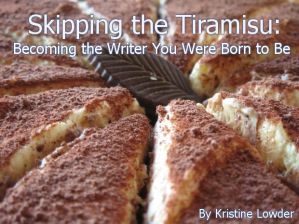
Skipping the Tiramisu Cover 3To reiterate Rice, “Writing is what makes a writer, nothing more and nothing less.”  To explore the concept more fully, grab a free copy of my ebook, Skipping the Tiramisu: Becoming the Writer You Were Born to Be.

How have you worked on your writing this week?

***

Up next: How to Avoid Sneezing By Email and Books to Grow By.


Leave a comment

One Hundred Years From Now…

Pen and bookAmerican economist James M. Buchanan won a Nobel Memorial Prize in 1986 for his work on pubic choice theory. Two questions he reportedly asked job candidates were:

“What are you writing that will be read 10 years from now? What about 100 years from now?”

Has anyone ever asked you that? How did you respond?

Continue reading →


Leave a comment

Cards, Letters, and Lost Pennies

Now that some holiday dust has settled, let me ask you something: Did you send fewer Christmas cards this year than last?  Did you receive fewer?

Maybe it’s the writer in me, but I’m one of what appears to be a rare-and-vanishing-breed of old-fashioned souls who starts banging out a family Christmas letter each year just after Thanksgiving.  Sometimes before.  December without an annual family newsletter is like peanut butter without jelly, Aspen slopes without snow, Lucy without Ethel… Well.  You get the idea.

Do you write letters anymore, even around the holidays?  How many people read your letters?  While I’m clunking merrily away on the keyboard, I’m fully aware that my year-end wrap-up of family news, vacation photos, sports events and special occasions will most likely be speed-read by a select few and ignored by most.  How come?  Here are a few possibilities:

Continue reading →


Leave a comment

‘Desper-Doodles’ and Snake Oil Salesmen

“Never mistake motion for action” – Ernest Hemingway

If you’ve been at the writing trade for longer than twenty minutes or so, you’ve probably noticed the “desperate doodlers.”  These are the writer wannabees who are so desperate to break into print that they’ll pitch their work to anyone and everyone, even paying a third party to get “published.”  Those who continuously stoop to submitting anything, anywhere, with little to no regard to a publisher’s reputation, accessibility or integrity aren’t Real Writers so much as they are Desper-Doodles.  They’re dying to pad their scanty resumes with “publishing credits” from any Tom, Dick, or Harry that comes along and says “I’ll take that.”  (This can actually hurt you in the long run if you make it a habit.)

Heads Up

A word of clarity here: In the publishing world, “small” or “independent” doesn’t necessarily mean poor quality or ill repute.  Just because a publisher or literary outlet isn’t a household name doesn’t necessarily mean it’s a boiler-plate, fly-by-night outfit.  But it might.  So heads up: “Come one, come all” publishers who prey on inexperienced novice writers are a dime a dozen.  They’ll publish anything and everything, usually for a fee, regardless or quality or merit.  Some of these “publishers” make a living at predating on hapless souls who are willing to sell their firstborn for a chance to see their name in lights.

Look before you leap.  You may get your work “published” with some of these “snake oil” publishers, but good luck on finding anyone who’ll actually buy your book – let alone fall in as a loyal reader.

***

Have you had an experience with a publishing “snake oil salesman?”

What did you learn?


Leave a comment

Lessons Learned in Self-Publishing

Attention fellow writers and readers:

Check out: 7 Lessons in Self-Publishing I Learned in the Seventh Grade  by Mainak Dhar.  This guest post on David Gaughran’s blog,Let’s Get Digital: How to Self-Publish and Why You Should, is a bit long-ish, but it’s well worth the read.  Plenty of practical tips, perspective and ‘food for thought’ here.

Speaking of which, have you self-published?  If so, what was your experience?  Positive or negative?  What are some of the pros and cons you’ve encountered in self-publishing?  Would you recommend this route for publication?


1 Comment

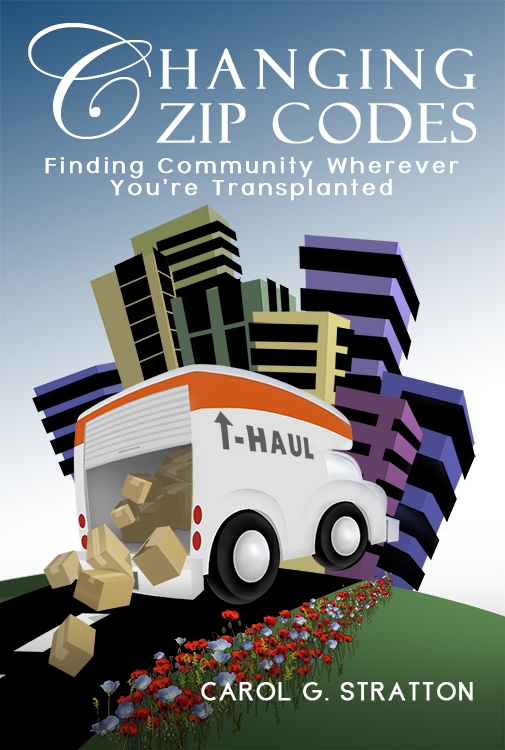
Author Spotlight: Carol Stratton and ‘Changing Zip Codes: Finding Community Wherever You’re Transplanted’

Today we’re getting to know Carol Stratton, author of Changing Zip Codes: Finding Community Wherever You’re Transplanted.  Carol has moved twenty-two times and has a passion for newcomers, “as I’ve been one many times.” She says, “I started out in the SF Bay Area and now live in North Carolina.”

Carol has kindly offered Roads Diverged readers a sweet slice of her book via the following devotional excerpt, All Dressed With Somewhere to Go.  Her bio and contact info. follow. Enjoy!

Changing Zip Codes CoverRejoice in the Lord always. I will say it again: Rejoice!

Let your gentleness be evident to all. The Lord is near. Do not

be anxious about anything, but in everything, by prayer and

petition, with thanksgiving, present your requests to God.

Philippians 4:4-6 NIV


All Dressed With Somewhere to Go

Out in front of his Bible school, David Weaver perched himself on top of a suitcase that held most of his worldly possessions. Even though he was sure he wanted to be a missionary, he didn’t have next semester’s tuition. Consequently, he found himself moving out of the dorm room and onto the school’s front lawn.

If it had been me, I would have been kicking the side of my suitcase, calling home to cry on my mother’s shoulder, or writing a very self-righteous letter to the president of the school.

Not David. A man of strong faith, he sported a large smile and a positive attitude. He had tried every other means to raise funds and nothing had worked. So he just sat outside with a grin, knowing God would come through with a miracle.

 Maybe you need a housing miracle. It might be selling a home and finding temporary shelter before you can move on. It might be an affordable mortgage. But whatever it is, know that God is paying attention. Even though heaven seems mute, He has not forgotten your need. But our part is spelled out clearly in Philippians: we are to rejoice, rejoice again, and rejoice always. After we do that we are to present our requests to God in a thankful manner. So let’s review. Rejoice, rejoice again, and pray with thanksgiving—end of discussion.

But when we are talking about a major relocation in our lives, it’s a very difficult thing to do. That’s when we bring God our “sacrifice of praise.” It’s a sacrifice because we have to give up our normal way of handling things—whining, worrying, and stressing. But to use David as an example, getting our attitude right opens the door for God to work. Want to hear the rest of the story?

As David perched outside the administration building, a lady from the office ran out to tell him they’d found him a place to stay. Two bachelors had a room in their house and David could room there for free. In addition, the house was right behind the school, within walking distance.

As he hauled his gear into his new home, the phone rang. One of the owners picked it up and with a puzzled look, motioned to his new roommate, “It’s for you.” Someone from the school’s office had called to tell him there was a job available and he’d better get over there, pronto. David explained how he was in a grubby T-shirt and jeans, but the caller insisted he needed to get there immediately. He rushed over to the employment office. Standing in line with other applicants, he felt foolish in his grungy work clothes among the suits and ties of the other young men. Suddenly he saw one of the interviewers pointing at him. “Hey you, come up here right now.”  Shocked, he walked to the front of the line. “I need someone in construction and see you are dressed for work. Can you start right away?David shook his head in amazement. In one day he’d gone from being homeless to landing a good roof over his head and a job. What an awesome God.

Today as we feel overwhelmed with a move, let’s remember God does pay attention. Our part is to keep a faithful attitude. You might try pulling out a suitcase and putting it by the front door as a reminder that God does provide.

Taken from the book: Changing Zip Codes: Finding Community Wherever You’re Transplanted

Published by Lighthouse Publishing of the Carolinas

Available at Amazon.com http://tinyurl.com/ox3nxrj

***

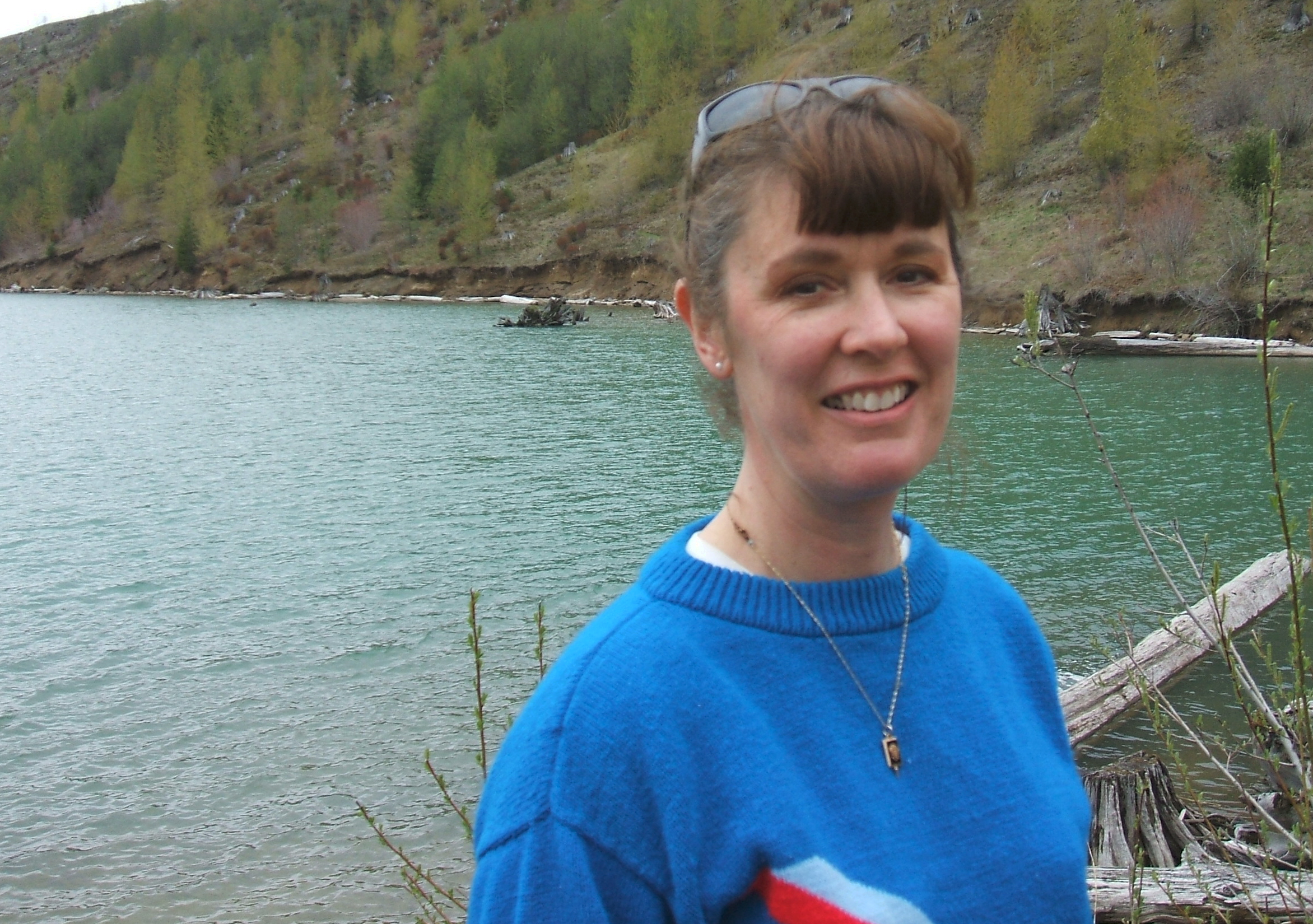
Carol Stratton PhotoCarol G. Stratton has been a freelance writer and speaker for over a decade in publications including  InTouch magazine, CBN.com, Kyria, Forsyth Women Magazine and the Grand Rapids Press as well as two anthologies, Writing so Heaven Will be Different (Wine Press) and Extraordinary Answers to Prayers (Guideposts).

She speaks to MOPS and other women’s groups about life transitions and personality temperaments. She is currently under contract for a women’s inspirational novel called Lake Surrender.

Contact Carol at: carolgstratton@gmail.com or through her website: ChangingZipCodes.

You can also find Carol on Facebook at Changing Zip Codes, or on Twitter at @CarolGStratton.

###

Interested in being  a featured author? Shoot me a comment. Tell me a bit about yourself and your work. I’ll get back to you by email. (Anonymous comments will not receive a response.)


1 Comment

When Is “Free Speech” Not?

WordsWhat is “free speech”? If you’re a writer, you’ve doubtless come across the concept. What does it mean? How does it look? Act? Behave?

For some, “free speech” means “we all have the right to an opinion and to voice that opinion.” Nobody can tell anyone “what they can and can’t say.”  No constraints. No boundaries. Anything goes. Period.

Get Lost, Cookie?

Example: I came across a political blog the other day that contained profanity and some tasteless content, IMHO.  What was said wasn’t an issue; it was how it was said. The blog owner asked readers to comment, share links, etc. Out of respect for my readers, I politely suggested that I’d be happy to do so if the language could be cleaned up. Wrapped in the Bill of Rights and “free speech,” the response was basically, “Get lost, cookie.”

So I did.

When Is “Free Speech” Not?

Realizing that people have a right to disagree and disagree passionately on a variety of topics, I wondered at what point, if any, is “free speech” not free? Is there a point where it becomes costly?

Tossing that out to others recently, the question generated quite a discussion – and many different views and nuances.  Here’s some feedback. “Free speech” may not be “free” when it:

  • Compromises your integrity.
  • Violates your standards.
  • Is intentionally offensive.
  • Your choice of words or writing style is so abrasive that your point gets lost in the flames.
  • All semblance of responsibility and professionalism are jettisoned.
  • Is used to excuse limited vocabulary or lazy writing.
  • Costs you readers.

Someone also pointed out that “free speech” is not an absolute right. “You can’t yell ‘Fire!’ in a crowded theater,” he said.

In America, we hold the Bill of Rights dear. The right to free speech, including the right to disagree, is held dear. And they should be. But are writers held to a higher standard? When? Does that depend on context? Audience? Or something else?

Where do “free speech” and responsibility intersect? Or do they? Does it matter?


Leave a comment

Caring, Crafting, and Rekindling

Remember my post from awhile back, Andretti, Puccini, and 120 MPH With Your Hair on Fire?  (That’s okay. I’ll wait.)

Anyway, that post talks about  re-charging the ‘ole creative batteries and caring for your heart.  About slowing down long enough to drink in some beauty. Share grace.  Rekindle your sense of awe and wonder and delight.  I offered some suggestions.

So writer, how are you caring for your craft by caring for your heart today?

If you’re running around at warp speed, may I make a suggestion – and offer an example? Take a few moments to slow down and enjoy this cool video by The Piano Guys,  (It’s even better if you know the lyrics.) 

Be refreshed. 

Then share with a friend who could use a boost. Tell us who you shared it with in the comments section. You might also let us know how you care for your craft by caring for your heart:


Leave a comment

Books to Grow By – How Many Have You Read?

Books to Grow By:

As mentioned last time, if you’re a writer, chances are you’re also a reader.  So let me ask: have you seen the list of Books Everyone Should Read that’s floating around Facebook?  Did you read it?

I did.  IMHO, several of the titles were questionable and many books that should’ve been included weren’t.  So I came up with my own list: Books to Grow By.

Classic, contemporary, and just for fun titles are included, plus some surprises.  (Note: With apologies to high school English teachers everywhere, I simply cannot abide ‘stream of consciousness’ prose a la Faulkner, which is one reason The Sound and the Fury isn’t included.  Ditto Wuthering Heights and The Great Gatsby.)  You’ll also find evidence of my conviction that some of the finest literature ever written can be found in the Children’s Section.  Selections appear in alpha order by title.

Click here for the full list. :)

Coldwater Lake - Mount Saint Helens.

How many of these have you read?  What are YOUR favorites?  Share in the comments section.