The relationship between characters and plot in any novel is pivotal and tricky. A story is often plot driven but what I remember most when I finish a satisfying read are the characters. Of course, good plots makes characters memorable how they get in and out of jams, express or repress their emotions, and make sacrifices, but down deep I just like who they are above and beyond what they do. They may start out as the tail but they end up as the dog.
My own characters sometimes become friends. At least conversationally. “Hey, should I return my latest, ridiculous Amazon purchase?” Or, “What wine should I bring to this dinner party because my expertise is wine labels.” If they’re going to be my friends, this begs the question about what kind of characters do I like to draw from in real life. Someone different from me, as much as possible, and who strikes me as interesting in conflicted ways. Someone challenged by the limits of both their strengths and their weaknesses. In the end, I hope they are sympathetic to most readers.
Even unsympathetic characters require a lot of attention and exploration before they go on the written page. Minor characters, too, require serious thought because their place in the narrative can enhance or diminish the total effect. Every blemish – and all novels have them, if a reader looks closely enough -shows.
In Ghost With Two Hearts, there are two main characters, and I like both, but creating one, a computer coder, was easier than fabricating the other, a ghost serving an eternity in Shinto Hell. Making a realistic (at least plausible) ghost, about whom an author can’t do much research, worked out in the end. A lot of drafts were written and discarded over 18 months. I got to invent a ghost who is quite human. She is being tortured by gods (i.e., society) by denying her the right to sleep/dream, controlling her memories, and shutting her off completely from loved ones she inadvertently damaged but longs to be forgiven by and united with. How does anyone escape a fate like that?
We know the need to be loved is universal. In Ghost With Two Hearts, I began to wonder if that includes the dead.
About Ghost With Two Hearts:
Summary:
Approaching 30, Adrian, a talented software engineer, takes stock of his wealth and accolades – and how unhappy he is. He doesn’t make friends easily, dislikes social media, and was bloodied in a divorce. He finds no common purpose in a country defined by political vitriol, distrust, and inequality.
Taking a leave of absence from his company, he travels to Japan with a samurai sword that his grandfather stole from a Japanese captain in World War Two. Adrian is determined to find its rightful heir. Doing the morally correct thing, he hopes, will make him feel better about his life.
Print Length: 193 Pages
Genre: Fiction, Cultural Heritage Fiction, Ghost Fiction
Publisher: Independently Published January 12, 2023
Note: We received a complimentary copy of this book in exchange for an honest review.
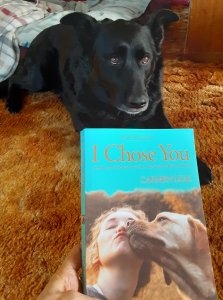
Okay. First off. Who can resist a cover like this? I mean, c’mon. Talk about “Too Cute!” Even the neighbor’s cat is gonna want to snuggle up with this sweet little fella. You will too after a few pages. Like this:
Note: We received a complimentary copy of this book in exchange for an honest review.
It’s Friday. But Sunday’s comin’!
And what better way to mark it than with Mark Miller’s PAWsome new book, DAWN?
Here’s the short version of why:
Oceans of ink have been spilled about the crucifixion and resurrection of Jesus Christ. It’s not exactly a new topic. But there’s something in Mark Miller’s re-telling that’s as fresh and vibrant as this morning’s sunrise. As relevant as today’s headlines.
Kimber here. Reminding some of you newbies about a Totally PAWsome new author we found last year-ish. Name’s Rogers. Rick Rogers. (Works best said with a tux and a martini. Shaken. Not stirred.)
So when Rick contacted us recently with a guest-ish post, we jumped at it. Like:
Prompted by a recent author interview with Sharon Brubaker, Rick’s post is all about writing and the writing craft. You’ll love this. Trust me. Have I ever steered you wrong? (Well. Okay. There was that one time with the prime rib. But I think Mom’s forgotten about that by now.)
Anyway, just swipe the nearest burger off your human’s plate when they aren’t lookin’ and settle in for an insightful and engaging read. Take it away, Rick!
Congratulations! The weekend is in sight. So today we’re doing something a little diff. We’ve had a lot of inquiries from authors about “building a platform.” How do you do it? What does it take? Ideas? Dos and Don’ts?
So here, at no extra charge, is The Official Mom and Kimber Guide to How to Build Your Platform. You’re welcome:
You’re kidding, right? I say this to Mom a lot. Especially when she gets The Look. You know. That Look. It usually precedes a mile-long description of her new favorite book. Of course I listen. Because, ya know. That’s my job. Well, that and being beautiful and brilliant. (It’s a tough job. But I’m up for it!)
So when Mom came up with yet another harebrained idea the other day – where do these things come from? – I just smiled and listened.
Mom’s latest brainstorm? A list of really cool murder mysteries/whodunits.
Being the brains in this dynamic duo, I tried to remind Mom that she doesn’t typically gravitate toward either genre. But you know Mom!
It’s been like FOREVER since our last Fine Wine Friday. One of us has been falling down on the job (Hi, Mom). So let’s go!
So here, in no particular order, are Mom’s recently-ish read murder mysteries/whodunits. All get at least a four on the Official Mom and the Kimster rating-o-meter:
“Don’t look at me,” says I, Kimber the Magnificent. Mom’s idea. Again. Insert eye roll here.
Anyway, I’m tail-waggingly excited today! And it doesn’t even involve bacon! Nope. I’m excited cuz we’re getting to know one of our new favorites today, Sharon Brubaker. Sharon shares with us about her inspiration for her book, Tides of Blue, her writing process, writing advice for beginners, other work in the pipeline and lots of other good stuff. (See our review of Tides of Bluehere.)
I’d listen up ‘fize you! So let’s dive right in. Take it away, Sharon!
a person who is in charge of a worker, group, or organization:
Kimber here. I’m explaining what a “boss” is. In case you’re wondering about who’s in charge around here. And ya know what? Mom takes orders pretty well. Most of the time.
So about how to write a book review. We’ll show ya how in five easy steps. But first, let’s determine what is and isn’t a “book review,” okay?
According to family lore, one of us has roots in Ireland. So on this Saint Patrick’s Day we’re highlighting books worth reading that are set in and around the fabled Emerald Isle.
Now, if you Google “Books set in Ireland” or something similar, you’ll find a veritable pot o’gold at the end of the proverbial bibliophile rainbow. But we’re only highlighting books we’ve actually read. And that’s no blarney. (Incidentally, we’re not really big fans of James Joyce. In case you’re wondering. So don’t look for Ulysses on this list, okay?)
Here are 10 Worthy Reads Set in and Around Ireland, just in time for your Saint Patrick’s Day! How many have you read?
A masterful memoir of Frank McCourt’s childhood in Ireland.
Frank’s mother, Angela, has no money to feed the children since Frank’s father, Malachy, rarely works, and when he does he drinks his wages. Yet Malachy—exasperating, irresponsible, and beguiling—does nurture in Frank an appetite for the one thing he can provide: a story. Frank lives for his father’s tales of Cuchulain, who saved Ireland, and of the Angel on the Seventh Step, who brings his mother babies.
Dateline: Ireland, 1830s. English landlords hold power over Irish tenant farmers and seeds of bitterness are ssown that would last for generations.
In an endeavor to eliminate all influences of Irish heritage, the English force an intellectual and spiritual bondage on Ireland as well as a bitter physical bondage of servitude. Freedom has become so rare that the Irish coined a saying, “In Ireland only the rivers run free.”
Yet one poor, befuddled old woman speaks of freedom, truth, and hope. Mad Molly Fahey promises the priest and villages that a miracle is on its way.
Western Ireland’s potato crop was the best it had been in October 1844. But by the next year, the Irish would see the potato blight destroy the crops and thousands will die of starvation.
Soon a great migration to America would begin as the hopelessness of the situation finally sinks in. In this fourth and final book of the Galway Chronicles, the story of Kate, Joseph, and the inhabitants of the village of Ballyknockanor continues with Joseph’s dramatic return to his estate and the beginning of the terrible years of the Irish potato famine.
The book picks up where Gone With The Wind Leaves Off. Heartsick after Rhett walks out, Scarlett eventually heads to Ireland and is heartily welcomed by her Irish kin. There she finds an old house called ‘Ballyhara’; it was O’Hara land long ago before the English seized it. Scarlett soon receives a notification of divorce from Rhett. She makes plans to leave for America but learns that Rhett is now married to Anne Hampton, who is said to resemble Melanie Wilkes.
Heartbroken, Scarlett decides to remain in Ireland. She leaves part of Tara to her son Wade Hampton (fathered by her first husband, Charles Hamilton), buys Ballyhara and settles down in Ireland, to her Irish family’s delight. But then… Oh, wait. You’ll have to read the book to find out what happens next.
Tales and legends that range from the misty dawn of Gaelic history and the triumph of St. Patrick to the Ireland of the present day – tales as beautiful, mystical, and enchanting as the ancient land itself.
A heartwarming tale about an unlikely friendship between a spider and a leprechaun. The delightful story follows Spuds the leprechaun and his disdain for spiders.
Finn McCool is the largest giant in all of Ireland. He’s a fierce warrior, even beating the giant Culcullan and saving Ireland from the Scots. Helpful and kind, he helps the farmers bring in the hay. “He’s the best-hearted man that ever walked on Ireland’s green grass.”
But for all his strength, courage, and goodness, there’s one thing that Finn lacks. He’s just not smart. And he knows it. When a wise man living in a nearby village tells Finn about a magical red salmon with the wisdom of the world, Finn sets out to catch the fish. He learns a thing or two about himself in the process.
Introduced by Seamus Heaney, this collection of Yeats’s best poems provides insights into the work and readers’ reactions. If you’re interested in William Butler Yeats’s work, check it out.
A collection of 300 contemporary images of the natural beauties of Ireland, covering every one of the 32 counties. The photographs are taken by two of the country’s leading landscape photographers, Peter Zoller and Michael Diggin.
This little book introduces young readers to the life and work of the Patron Saint of Ireland.
Brief, bite-sized sentences take readers on a nimble journey through Patrick’s life, beginning with his birth in old Britain. How he’s stolen from his parents and winds up in the wild and pagan country of Ireland as a slave. Working as a shepherd, Patrick discovers God’s grace and turns to Christ.
Even if you’ve heard about the legend of Saint Patrick for years, there’s something endearing and uplifting about the simplicity of this book and the simple and conversational writing style. It’s like nestling into grandma or grandpa’s lap and hearing them tell you the story over a hot cuppa.
Do you have a favorite book set in or around Ireland? Holler in the Comments!
Note: We received a complimentary copy of this book from Reedsy in exchange for an honest review.
You’re not afraid of ghosts, are you?
What’s a city girl from Chicago doing locked in a high tower prison in a creepy old house in 1930s New Orleans? How did she get there, and why? These questions and more swirl throughout Tom Xavier’s utterly absorbing mystery, The Case of the Crying Signpost.