Pages & Paws

Writing, Reading, and Rural Life With a Border Collie


Leave a comment

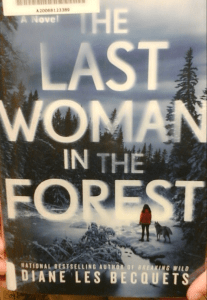
Shelf Awareness & ‘The Last Woman in the Forest’

The Last Woman in the Forest

Penguin Random House, 2019

By Diane Les Becquets

The hair-rising Prologue starts with murder “Victim #1.” There are four victims in all. Four young women. All with an independent streak. All with trusting natures. All dead in or near the Stillwater Forest, apparently by the same psycho serial killer.

Continue reading


Leave a comment

‘Without Complete Understanding’: Why ‘Wartime Sisters’ Runs Through It

In his novel, A River Runs Through It, author Norman Maclean struggles to make sense of what happened to his family in the early 20th century and why. Set in rural Montana, this hauntingly evocative novel was made into a major motion picture in 1992. It’s directed by Robert Redford.

Lynda Cohen Loigman’s The Wartime Sisters echoes themes from A River Runs Through It. Especially the final scene featuring Tom Skerritt as Norman’s pastor father. The last message we hear Rev. Maclean deliver is called We Can Love Completely:

Continue reading


1 Comment

What Do Spartacus and 5 Dragonets Have in Common?

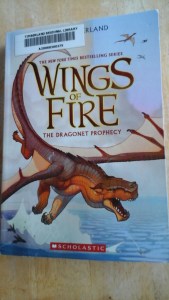
Wings of Fire: The Dragonet Prophecy

By Tui T. Sutherland


You know that “We who are about to die salute you” gladiator scene in Spartacus? Where Kirk Douglas is forced to duke it out to the death with another gladiator?  Add some scales, talons, and wings. Stir in five dragonets who are the only hope for peace between endlessly warring dragon tribes. And you’ve got the gist of Tui T. Sutherland’s Wings of Fire: The Dragonet Prophecy. It’s Book 1 of a 12-book fantasy novel series set in the mythical land of Pyrrhia.


Plot Summary

A war has been raging between the dragon tribes of Pyrrhia for years. MudWing dragonet Clay and four other dragonets have lived their entire lives – six years – under a mountain. Purloined from their homes as eggs, the quintet has been hidden from the rest of the world until they’re ready to fulfill their destiny. According to a mysterious Prophecy, five dragonets will end the bloodshed and choose a new queen.


Or will they?


When Clay and his spunky buddy, Tsunami, make a daring escape and return to rescue the others from their subterranean existence, everything kind of goes sideways. Inches from freedom, plucky Clay and his friend are captured by the deadly SkyWing dragon queen, Scarlet. She forces her prisoners into to-the-death gladiator battles reminiscent of Spartacus. (See? I told you so.)


Queen Scarlet’s champion is an undefeated SkyWing named Peril. She responds to Clay’s kindness. But is Peril friend or foe? And who will become queen?


Wit and Humor

A rapier wit and subtle humor enliven this delicious fantasy tale. Sutherland’s world-building is also first-rate. You can almost hear fire sizzle, smell the musty earth and feel the waves of an icy river and waterfall lap at the pages.


The plot picks up speed quickly as “huge, handsome idiot” Clay and his pals battle to escape Queen Scarlet’s evil clutches and search for their own families while trying to unravel their intertwined destinies. A fun read for older elementary or middle schoolers or anyone who enjoys exploring fantasy worlds, dry humor and traipsing in and out of dragon lairs.


Don’t Eat the Block Rocks

Along the way we learn that old scrolls and dusty lectures can come in handy. Eating black rocks from the Diamond Sky River turns out not to be such a great idea. Peril and the Champion Shield uncover a secret.


You should also know that there’s more than one kind of dragon in Pyrrhia. The different dragon tribes are: SandWings, MudWings, IceWings, RainWings, and NightWings. And not every dragon breathes fire.


One other thing: Mud isn’t just for squishing in.


Keep An Eye Out

One other, other thing. And this is kind of important. Not every dragon wants the Great War to end. Like Burn. And what’s up with Morrowseer? I’d also keep an eye on Blister, ‘fize you.


But I’m getting ahead of myself.


Is this unlikely band of rag-tag dragonets really destined to fulfill a mighty Prophecy, or are they just being lured out into the open where evil stalks their every move and treachery awaits…?


Oh, the dragonets are coming

They’re coming to save the day…


3.0


For more on our rating system, click here.


Leave a comment

5 Easy Recipes + 1 Good Book for Your Super Bowl Sunday

There’s this football thingy going on this Sunday. Apparently it’s a BIG football thingy. Dad’s working on “game day food.” I’m not sure what that means. But if “Game Day” makes the kitchen smell this good, then we should do Game Day every day.


Here are five of Dad’s and my favorite snacks and recipes for Super Bowl Sunday. (I don’t really care who’s playing. As long as I get bacon.)


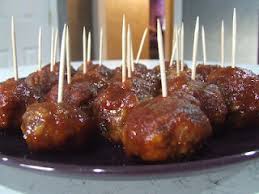
CRANBERRY COCKTAIL MEATBALLS

(Makes 2 dozen cocktail-sized meatballs)

Flickr

Meatballs

2 lbs. ground beef round

1 cup packed cornflake crumbs

2 eggs

2 Tablespoons soy sauce

1 teaspoon minced garlic

1/3 cup catsup

½ cup finely minced onion


Sauce

I can ( 16 oz.) jellied cranberry sauce

1 bottle (12 oz.) chile sauce

1 Tbsp. brown sugar

1 Tbsp. lemon juice


Mix meatball ingredients together in a large bowl. Form into walnut-sized balls. Place in a large square baking pan.


Preheat oven to 350 degrees. In a saucepan mix together the sauce ingredients; Stir and simmer until the cranberry sauce melts. Pour over the meatballs and bake, uncovered for 30 minutes.


Adapted from Four Midwestern Sisters’ Christmas Book, 1991.


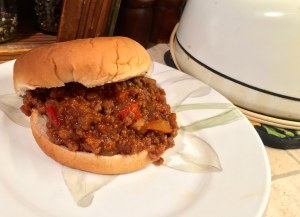
MOM’S SLOPPY JOES

Flickr

1 lb. ground beef

1 medium onion, chopped

1/2 cup chopped green pepper

1/2 lb. frankfurters, sliced

1 8-ounce can tomato sauce

1 tsp. salt

1 tsp. chili powder


In a skillet, lightly cook beef, onion and green pepper.  Drain fat.  Stir in remaining ingredients.  Simmer 5 minutes.  Serve open-faced on kaiser or sour dough rolls, or hamburger style.


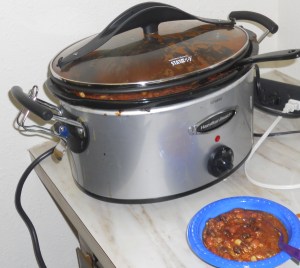
CHUNKY CHICKEN CHILI

1 lb. boneless skinless chicken breasts, cut into bite-sized pieces

1 cup chopped onions

1 cup chopped celery

½ cup carrot

2 garlic cloves, minced

1 cup mild salsa

1 (8 oz.) can tomato sauce

3 teaspoons chili powder

½ teaspoon cumin

1 (15 oz.) can garbanzo beans

1 green bell pepper, chopped


Spray large nonstick saucepan with nonstick cooking spray. Heat over medium high heat until hot. Add chicken, onions, celery, carrot and garlic. Cook and stir until chicken is no longer pink.


Stir in salsa, tomatoes, tomato sauce, chili powder and cumin.


Bring to a boil. Reduce heat. Cover. Simmer 30 minutes, stirring occasionally. Stir in garbanzo beans and bell pepper. Simmer until thoroughly heated.  6 (1.5 cups) servings.


Adapted from Classic Pillsbury Cookbooks, Heart Healthy Recipes


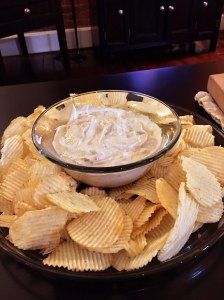
CREAMY ONION DIP

1.5 cups dairy sour cream

2 Tbsp. dry onion soup mix

½ cup crumbled blue cheese (2 oz.)

Assorted vegetable dippers (celery, carrots, cauliflower or broccoli florets, bell pepper, baby carrots, radishes, cherry tomatoes, etc.)


In a medium bowl stir together sour cream and dry onion soup mix. Stir in blue cheese. Cover and chill for at least 4 hours or up to 48 hours. If desired, sprinkle with snipped parsley just before serving. Serve with veggie dippers. Makes 1.75 cups.


Adapted from Better Homes and Gardens Best Loved Recipes 2006


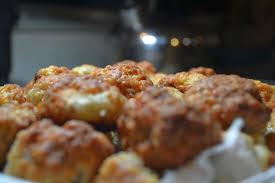
SAUSAGE-CHEESE BALLS

Flickr

1 lb. bulk hot sausage, browned and cooled

1 lb. sharp cheddar, grated

3 cups Bisquick

¾ cup water


Combine, shape into 1-inch balls. Bake until lightly browned, about 20 minutes, at 350 degrees. Reheats well. Freeze separate, then put into bags. Makes 80 -100.


Adapted from Seasoned with Love: A Book of Favorite Recipes compiled by the Joint Heirs Sunday school class of Whittier Hills Baptist Church, April 1984.


Mom’s contribution:

Not being a football fan, there’s just one “football book” I can recommend for today: I Am Third, by Gale Sayers.


Movies featuring football worth seeing again and again? The Blind Side and Facing the Giants. Two thumbs up for both!


What would you add?


TTFN!

Mom and Kimber

(And Dad, too)


Leave a comment

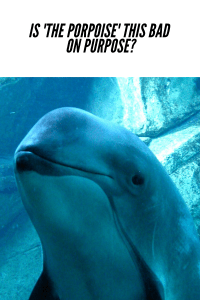
Is ‘The Porpoise’ This Bad On PURPOSE?

The Porpoise

By Mark Haddon

Doubleday, 2019


If you don’t have anything better to do – like watch paint peel – check out a Catcher in the Rye Meets Flipper & Faulkner Wannbee. It’s called The Porpoise.

Plot Summary

The sole survivor of a plane crash that killed her mother, Angelica is raised by her insanely rich, overprotective father, Philippe. More of a nutcase with “issues” than he a grieving widower, the guy’s a first class Creepazoid.


Angelica grows up in about 40 pages.  Rumors swirl around the isolated daughter of breathtaking beauty. When a potential suitor, Darius, arrives, he guesses more than he should. He winds up hightailing it out of Daddy’s swank digs fast, with an assassin on his tail. Darius runs for his life aboard a boat, The Porpoise.


“Darius”? Seriously?


Says one breathless reviewer: “And then, over several extraordinary pages, he sails out of contemporary Britain and into ancient mythology, shedding his old self and becoming Pericles in the process.”


Snooze Alert

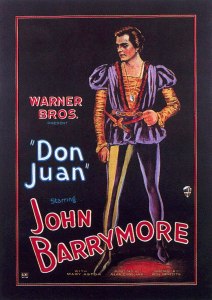
Great. A modern-day Don Juan wannbee who thinks he’s Pericles fleeing an abusive dad while trying to navigate into a Greek legend.

Yep. It’s that bad. A fact that does not go unnoticed by the Encyclopedia Britannica:


Pericles, play in five acts by William Shakespeare, written about 1606–08 and published in a quarto edition in 1609, a defective and at times nearly unintelligible text that shows signs of having been memorially reconstructed. …The play was based on the Classical tale of Apollonius of Tyre.


“Defective” and “nearly unintelligible text” is right.

Flickr

Gag Me

The Porpoise is supposedly based on Shakespeare’s play which is based on the legend of Apollonius. The brittle, overwrought and often unintelligible Porpoise also seems to be in the running for One Flew Over the Cuckoo’s Nest, Part II. As do George Wilkins’s clogged arteries.


It’s almost as if the author is so desperate to impress, he dumps every literary dust mote ever dashed onto papyrus and swashes them onto the page in one fell swoop. (If I want Shakespeare I’ll get the original, thank you very much.)


Then it’s back to Angelica, silent again. Oh, and she stops eating, too. By this time, however, she’s pretty much a footnote to a story that lurches onward focusing on Darius/Pericles.


Land, ho! Naw. Just kiddin’.


Limping Along & Anchorless

Anchor-less, the author can’t seem to decide who his protagonist is or which end is up. So he just wanders around aimlessly, spilling out endlessly descriptive passages like bread crumbs to voracious sea gulls for no discernible reason. Cuz lemme tell ya, baby. That habit neither propels nor rescues the stilted and largely incoherent story that’s already limping along on legs as wobbly as a newborn colt’s.

Pexels Stock Photo

The result is a prattling, incoherent sop that makes Benjy Compson look eloquent. (To the horror of high school English teachers everywhere, I’m not a big Faulkner fan. But Porpoise isn’t even a good knock-off of Faulkner or The Bard. That’s why I’m not linking to it. On porpoise. That’s not a typo.)


Sure, the back cover is peppered with effusive praise. But so was Proust.


Hopelessy Obtuse

With a hopelessly obtuse plot that just tries too hard, this load of horse hooey ranks right up there with a tale told by an idiot, full of sound and fury signifying nothing.


Indeed, it’s been years since I slogged through a book this bad. Don’t waste your time. I already did. With apologies to Flipper.


0


For more on our Rating System, click here.


Leave a comment

A Rich Read to Warm Your Winter

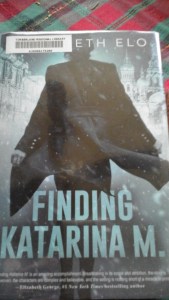
Finding Katarina M, by Elizabeth Elo

Harrowing and haunting, Finding Katarina M is an unusual story. The writing is top-notch. The characters are dynamic. The plot is lithe and engaging, with pitch-perfect pacing and enough intrigue to grab the reader like a colt with a new bit racing toward the wire in the Kentucky Derby.

But I just couldn’t shake the feeling that it was a little too far-fetched.

A successful Washington, D.C. surgeon on a mission to Northern Nowheresville, Russia to find her grandmother who supposedly died in a Siberian gulag is recruited by the CIA to spy on black market WMD sellers after her teenage cousin and aunt, also recruited by the CIA, disappear?

Then Dr. Natalie March is accused of a double murder, refuses to leave the country, discovers a horrible secret at an abandoned gulag site, winds up in a Russian prison, escapes, and miraculously locates her long-lost aunt in an unmapped village, second star to the right and straight on to Nowhere? And snow. Lots and lots of snow.

And NYPD Detective Ruggeri, CIA spymaster Meredith Viles and her unsavory sidekick, Oleg? Straight out of central casting. And what’s up with that last minute fling with Dimitri?

Even so, the story works.

Dr. Natalie March is a respected American surgeon at the top of her game. Single and closing on 40, Natalie doesn’t have time for anything or anyone outside of a hectic work schedule, her medical journals, and her beloved mom, Vera. A Russian immigrant, Vera has multiple sclerosis and is confined to a care facility. Natalie visits her every Sunday morning.

Vera was ripped from her mother’s arms as an infant when her mother, Katarina Melnikova, was sent to one of Stalin’s notorious gulags. Natalie always presumed that her grandmother Katarina was among the millions of Russians who perished in the notorious labor camps. Until a young woman, Saldana Tarasova, shows up at her office claiming to be her cousin.

A Russian ballerina in the U.S. on a cultural exchange, Saldana insists that Katarina is still alive. She also indicates that her mother and brother, Natalie’s aunt and Cousin Mikhail “Misha”, are in grave danger in Russia.

Saldana is desperate to defect. She tries to enlist Natalie’s help. Reluctant to break the law, Natalie waffles. But when Saldana is murdered, Natalie journeys to Siberia to uncover the truth about her young cousin’s death. In the process, she’s drawn into a tangled web of deceit, double-crosses, and family secrets that pit her against the CIA and the dreaded Russian FSB.

Accused of two murders she didn’t commit, Natalie winds up in Female Prison #22 in the frozen hinterlands of Nowheresville, Siberia. There, her medical expertise comes in handy during a daring escape reminiscent of her grandmother’s run from the gulag.

And snow. Lots and lots of snow. Think Doctor Zhivago.

For the most part, Finding Katarina M. moves with the rapidity of a runaway freight train. It’s high voltage. But at times Natalie’s misadventures seem a bit contrived. We almost lose sight of her search for her grandmother as Natalie wanders through rundown Russian hotels, Siberian reindeer camps, museums, Sakha villages, and Vodka.

We later discover that Natalie’s 19 year-old cousin, Misha, also recruited by the CIA and recently disappeared, was hot on the trail of evidence exposing atrocities at the infamous Gulag Butugychag.

Finding Katarina M. is a prodigious blend of history, travelogue, family ties, and whodunit murder mystery. Skillfully knit into its 322 pages are courage, resilience, and exquisite descriptions of Siberia’s feral wilderness. In the end, Natalie discovers far more than she ever thought she’d find.

Overall, Finding Katarina M. is an engaging, rich read if you’re able to willing to suspend your disbelief and enjoy some good historical fiction. Best paired with a steaming mug of hot cocoa and a roaring fire. I’d grab an extra blanket ‘fize you.


2 Comments

THIS Book Kept Me Up All Night – Here’s Why

Every once in a while you come across a book that’s so engaging, so fresh and fierce, you can’t put it down until the last elegiac sentence tiptoes across the final page.

Where the Crawdads Sing, by Delia Owens, is one of those books.
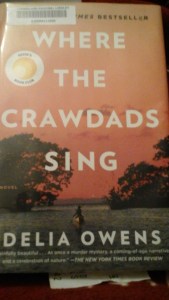
I heard Crawdads has been on the NYT Bestseller List for over a year. A natural cynic, I don’t put much stock in “best seller” anything.

So I checked this book out from my library to see what all the buzz is about. Brought it home yesterday afternoon.

I read it cover-to-cover in one sitting. Finished at 1:44 a.m.

Set in rural North Carolina over a span of about 20 years, Where the Crawdads Sing is a wistful, bittersweet story about Catherine Danielle Clark, aka “Kya.” Also known as the Marsh Girl. The story centers on Kya’s young life as she navigates the wilds of North Carolina alone. It’s a masterful tale of love and loss. Abandonment and rejection. Loneliness. Hope and longing.

Powerful and poignant, Crawdads rolled around in my head all night. And most of today.

Crawdads clusters around two time frames, the 1950s and the late 1960s/1970. The chronology could easily come unglued in the hands of a lesser talent. But Owens’s story glides between one epoch and the next as naturally and seamlessly as the channels and lagoons of Kya’s marsh and the wild lands that bookend her life.

The story opens with six year-old Kya watching her Ma trudge away from the family’s marsh shack. Clutching a cardboard suitcase, Ma walks out of Kya’s life without a backward glance.

And so begins a lifetime of loss and loneliness for Kya.

Her siblings all leave the marsh too, including her closest brother, Jodie. We later learn that Kya’s father is abusive, to put it mildly, and Ma and the other children just couldn’t take it anymore. They walk out of Kya’s life one by one, leaving the six year-old alone with her father, who’s absent more than he’s home. When he’s home, he’s usually drunk. When he’s drunk, he’s mean. And violent.

What’s a six year old to do?

Kya does plenty.

Left to fend for herself, the little girl scratches out a subsistence by harvesting and selling mussels and smoked fish to her only real friend, “Jumper.” She learns how to keep a wood stove going, cook grits, steer Pa’s boat. She sleeps on a mattress on the shack’s front porch. Learns how to read the water, tides, birds, grasses and the native flora and fauna of her marsh.

Her only friends are the sea gulls.

Shy and remote, Kya is regarded as strange and odd by the townspeople during her occasional boat trips into town for supplies. She becomes adept at hiding, especially from the truant officer.

Kya raises herself, making do with second-hand clothing and other items collected by Jumper and his kindly wife, Mabel.

With only one day of schooling, Kya finally learns how to read with the help of her friend Tate. She also learns how to count past 29. Paint and collect feathers, shells, and mushrooms.

As a young adult, Kya is still regarded as wild and strange. She’s fiercely independent and private. Shy and retiring. More at home with the creatures of the sea and the marsh than with other people. She understands nature better than people. Humans bewilder, overwhelm, and disappoint.

They also walk out.

In fact, most of the townsfolk shun and ridicule “the Marsh Girl.” Except for her childhood friend Tate, who seems to understand her.

But he abandons her, too.

Longing for companionship but afraid to risk more heartbreak, Kya keeps mostly to herself, hoping against hope that Ma will some day walk down the lane and back into her life.

A voracious reader with a quick mind, Kya becomes a self-educated expert on marsh life. Her prodigious powers of observation, analytical skills and extensive specimen collections result in the publication of several books under her byline.

But she’s still alone. Solitary. Her self-imposed solitude is both a blessing and a curse.

Later, when the dead body of the town’s star quarterback and All American jerk, Chase Andrews, is found beneath a fire tower near the marsh, foul play is suspected. Kya is arrested and tried for murder. A handful of friends stand by her.

Marinaded in hauntingly beautiful, lyrical prose, Where the Crawdads Sing is a remarkable achievement. With its keen observations of nature and wildlife, Crawdads tells us as much about marsh life, ecology, and marine biology as it does human nature.

Lithe as a great blue heron and as luminescent as a Carolina sunset, Where the Crawdads Sing is a riveting tale of the human heart and its need for love, belonging, and connections. You can almost hear the gulls cawing. Taste the salt spray. And see the fireflies glow.

Two thumbs up.


Leave a comment

A Simple Guide to 20-ish BEST Reads of 2019

Selection criteria for an annual “best of” list is kinda squishy, especially when it comes to books. We all have our fave authors, genres and styles, right? If a book made it onto my “best of” list, it had to include:

1. Rich, robust writing that’s a cut above.

2. A creative, clever plot that grabbed me by the throat and wouldn’t let go until The End. The story had to be powerful, poignant, or unusually memorable. Even better: all of the above.

3. Three dimensional characters that are lively, intriguing, and powerful. The type you don’t forget after you close the book.

4. Bonus points for a fresh approach on an old topic, a unique perspective, or inspiration as sound as sterling.

So here’s my totally unscientific, 100% subjective list of Best Reads of 2019. (Not every title on this list was published in 2019. It’s just the year I read it, okay?)

In no particular order, here are my top reads of 2019, by category:

MOST INSPIRING :

Bòrn Free: A Lioness of Two Worlds, Joy Adamson

My Pride and Joy: An Autobiography, George Adamson

The Winter Pony, Iain Lawrence

Tuesdays With Morrie, Mitch Ablom

The Tattooist of Auschwitz, Heather Morris

Lassie Come Home, Eric Knight

MOST CREATIVE & ORIGINAL:

One of Our Thursdays is Missing, Jasper Fforde

Flame in the Mist, Renee Adieh

The Penderwicks: A Summer Tale of 4 Sisters, 2 Rabbits, and a Very Interesting Boy – Jeanne Birdsall

Out of my Mind, Sharon Draper

Maze Runner, James Dashner

The Prey, Andrew Fukuda

I Am Still Alive, Kate Alice Marshall

A River Runs Through It, Norman Maclean. I’ve read this before, but I appreciated it more the second time through.

BEST HISTORICAL FICTION:

Sky in the Deep, Adrienne Young

At the Mountain’s Edge, Genevieve Graham

Making Bombs for Hitler, Stolen Girl, and The War Below, Marsha Skrypuch

BEST NARRATIVE NONFICTION:

Fatal Throne: The Wives of Henry VIII Tell All, Various

Spencer’s Mountain, Earl Hamner (A novel, but with a strong narrative voice)

‘NEW’ AUTHORS OF NOTE (In no particular order. List not exhaustive)

Will Hobbs

James Dashner

Genevieve Graham

Lauren Tarsis

BEST NON-FICTION

The Case Against Socialism, Rand Paul

The Library Book, Susan Orlean

No Safe Spaces – Dennis Prager, et.al.

FAITHFUL FAVES:

Max Lucado, Scott O’Dell, Gary Paulsen and Sarah Sund. Also Ingrid Paulson and Richard Paul Evans. Karen Kingsbury. Debbie Macomber. And I don’t think I’ve ever met a book I didn’t like by C.W. Anderson, Walt Morey, or Maurice Sendak.

I’m working on a TBR list for 2020. What do you recommend? Holler in the Comments!


Leave a comment

“Born Free”: Timeless and Transcendent After All These Years

Have you ever re-discovered a book from your childhood that still has the power to move and profoundly impact you, even a half century after your initial read? If so, then you’ve found a true classic.

Pinterest

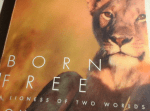
Joy Adamson’s Born Free: A Lioness of Two Worlds is such a book.

Evocative and compelling, Born Free is the remarkable true story of Elsa, an orphaned lion cub raised by Joy Adamson and her husband, George. At its core, Born Free is a love story. With great sensitivity and precision, Adamson chronicles the mutual affection and bond between a magnificent lioness and the humans who loved her enough to release her to the Kenyan wilds where she was free born.

It’s probably the most moving and inspiring “animal story” I’ve ever read.

Joy Adamson wrote three books about African lions: Born Free, Living Free, and Forever Free. I read them all. Born Free is my favorite.

I first read Born Free in 1969, nine years after it was first published. I was in the fifth grade. Entranced, I read it over and over. There’s something timeless and transcendent about the story that’s difficult to put into words.

I lost track of Adamson and Elsa over the years. But I never forgot the extraordinary story of a free born lioness and the humans who loved her. I recently located a library copy of Born Free. Finally.

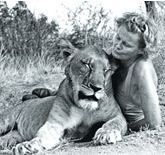
Elsa and “Born Free” author Joy Adamson.

Opening the Forward to the Fortieth Anniversary Edition (2000), I was startled to learn that Joy Adamson was stabbed to death by a disgruntled former employee in 1980. The news hit me like a ton of bricks. I felt like I’d lost a best friend I’d never met. So it was with a mixed sense of sadness and reverence that I sat in a sun-soaked living room in a far corner of the Olympic Peninsula nearly thirty years after that sad event and re-opened a book that profoundly impacted my life, especially with regard to animals.

Lavishly illustrated with black and white photographs, Elsa’s story is still an unforgettable one. So is Adamson’s prodigious writing talent. Her breezy, bucolic style recalls another formidable literary talent who writes so evocatively about her life in Kenya: Isak Dinesen. Like Dinesen, Adamson’s descriptions of her life as the wife of a senior game warden in East Africa have a luminous quality that is almost melodic.

My favorite photo from the book. Joy Adamson and Elsa.

I read Born Free cover to cover in one sitting. Here’s a key line, from page 109:

“Her (Elsa’s) good-natured temperament was certainly due in part to her character, but part too may have come from the fact that neither force nor frustration was ever used to adapt her to our way of life. For we tried by kindness alone to help her to overcome the differences that lie between our two worlds.”

The Adamsons and Elsa succeed beyond all expectations.

Re-reading the last chapter, The Final Test, the same intense sense of sadness and loss these pages evoked in me five decades ago bubbled up again from some deep internal well. It was as if Elsa and her human pride had never left, patiently waiting 50 years for my return to their story.

Recording Elsa’s success in finding her own wild pride and mate, Adamson writes:

“We returned to camp alone, and very sad. Should we leave her now, and so close a very important chapter of our lives?”

The Adamsons decide to wait “a few more days” to make sure Elsa has been accepted by the pride.

In the final elegiac paragraph, Adamson returns to her “studio” by the river to continue writing the story of Elsa, “who had been with us until this morning.” Sad to be alone, the author writes that she tries to make herself happy “by imagining that at this very moment Elsa was rubbing her soft skin against another lion’s skin and resting with him in the shade, as she had often rested here with me.”

I cried. Again.

And that, friends, is the mark of a true classic.


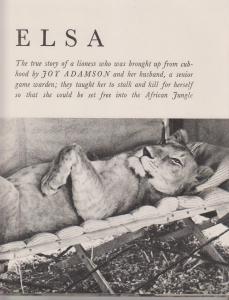
Elsa on Camp Bed Photo Credit


Leave a comment

A ‘Champion for the Ages’

Reposting from 2018 in honor of Derby Day and the 145th Run for the Roses!

***

“Inevitable.” Isn’t that a great word? Learned it from Mom the other day. As in, the 144st annual Run for the Roses is coming up on May 5. So debates about who was the Greatest Thoroughbred of All Time are… inevitable.

Or so I’m told.

A few other things I learned:

The “Run for the Roses” is also known as The Kentucky Derby. The Derby is always run on the first Saturday in May. It’s the first jewel in the Triple Crown of Thoroughbred horse racing.

Why do I care about Thoroughbred racing? Well, I don’t. Not really. But Mom does!

She’s been reading a Walter Farley book about one of the greatest champions to ever set hooves on a race track: Man O’War. Along with legendary Triple Crown winner Secretariat, Man O’War is a top contender for Greatest Thoroughbred of All Time honors.

Back to the Farley book.

Man O’War’s remarkable life unfolds through the eyes of fictional stable boy Danny Ryan. Mom says the story is nearly as powerful and compelling as the great Thoroughbred himself. I’m not sure what the means. But it sounds good.

Here’s Mom’s review of Farley’s Man O’ War.

So when Kentucky Derby time rolls around each May, the comparisons between Man O’ War and another great champion, Triple Crown Winner (1973) Secretariat, are inevitable. At least according to Mom. Which horse gets the nod for Horse of the Century? Depends on who you ask. And what day it is.

Both possessed blinding speed. Both ran challengers off their feet. Both broke records. Both have great stories.

So whether your vote for The Greatest goes to Secretariat or Man O-War, a few things are for sure:

1) May is the perfect month for awesome horse stories!

2) Any story by Walter Farley is a great story. Inevitably.

3) Churchill Downs promises another great Run for the Roses this Saturday. (“Run for the noses”? I always kinda thought that was when Mom calls me in for dinner. But I may be wrong about that.)

4) One of the finest athletes to ever set hooves on a race track, Man O’War remains a Champion for the Ages. Just like Walter Farley.

Is it dinner time yet?

Update – May 5: Congratulations to the 2018 Kentucky Derby winner, Justify!