I’m old enough to remember Sunday nights with Walt. Remember the old Wonderful World of Color series? Hosted by Walt Disney, it came on right after Lassie.
What if I told you some folks had written a book about capturing the Disney magic every day of your life? Would you dash out and pick up a copy? Well, here’s your chance!
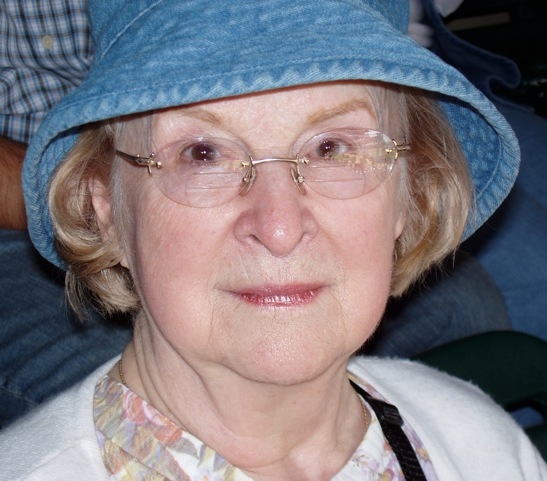
The following is an interview with writer, researcher, word fan, editor and wordsmith Peggy Matthews-Rose. Read more about her part in the fascinating “How to Be Like” series, particularly her role in How to Be Like Walt: Capturing the Disney Magic Every Day of Your Life.
First things first:
*Tell us about your book (title, publisher, publication date, etc.)
Our book is called How to Be Like Walt: Capturing the Disney Magic Every Day of Your Life. The authors are Pat Williams (Orlando Magic SVP) and Jim Denney. The book was published by HCI in 2004 and continues to sell well and inspire readers everywhere. It is part of a Williams/HCI “How to Be Like” series that profiles leaders like Michael Jordan, Amway founder Rich DeVos, baseball legend Jackie Robinson, Coach John Wooden, and even Jesus. My role in the book was that of researcher, contact-maker, and editing assistant, based on my longtime involvement with The Walt Disney Company. You won’t see my name on the cover, but I am listed on the dedication page and in the acknowledgments.
*Tell us about yourself. (Where are you from, what is your background, how long have you been writing or anything we might find interesting about you.)
While not a prolific writer, I’ve definitely been a word fan since childhood. Excelled at creative writing projects and began focusing on journalism classes in junior high. Continued with communications as an emphasis in college though my degree was ultimately in English literature. I found that reading great writing helped me improve my own. Grew up and still live on Orange County, California. My friends like to introduce me as, “This is Peg. She used to be Peter Pan at Disneyland.” So I guess that must be the most interesting thing about me! That debut was followed by many Disney years, about half of which were in communications roles. Today I freelance as a collaborative writer, editor, and general, all-around wordsmith.
Why did you write this book? My involvement in this book is what I call a “God-thing” and way too long a story for this blog. Suffice it to say that I met Pat Williams at a book show, he told me about this book he was writing about Walt, I told him I had every book written about Walt (at that time) as well as contact with many people who knew or were inspired by Walt – and the rest was publishing history. We wrote the book as a tribute to Walt and to further inspire readers as Walt inspired so many who knew him. Walt was a one-of-a-kind, a true American original. No one can be Walt. Be we can all be like Walt by studying what drove the man. We can all keep his light in our window.
What obstacles did you encounter in getting this book published? How did you overcome them? Since the book was already under contract when I got involved, there were no real obstacles. We did encounter some curious resistance from some of the folks we interviewed and then, of course, minor issues when the publishers decided there was “too much soap in the box.” How do you cut anything from a book about Walt Disney? But we did.
How did you know you wanted to be a writer? How did you get started? As I hinted earlier, I knew I wanted to write the first time a grade school teacher read one of my stories out loud. I think that was first or second grade. My professional start came when I interned for a staff writer job at Disneyland and was hired fulltime shortly after that. I edited the “cast” newsletter and an internal magazine for several years, as well as at Walt Disney Studios later on. A number of years later, I returned and worked in similar roles. When I left, I decided it was time to see if I could do this writing thing on my own. Answer: yes and no. I’m fortunate to no need a full-time employer, but I definitely need partners.
Did you learn anything from writing and publishing this book? What? Where do I begin? This book was the launch of what I could easily call some of my greatest life adventures. Always a Waltphile, I learned more about the depth of this man’s soul than I ever could have in any other way. I reconnected with people I’d lost contact with, made new friends, and generally enriched my life in many ways. Beyond what I learned about Walt, I learned the ins and outs of the publishing world in working with Pat and Jim and HCI editors. In the process of working with Pat and Jim, I learned about the wonderful world of collaborative writing. Since this book’s publication, I’ve personally written five books with Pat and several with other collaborators. And beyond all that, this book brought me a great couple of friendships with Pat Williams and Jim Denney. Pat is an inspiration to everyone who knows him: a consummate sports professional, motivational speaker, father of nineteen, and now a cancer survivor. Whatever hurdle life throws in his way, Pat continues to knock it down and keep going. I am so grateful for his friendship and patient support over the years. Jim has likewise been an encouraging, wise, and helpful mentor. May blessings overflow to them both.
If you were doing it all over again, what would you do differently? Not in any way, except for maybe starting earlier. But I always was slow on the uptake.
What types of books do you like to read? Who are your favorite authors? Why? I’ve always lived in Fantasyland, literarily. Love children’s classics (especially Peter Pan J), C. S. Lewis’s Narnia books, Tolkien’s Lord of the Rings. These authors knew how to grab hearts and imaginations. They didn’t write down to the child but well understood and spoke to the child inside us all.
What other books have you written? With Pat Williams, I’ve written Read for Your Life: 11 Ways to Transform Your Life with Books (HCI 2007); Lincoln Speaks to Leaders: 20 Powerful Lessons for Today’s Leaders from America’s 16th President (with Gene Griessman, Elevate Books 2009); The Take Away: 20 Unforgettable Life Lessons Every Father Should Pass On to His Child (with Karyn Williams, HCI 2009); Nail It: 10 Secrets for Winning the Job Interview (Advantage 2010); and Daly Wisdom: Life Lessons from Dream Team Coach and Hall of Famer Chuck Daly (Advantage 2010). With Saddleback Church pastor Erik Rees, I’ve assisted with S.H.A.P.E.: Finding and Fulfilling Your Purpose for Life (Zondervan 2006) and co-written Only You Can Be You: 21 Days to Making Your Life Count (Howard 2009). I’ve also co-written a children’s picture book with ministry partner Sandra Maddox called Tiffany and the Talking Frog in The Search for the Crown of Rye Chestnuts. This latter title was self-published by Ms. Maddox in 2008. The book and characters were inspired by her daughter, Tiffany, who was tragically killed in an automobile accident in 2003 at the age of 24.
Are you working on something now? What? Got a couple irons in the fire. Not ready to share just yet. Always have a possible book of my own in the back of my mind, been there since my college days (just last year J), my own fantasyland tale. It seems to get stuck there, however. Who knows? It may resurface one day or always remain my book in a box somewhere.
What is the best advice you could give other writers about writing or publishing? 1) If you believe in your book and believe your message deserves to be heard, be ready and willing to do what it takes to self-publish. Besides the fact that the traditional publishing world isn’t kind to unknown writers, those who self-publish always stand to profit more from this avenue than any other. 2) Unless you are a highly skilled and confident communications professional, hire a wordsmith or editor! I see way too many self-published books (reading one right now) that have so much potential but are riddled with misspelled words, poor punctuation, badly constructed sentences, etc. These “little” details scream “unprofessional.” No matter how you seek publication, getting it right in manuscript is critical. Can’t emphasize that enough.
Where can readers learn more about you and your book?
http://www.amazon.com/How-Be-Like-Walt-Capturing/dp/0757302319/ref=sr_1_1?ie=UTF8&qid=1334687850&sr=8-1. You can also find me on Facebook and/or LinkedIn (Peggy Matthews Rose).
Anything else to add? If you love to write, just do it. Writing really is its own reward. If you must have an audience, read to your friends, your kids or self-publish. Writers groups are hugely helpful. Can’t find one? Start one. Just make sure you’re all there to help one another. But if you want to sell what you’ve written, be ready to do a lot of work promoting it. Someone once wisely said, “Nobody loves your baby as much as you do.” Finally, I’d like to say thank you so much and forever to Pat Williams and Jim Denney. At this writing, I have no idea whether or not I’ll ever do another book. But for the time I’ve had so far, it’s been a real E-Ticket attraction.

 ur a day to write, the “interruptions” flood in like Hurricane Hugo. The doorbell. Phone. Dog. Kids. Laundry. Raspberry white chocolate cheesecake.
 Take a Vacation