Pages & Paws

Writing, Reading, and Rural Life With a Border Collie


10 Comments

Author Interview: C.J. Edwards

Today we’re getting to know J.C. Edwards, author of Poems of Living, Loving and Lore. Even if poetry isn’t your thing, give this one a chance. Like a finely aged wine, J.C.’s work is  rich, full-bodied and mature.  Her thoughtful, evocative collection includes reflections on relationships, gratitude, seasons, holidays, love, loss, and much more!
Sensitively written with a commanding grasp of the language, Living, Loving and Lore surprises and delights, artfully drawing in readers with rhythms that are supple and subtle as well as solid and intense.
A resident of British Columbia, J.C. also has a compelling life story.  Let’s get to know her a little better:

Your name:

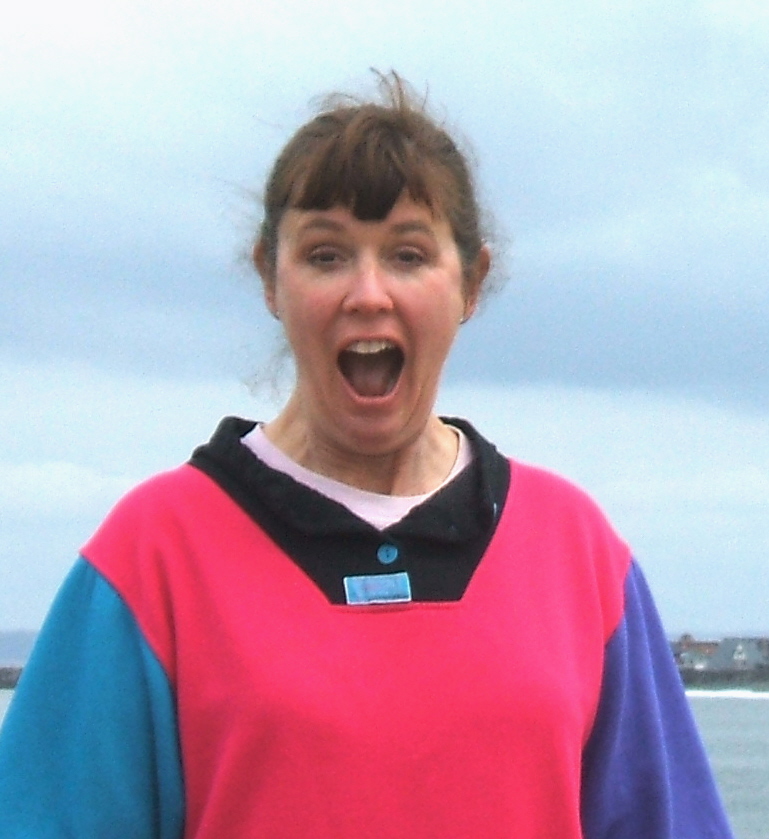
J C Edwards Profile Pic 2Julie Catherine Vigna, my pen name is J C Edwards.

Where do you live?

I live in beautiful British Columbia, Canada. I was born in Ontario and lived there until 2004; moved out to BC, then to Alberta – both for family reasons – then in October of this year, finally made my way back to BC – the home of my heart and soul. I missed the mountains and water terribly, and felt so welcomed when I returned. They are my muses, the source of my inspiration.

Tell us something about yourself.

Born Julie Edwards, I’m fifth of eight siblings, and I am a survivor of childhood abuse. My brothers and sisters and I were adopted out to various families as young children – in 2007, after more than 45 years we were finally reunited in Alberta just months before our youngest brother passed away from pancreatic cancer.  Although we now live scattered across Canada we are blessed to be together again. My pen name, J C Edwards, is a combination of my birth and adopted names: Julie Catherine. I always knew that when I published, it would be under that name. I’ve been writing, drawing and painting ever since grade three, love antiques and all of nature. Being near water of any kind is inspirational and makes my soul sing.

What inspired you to write this book/article/piece?

While I’ve always written poetry, I didn’t think to put together a collection until I was forced to retire from the workforce for medical reasons at Christmas, 2010. It helped me to deal with a drastic change in lifestyle, and gave a brighter purpose to the long days between medical appointments and dealing with disability applications.

How did you choose the title?

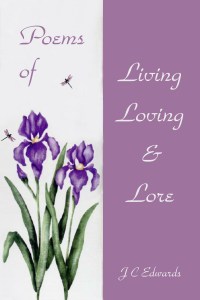
Poetry Book CoverI love the title, “Poems of Living, Loving & Lore”!  I wanted it to be very clear this is a poetry book; something a little ‘old-world’ to match the book cover and the classical feel of the poems, and wanted the three sections of the book to be included in the title.

What obstacles did you encounter in getting this book published? How did you overcome them?

I didn’t want to go the traditional publishing route with this book and decided to self-publish because I wanted to publish within months rather than years; however, I only had a tiny budget for printing, and none at all for promotion. I have a friend, Selena Howard who is a poet and artist, and she did the beautiful cover for me – in return I sent her a gift of art supplies and a copy of my book. I’m an editor as well as a writer, so was able to do most of that myself, although I also had a couple other people do a run-through as well. I’ve been promoting my book on social sites, my blog, and as many other avenues as I can find that have little or no cost. I was interviewed by our local television station and did poetry readings at our local library and schools. The rest has been entirely word of mouth.

How did you know you wanted to be a writer? How did you get started?

I’ve always known I wanted to be a writer, and have always written poetry and short stories. I also have two novels in the works that are at least a year away from being completed. When I knew I would have time to devote to my writing, I consciously made the decision to begin with a poetry book because of the shorter time involved in producing it. I worked on my poems for a year before I had enough for a volume of poetry. I just literally made a decision to do it, researched various print-on-demand publishers, made my choice, and then jumped in the deep end.

Do you have any writing rituals?

I often meditate before writing poetry, especially if I have a particular theme in mind. I also enjoy listening to classical music, both during the meditation and while writing.

Did you learn anything from writing and publishing this book?  What?

If you want something badly enough, and want it done well, you have to do the work to make it happen. I learned that the promotional part is indeed more work than the actual writing of the book; and because of my physical disabilities, I have to be innovative in finding ways to promote myself and my book. Book fairs and signings and travelling are not feasible for me because of mobility issues, so most of my promotion has been online and word of mouth. But if you understand and commit to what you’re able to handle and do the work, it is possible to make your dream come true.


If you were doing it all over again, what would you do differently?

I’m pretty satisfied with the way things were handled with the publishing of my debut poetry book, so will likely follow a similar path with my next collection. The only thing I would do differently might be to concentrate on promotion earlier than I did with this book – and hopefully have more of a budget to work with!

What types of books do you like to read? Who are your favorite authors? Why?

I have eclectic tastes and love to read practically anything! I’m currently reading a romantic suspense novel, a Christian novel and a spy novel in paperback form. On my e-reader I’m reading a poetry collection and a historical fiction novel. I have a huge love of all the classical writers such as Shakespeare, since that’s what I grew up with. I also love Tolkien and his Middle Earth worlds – I’m a huge LOTR and Hobbit fan. These are worlds and stories I can positively get lost in, with amazing characters and incredible scene descriptions. Another of my fav authors is Marion Zimmer Bradley – her book, The Mists of Avalon (and that entire fantasy series) is one I will read over and over and never tire of.

Are you working on your next book? What can you tell us about it?

I have a few projects on the go right now, including a new poetry collection tentatively titled, “Essence of Woman”. The poems will cover every aspect of what makes us women, but I don’t want to say too much more about it just yet. I also have two novels in the works: a middle-grade adventure/mystery set in Georgian Bay, Canada, where I spent a few summers; and a contemporary romance novel. It will likely be at least another year before they’re ready, either for self-publication or submission; I haven’t decided which way to go yet. And yes, all my projects are completely different from each other – I don’t think I’ll ever be pinned down to just one genre!

*What is the best advice you could give other writers about writing or publishing?

Once you’ve done the writing, let the book ‘rest’ for awhile before going back to edit. Proof, proof and proof again – if you can’t afford an editor, then at least have a couple of people with excellent spelling, grammar and punctuation skills to proof for you as well. Do not be in a rush to submit your manuscript until you are absolutely positive it’s the best quality you can produce. Don’t settle for mediocre – strive to be the best you can be and take pride in your work. Your readers will appreciate that as well and it will show in your reviews.

Who is the perfect reader for your book? (Please do not say “everyone.” ;o) )

Poetry lovers, especially those interested in classical forms of poetry, mythology, fairies, nature and romance would enjoy reading these poems. Although there are a few poems that deal with harsher realities of life, I have attempted to keep the bulk of the collection upbeat and positive, preferring to focus on the beauty of life, love and nature.

Where can readers learn more about you and your book?

Poetry Book Page

J C Edwards Page

Amazon  (Paperback & Kindle)

Barnes & Noble (Paperback & Nook)

Xlibris  (Paperback)

Visit Julie On-line:

Julie’s Blog

Twitter

***

Next up: What ‘Writing Contest’ is – and Isn’t.  Also an author interview with John Lucas, author of Power and Intimacy in Relationships.

I am now scheduling author interviews for February.  If you’d like to be featured, just leave a comment in the Reply section below.


Leave a comment

‘Sweet Hymns of Joy…’

My favorite Italian tenor Andrea Bocelli sings my favorite Christmas carol:

https://www.youtube.com/watch?v=-k61PGAgzAM

Sweet hymns of joy in
Grateful chorus raise we,
Let all within us
Praise His holy name!
Christ is the Lord,
Oh praise His name forever,
His pow’r and glory evermore proclaim
His pow’r and glory
Evermore proclaim.

You can find the rest of the  lyrics in English and a brief bit of historical background here.

What’s your favorite Christmas carol? Share by leaving a reply in the space provided.  And Merry Christmas!


1 Comment

Dive In. Now.

“Writing is the only thing that, when I do it, I don’t feel I should be doing something else.” ~Gloria Steinem

I may not agree with Gloria on everything.   But her take on writing is spot-on.  Know what I mean?  There’s something about writing that, if you’re called to it, is mysterious and mesmerizing.  Fantastic and hair-raising.  Startling.  Compelling.

The nuts-and-bolts of writing is a solo flight.  Others may offer help, advice, or corrected grammar, but no one can do your writing for you.  That job is yours alone.

A Camaraderie

Writing can also be the basis for camaraderie.  A bookish “Band of Brothers,” to borrow from the venerable Bard.  No one appreciates the frustration or fulfillment of writing like a fellow writer.

Few realize how much work it is to haul a bunch of characters around in your head all day like another novelist.  No one appreciates the expenditure of mental energy that goes into rewrites, or the incessant search for just the “right’ word or phrase.  Only another writer truly understands the ouch! of that last rejection letter, or the swirling delight attached to an editorial “Yes!”

Gloria was right.  Writing really is the only thing that, when I ‘m doing it, I don’t feel like I should be doing something else.  If you’re a writer, you know what I mean because you, like me, are fulfilling your calling when you write.

Don’t Put It Off

So, exit this blog and get busy writing.  Don’t jump to another article on writing, update your status or start tweeting.  That’s not writing, it’s dilly-dallying.  Knock out a new story.  Outline a holiday piece.  Submit that memoir that’s been sitting in your bottom drawer gathering dust.  Revise a rejected manuscript.  Polish a poem or publish an Ebook.

Whatever you do, don’t put it off.  Take a deep breath.  Close the door.  Unplug the TV.  Mute the phone.  Whatever it takes.  No more excuses.  Dive in.  Now.

It’s takes guts to be a writer, but you can do it.  Not only because you’re doing what you were called to do, but because we need you.  Your voice.  Your perspective.  Your willingness to learn and grow and inspire us along the way.  We need your story.  And you’re the only one who can tell it.

What’s your story?  Share it in the comments section in 50 words or less.  If you don’t have time for that, choose a one or two word genre that best describes what you’re working on, like short story, historical fiction or memoir.  We’re waiting to hear from YOU!


Leave a comment

Four Out of Four!

“Cute, pithy” and for those “who are new to the publishing game and in need of some friendly, clever encouragement.”

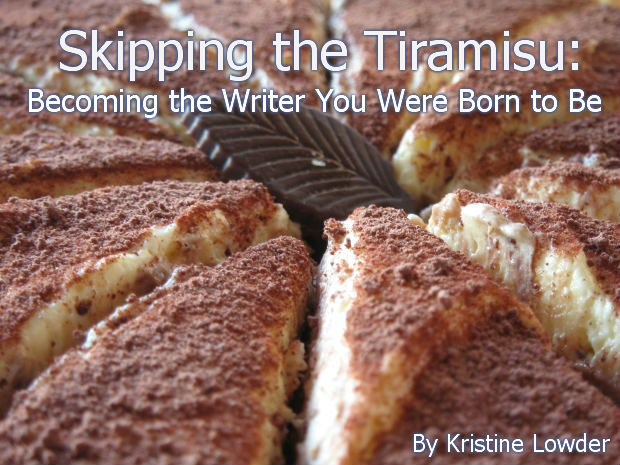
My newest micro Ebook, Skipping the Tiramisu: Becoming the Writer You Were Born to Be, earned these words and a four-star review out of a possible four.

Have you downloaded your FREE copy yet?  It’s quick, easy, and won’t bite!  Promise!

***

Up next: Why You Won’t Turn Into a Pumpkin if You’re Not Blogging Every Day (Part 1 of 2).


Leave a comment

Author Interview: Donna Clark Goodrich

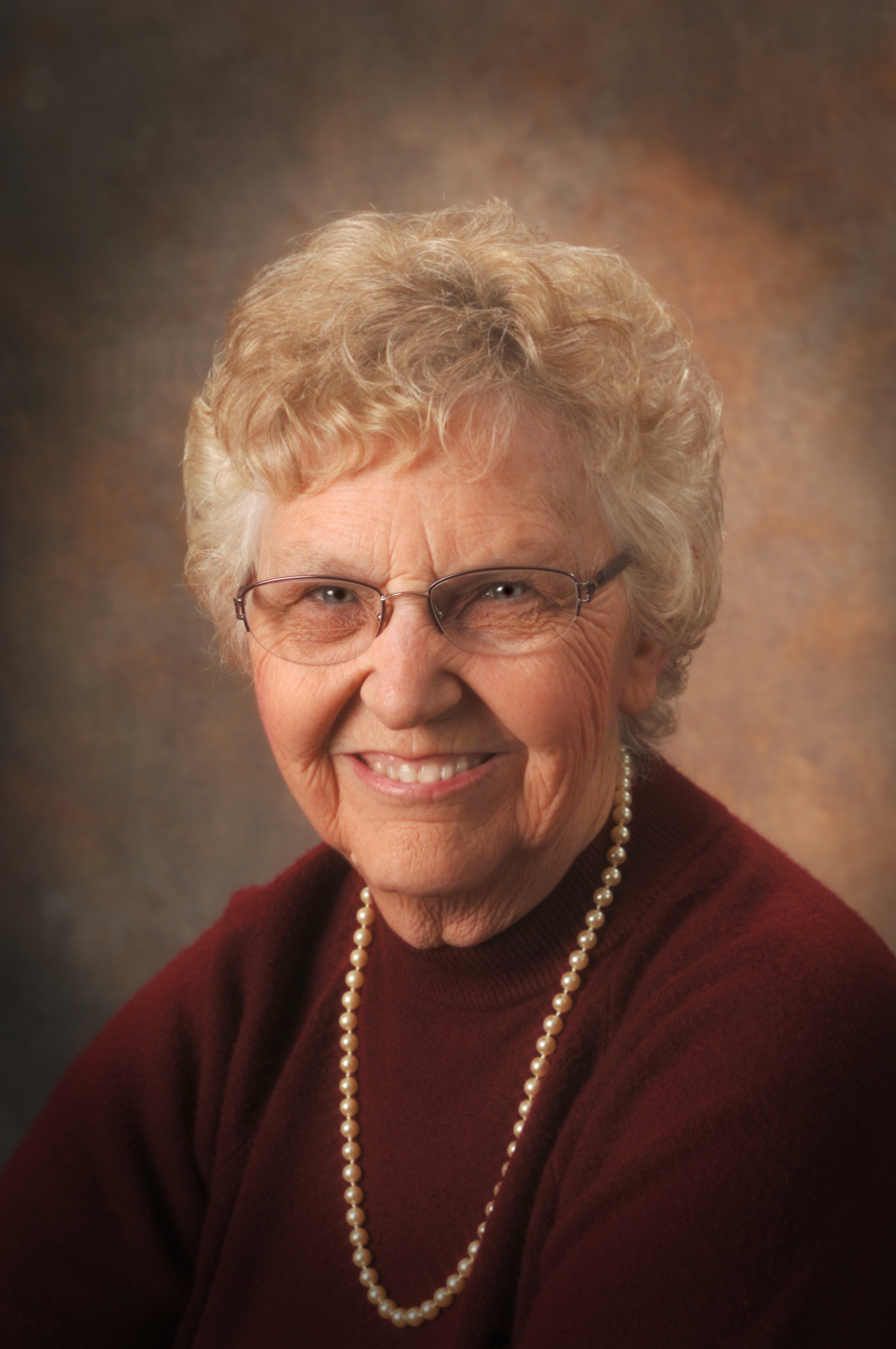
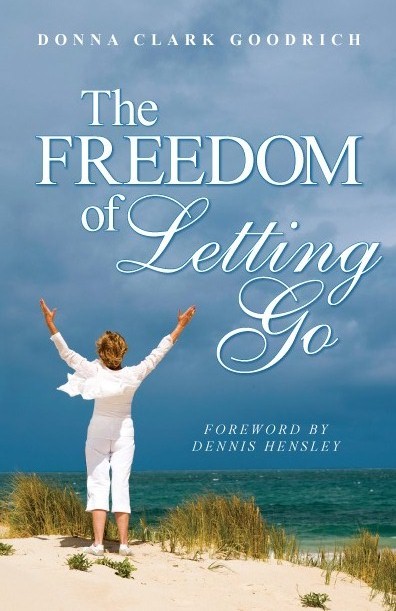
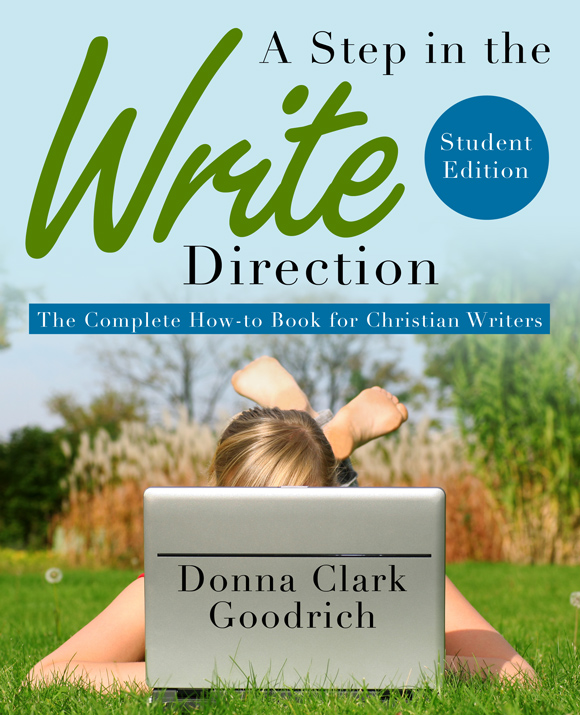
One of the great things about hosting author interviews and helping other writers is that I get to meet and connect with some truly fascinating and amazingly gifted folks.  Speaker and life-long writer Donna C. Goodrich is a choice example.  Donna has authored over 700 short stories, articles, devotionals, poems, and book reviews and more than 20 books including A Step in the Write Direction – the Complete How-to-Book for Christian Writers and The Freedom of Letting Go.  Let’s get to know her:

Where do you live?

Mesa, Arizona

Tell us something about yourself:

Author and speaker Donna Clark Goodrich

I’m originally from Jackson, Michigan. Moved to Kansas City when I was 20 to take a job as secretary to the book editor (Norman Oke, uncle by marriage of Jeanette Oke) at the Nazarene Publishing House. Two years later, I met my husband-to-be while typing his seminary term paper, and we’ve been married 52 years. Have 3 children, a pastor son-in-law, and 2 granddaughters.

I only have one year of college, but have had a number of writing jobs—associate editor, reporter, etc. , so most of my writing education has been on-the-job training.

I’ve been writing most of my life. Wrote my first poem at the age of 9 for Mother’s Day, another one that year for soldiers (which our pastor put in the church bulletin), and one at 11 when my father left. Sold my first poem at 14 (for $1.40) and my first short story at 18 (for $12).

The three people who had the biggest influence on my writing are: my mother, our children’s librarian in my hometown public library, my 5th-6th grade teacher, and my book editor boss at the publishing house.

Hobbies are baseball (Detroit Tigers and Arizona Diamondbacks), music (mostly southern gospel), reading, and crossword puzzles.

What inspired you to write your two most recent books, A Step in the Write Direction – the Complete How-to Book for Christian Writers, and The Freedom of Letting Go?

1)    A Step in the Write Direction—the Complete How-to Book for Christian Writers is taken from all the conference workshops I’ve taught over the years. I wanted something to offer all the people who called saying, “I want to be a writer. How do I get started?”

2)     The idea for The Freedom of Letting Go came from the fact it took me 11 years to let go of my mother after she died. Then I realized it wasn’t just letting go of her, it was the whole principle of letting go of many things: grief, guilt, hurts, success, failure, children, material things, worry, doubt, fear, then the book ends with The Land Beyond Letting Go.

How did you choose the title?

The name of 1) is taken from classes and one-day workshops I’ve taught, and 2) from talks I’ve given over the years on that subject.

What obstacles did you encounter in getting this book published? How did you overcome them?

1)      The publisher who accepted the “Step” book was a self-publishing house. However, the owner believed in the book enough to publish it on a royalty basis, and later, they also published my student book by the same title, but which has writing assignments throughout.

2)      I only sent the “Freedom” book to three publishers. The first one accepted it, but I turned them down as they had only been in business for one year and had only one employee. The second one felt it covered too many topics, and the third one bought it. It was published in May 2012.

How did you know you wanted to be a writer? How did you get started?

I’ve been writing most of my life. Unlike most students, I loved the essay questions. I wrote my first poem at the age of 9 for Mother’s Day, another one that year for soldiers (which our pastor put in the church bulletin), and one at 11 when my father left. Sold my first poem at 14 (for $1.40) and my first short story at 18 (for $12). When I accepted the job as book editor’s secretary, I was near all our denominational publishers, so I sold a lot of articles and short stories those two years. At present, I’ve had 23 books published, and over 700 short stories, articles, devotionals, poems, and book reviews.

Do you have any writing rituals?

Not really. I do editing and proofreading for publishers and writers, and also care for a husband with 12 diseases, so my writing time is limited. But when something burns inside me long enough, I find the time to write it!

Did you learn anything from writing and publishing this book?  What?

I had collected information for years, and some topics I had previously put out in self-published booklets. The one thing I did learn was to make my copy as professional as possible to send it in as, since I had copied whole booklets into the manuscript, I wasn’t consistent in my capitalization and punctuation, so I had to do a lot of proofreading when the galleys came.

On the “Freedom” book, it was like preaching to the choir as I used so many personal experiences, and it actually helped me to write the book.

If you were doing it all over again, what would you do differently?

1) As stated above, I’d proofread it better before submitting it, and 2) on the Freedom book I wish I had known earlier the size this publisher published, as after it was accepted, I  had to write 15,000 more words on material I hadn’t collected information for.

What types of books do you like to read? Who are your favorite authors? Why?

In the secular market, Mary Higgins Clark; religious market, Max Lucado.

Are you working on your next book? What can you tell us about it?

I’ve had two more books accepted this year: 1) Rhyme-Time Bible Stories for Little Ones (Harvest House Publishers), and 2) Preparing Your Heart for Christmas, a 66-page devotional book (Lighthouse Publishers of the Carolinas; 10/15/12). I’ve also completed a contracted anthology manuscript of stories, poems, and recipes for mothers and grandmothers which will come out before Christmas this year (Hidden Brook Publishers). At present I’m looking for a publisher for a book for caregivers.

.

What is the best advice you could give other writers about writing or publishing?

Find a local writers’ group and join. If there isn’t one in your area, start one. Read all the books you can on writing, and try to attend a writers conference. And let go of things you are doing that others can do so you can do what you’re called to do.

Who is the perfect reader for your books?

1)      The “Step” book is good for the beginning writer as it gives all the information they’re looking in one book, and it’s good for advanced writers as there is so much encouragement in it.

2)      The “Freedom” book is helpful for anyone who finds it hard to let go of something: children, grief, material things, failure, guilt, etc.

Find out more about Donna and her books at: The Writer’s Friend.

Visit Donna at her blog: Donna Goodrich

***

Are you a writer?  How do you know?

Find out!  Grab a free copy of my micro ebook, Skipping the Tiramisu: Becoming The Writer You Were Born to Be when you subscribe to my monthly-ish newsletter, Wreal 8.

To thank you for reading and being awesome, both are FREE!


2 Comments

Author Interview with Terry Whalin

Put the kettle on or add some ice to that lemonade.  Now’s your chance to get to know linguist, multi-published author and editor extraordinaire W. Terry Whalin, author of Jumpstart Your Publishing Dreams and over 60 other titles.  Put your feet up and enjoy this an engaging, informative glance “behind the scenes” with this talented writer:

Author and Editor W. Terry Whalin.

Where do you live? Irvine, California

Tell us something about yourself.

In high school, I was introduced to writing. It’s a story I tell in the opening chapter of Jumpstart Your Publishing Dreams (available free here.)  I wrote throughout high school and college. While studying journalism at Indiana University, halfway through my sophomore year, I had a life changing experience with a book. The full story is captured in a brief article called Two Words That Changed My Life. The direction of my life changed from journalism to linguistics. I spent 10 years in linguistics and 17 years with Wycliffe Bible Translators. I returned to my writing over 20 years ago and began to write for different print publications. I learned to write a query letter and I’ve written on assignment for over 50 magazines. In 1992, my first book was published—a little children’s book called When I Grow Up, I Can Go Anywhere for Jesus (David C. Cook). It is long out of print but launched my writing life into books. I’ve written more than 60 books for traditional publishers.

What inspired you to write Jumpstart Your Publishing Dreams?

For many years, I’ve been teaching and attending various writers’ conferences. I meet writers who have huge ambitions with their writing yet no idea how to achieve those writing desires. In today’s competitive marketplace to get published, you need three elements. First, you need the insider knowledge about how book editors, magazine editors and literary agents work. If you don’t understand their needs, then you will never be able to meet their expectations. Second, you need the skills to provide those publishing professionals with what they need. Finally you need to bring strong storytelling skills to your writing. You will find a mixture of story combined with practical skills and how-to information inside the pages of Jumpstart Your Publishing Dreams.

How did you choose the title?

I tested my title and subtitle in the marketplace. Many people guard their title as secret when I believe they need to test it and see if it resonates with their audience. I love the word Jumpstart because that’s what writers need to move forward with their writing. I used Publishing Dreams because many people have these sorts of ambitions but don’t even understand how the nitty-gritty of publishing works. I use the word publishing in the broadest use of the word inside my book. Finally I included a subtitle which emphasized a key benefit for my book: Insider Secrets to Skyrocket Your Success.
Do you have any writing rituals?

What a good question. In the computer world, I strongly dislike staring at a blank page. To solve this matter and simply get started, I’ve created a simple file that I call an “article header.” It contains all of the information at the top of a typical magazine article: name, address, word count, rights, and about halfway down the page: the title and my name. I pull this information into my file—and start revising it and almost instantly typing. It works for me and keeps me from getting stalled.

Did you learn anything from writing and publishing this book?  What?

With each of my books, I have learned a great deal. For Jumpstart Your Publishing Dreams, much of the basic material began with a set of random blog entries at my blog, The Writing Life.  I have over 1,000 entries in this blog. I grouped the contents together into different sections. It required drastic rewriting to take the random material from a blog and turn it into chapters in a book.

Also with this book, I learned to include cartoons throughout the book to lighten the contents and also break up the print. Finally with each chapter, I made a point to give the reader even more information than was in each chapter. The final pages of each chapter include a section called “Dig Deeper” which leads the reader to resources outside of the book on the same topic of the chapter. Also I included a section called “Awaken Your Dreams” which asks the reader several pointed questions so they can apply the contents of the chapter to their own writing life.

Are you working on your next book? What can you tell us about it?

Instead of working on another book, I’m helping others get their books published through my role as an acquisitions editor at Morgan James Publishing. Known as The Entrepreneurial Publisher, Morgan James is actively publishing nonfiction and has recently launched a fiction line. Learn more about the company here.

I’m actively looking for great pitches and proposals which writers can send to me directly at my work email: terry@morganjamespublishing.com. If you don’t know what is a good pitch or proposal, I recommend you learn before pitching and I have some resources for this as well at Ask About Proposals. Also I have an online course on the topic at, Write A Book Proposal.

What is the best advice you could give other writers about writing or publishing?

The majority of writers approach their craft backwards. They believe the best way to make an impact on their world is through a printed book—which from a traditional publisher who pays an advance and royalties—is one of the most difficult to attempt. Books take a long time to get into print. Even after you get a contract (which can take years), most publishers take 18 to 24 months to bring that book into the market. Writers labor over the long form without thinking about shorter writing.

My best advice is to write for printed magazines. These publications have a higher standard than online magazines for quality and good storytelling. Magazines have a much quicker turnaround of three to six months from when accepted. Plus you can reach many more people with your magazine work than you can with a book. A good selling book may sell 5,000 copies during the life of the book. You can easily reach 100,000 or 200,000 people with a short magazine article. Book editors and literary agents are looking for writers with experience—and one of the best ways to get publishing experience is in the magazine world. I continue to write for different magazines. You can learn my basics for this type of writing at Terry’s Basics.

Who is the perfect reader for your book?

My perfect reader is any writer who feels stuck in a place with their writing and wants to move to a new level of excellence. Or maybe they have been in the writing world for some time and want some fresh ideas. Check out this review: http://bit.ly/AiF0QF and it will show you that experienced and new writers alike gain valuable insight from my book.

Where can readers learn more about you and your book?

Jumpstart Your Publishing Dreams is available in bookstores all over the country. Check with your local bookstore to see if they have it. Or you can order it directly from me and get it autographed at Jumpstart Dreams.  To learn more about me, I recommend you check out my personal website, or subscribe to my blog on The Writing Life.  I have a lot of free resources and helps online for anyone who wants to learn more about writing and publishing. For example, check out Ask Terry Whalin.

Follow Terry on Twitter.

Download Terry’s free ebook, Straight Talk from the Editor.

***

Interested in an author interview? 

Ready to join our avalanche of writers helping writers? 

Find out how here.


Leave a comment

Uncanny, Isn’t It?

Uncanny, isn’t it?  Try though I might to set aside an hour a day to write, the “interruptions” flood in like Hurricane Hugo.  The doorbell.  Phone.  Dog.  Kids. Laundry.  Raspberry white chocolate cheesecake.

The computer where I do most of my brilliant blogging is in the bedroom.  This works pretty well for that coveted “quiet spot” – until sibling rivalry in the living room breaks into a three-alarmer.  Or the dog wants to go out.  Or dinner is burning.  Or a sink full of dirty dishes awaits.

I’ve learned to stuff my pockets with 3 x 5-inch spiral bound notebooks.  They’re small, lightweight and portable.  They also don’t require an outlet or Wi-Fi, so I can readily jot down any inspiration that may strike on the hiking trail, in a canoe, at the beach or on a mountain top.  I scribble down my impressions and try to decipher the hieroglyphics at the keyboard later.  Sometimes it even works.

Here’s my question.  Are you deliberate about setting time aside in your day to write?  This may include journaling, jotting down notes or ideas for future development, outlining a short story or your next great work of fiction, or rewrites on a current writing project.

Do you discipline yourself to practice writing on a regular basis?  If so, how, when and where?  What obstacles or interruptions have you overcome?  Share it with us in the comments section.


Leave a comment

Aw, phooey

Aw, phooey.

The envelope arrived in the mail with the self-addressed label I’d affixed some weeks prior.  Inside was a nice tri-folded typed note that read:

“Thank your for submitting your book proposal to ____ _____ (unnamed publisher).  We have reviewed the materials and have decided that the book is not quite right for our current publishing program.”

What does “not quite right” mean?  Is it within a millimeter of being “right,” or a mile and a half?  And if a publishing program isn’t “current,” what is it?  An antique?  In the future?

It’s okay

Alright.  So I’m in a bit of a blue funk.  Know what?  I’ve decided blue funks are okay.  For a time.

If you’ve poured heart and soul into a manuscript and slaved long weeks over just the “right” turn of a phrase, agonized over pacing and rhythm, polished dialogue and plot to a bright sheen only to have “The Editors’ reject your magnum opus, there’s a word for the experience: disappointment.  Aka: Aw, phooey.

And that’s okay.  It’s okay to admit that something hurts when it does.

What’s not okay is to let it take you out for the count.  To get so discouraged that you give up.

The territory

The truth?  If you’ve been writing for more than ten minutes or so, you know that rejection letters come with the territory.  Don’t take them personally. And don’t let them stop you from doing what you were born to do: write!

Now, if “the editors” have specified how or why your latest sparkling masterpiece isn’t “quite right” for their “current publishing program,” listen up and learn.  Avoid making the same mistakes twice.

More often than not, however, such letters offer little or no useful advice in the how or why departments.  When that happens, you might:

– Submit elsewhere

– Rewrite and re-submit

– Rework a current manuscript for a different publisher

– Pare down a manuscript into an article or an article series and sell it to a magazine

– Set aside the rejected mss. and start something new

– Treat yourself to another slice of raspberry white chocolate cheesecake with double hot fudge

– Pack your bags and head to Tibet.

A win-win

Before you dive into that last one, try offering your writing skills to a non-profit.  Volunteer to write for and/or edit their newsletter and other publications.  This can be a great opportunity to network.  It may even turn into a paying gig.  If it doesn’t, you’re still building relationships, polishing your skills and helping someone.  It’s a chance to turn an “aw, phooey” into a win-win.

Have you received a rejection letter?  How did you turn it into a “win-win”?


2 Comments

Just Do It

If you’re a blogger, you’re bound to hit The Wall sooner or later.  If you’re reading this, you know what I mean: the “blank screen” bloggers hit when they’re fresh out of ideas.

It’s not unusual.  Skim the blogosphere for any length of time and you’re bound to snag posts like, 20 topic suggestions for writing blog posts, or 10 ideas for awesome blog posts.  A lot of people spill considerable ink telling other people how to come up with fresh ink.

Keeping up a blog is hard work.  Let’s face it: sometimes the well runs dry.

So rather than regale you with more brilliant ideas or suggestions for writing winning blog posts, let me offer a suggestion you don’t hear much:

Take a break.

Take a Vacation

That’s right.  Take a blogging vacation.  Let your readers know that while you appreciate their loyalty, you need some time to recharge the ‘ole creative batteries.  You might let them know how long you plan to be away and when you plan to return.  Then disconnect.  Really.

Instead of blogging, go for a walk.  Play with your kids.  Eat a banana split.  Take up line-dancing, a watercolor class, or wood carving.  Find a new author.  Make a new friend.  Change the oil in your car.  Quit stressing about your next blog post or series.  There’s something therapeutic and bracing about shifting gears, trying something novel, exploring new territory.  Whatever it takes to replenish the well.

Productive ‘Down Time’

I know, I know.  This may seem counter-intuitive for some, especially you Type-A personalities.  Trust me on this.  You’d be surprised at how productive “down time” can be, or how a chance of pace, fresh perspective, or renewed energy pays off in the long run.  I’ve found then when a “rested” mind is a more creative mind.  Some of my best ideas and creative bursts have come after I’ve turned off the computer and gone “on vacation.”

How long should your blogging vacation last?  That’s up to you.  Running on fumes isn’t doing you or your readers any favors.  You’ll both be better off when you can hit the blogosphere fresh.  When you start feeling like blogging is fun again, you’re on the right track.

So turn off the computer and take Nike’s advice: Just do it.


Leave a comment

Skipping the Tiramisu

How many times have you heard, What are you writing? … Working on? …  Have in the pipeline?

How many times are you asked, “Why?”  As in, Why are you a writer?  Why do you write?  Why do you invest so much time, energy and passion into word-smithing and story-spinning?

“Why?” isn’t a trivial question.  In fact, Why? may be a lot more important than what, where, how, or even who.

Possible response to “Why?” that I’ve heard:

  • To make money
  • I want to get my message out
  • To become famous
  • Because I have a story to tell

Notice a common thread?  These are all “me-isms.”  In other words, it’s all about me.

Part of what makes great writing great is that it moves us beyond ourselves.  Expands our horizons.  Draws new paradigms. Explores an old topic from a new angle.  Moves us to tears.  Sends us into gales of laughter.  Breaks the mold.  Challenges, educates, dares, inspires.  You know you’ve come across truly great writing when you happily skip a luscious plate of tiramisu to finish the next chapter.

Yes, I know we all find ourselves fascinating.  But if our writing consists solely and wholly of me-isms without connecting to something bigger – family, faith, nature, tiramisu – then we’re just cranking out a commercial.

We can do better.  Dig digger.  Fly higher.  Stretch.  Explore.  Grow. The tiramisu will wait.

Which of your favorite authors writes “bigger than yourself”?